Top 6 Best ABM Tools in 2026: Platforms for Data, Intent, Ads & Enrichment
Compare the best ABM marketing tools for 2026. Detailed reviews of Bitscale, ZoomInfo, Demandbase, 6sense, DemandScience, and RollWorks with pricing and use cases.
Account-based marketing has become a major B2B go-to-market strategy, and the market continues to grow: the ABM market is expected to grow from USD 1.15 billion in 2026 to USD 2.02 billion by 2031, expanding at a CAGR of 11.94% (Mordor Intelligence, 2026). The reason is straightforward. And the tools powering these strategies have kept pace.
Picking the right ABM software in 2026 means evaluating more than feature checklists. You need to weigh how each platform fits your team size, budget, and the tech stack you've already committed to. A 2026 survey from Wynter found that 84% of CMOs now use AI tools for vendor discovery, so competition among platforms is fierce and buyer transparency is at an all-time high. Below, we break down six of the strongest ABM tools on the market: Bitscale, ZoomInfo, Demandbase, 6sense, DemandScience, and AdRoll ABM (formerly RollWorks), spanning intelligence platforms, orchestration engines, and AI-powered prospecting.
The Top ABM Tools at a Glance
Each ABM platform solves a different part of the go-to-market workflow, from account intelligence and intent signals to campaign orchestration, enrichment, advertising, and revenue measurement. The sections below break down where each tool fits, who it is best for, and how it can support your account-based marketing strategy.
Bitscale: AI-Powered Prospecting and Data Enrichment for ABM
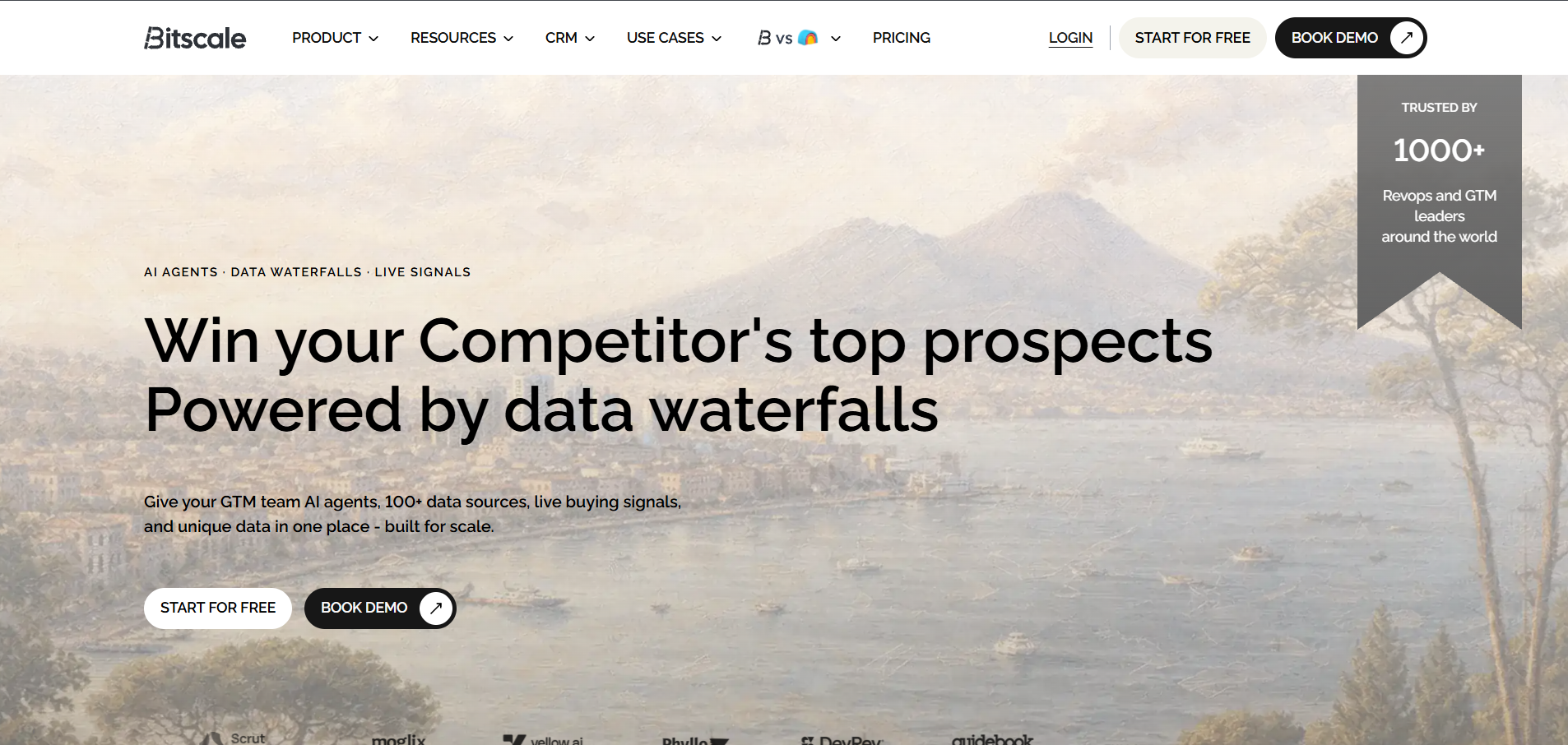
Here's the dirty secret of ABM: most platforms assume you already have clean, complete data on your target accounts. In practice, that's rarely true. Bitscale addresses this gap head-on by combining AI-powered prospecting with real-time data enrichment, giving growth teams the accurate, current contact and company data they need to run effective account-based campaigns.
Bitscale's approach prioritizes speed and scale. Alongside native list building and CSV imports, the platform can automate lead generation workflows: define your ideal customer profile, identify matching accounts, enrich records with verified contact and company data, then push the data into your CRM or outreach tool. For teams running ABM workflow automation, this reduces the manual data preparation required before campaign launch.
Try Bitscale to build and enrich ABM target lists faster
ZoomInfo: The Foundation of Account Intelligence
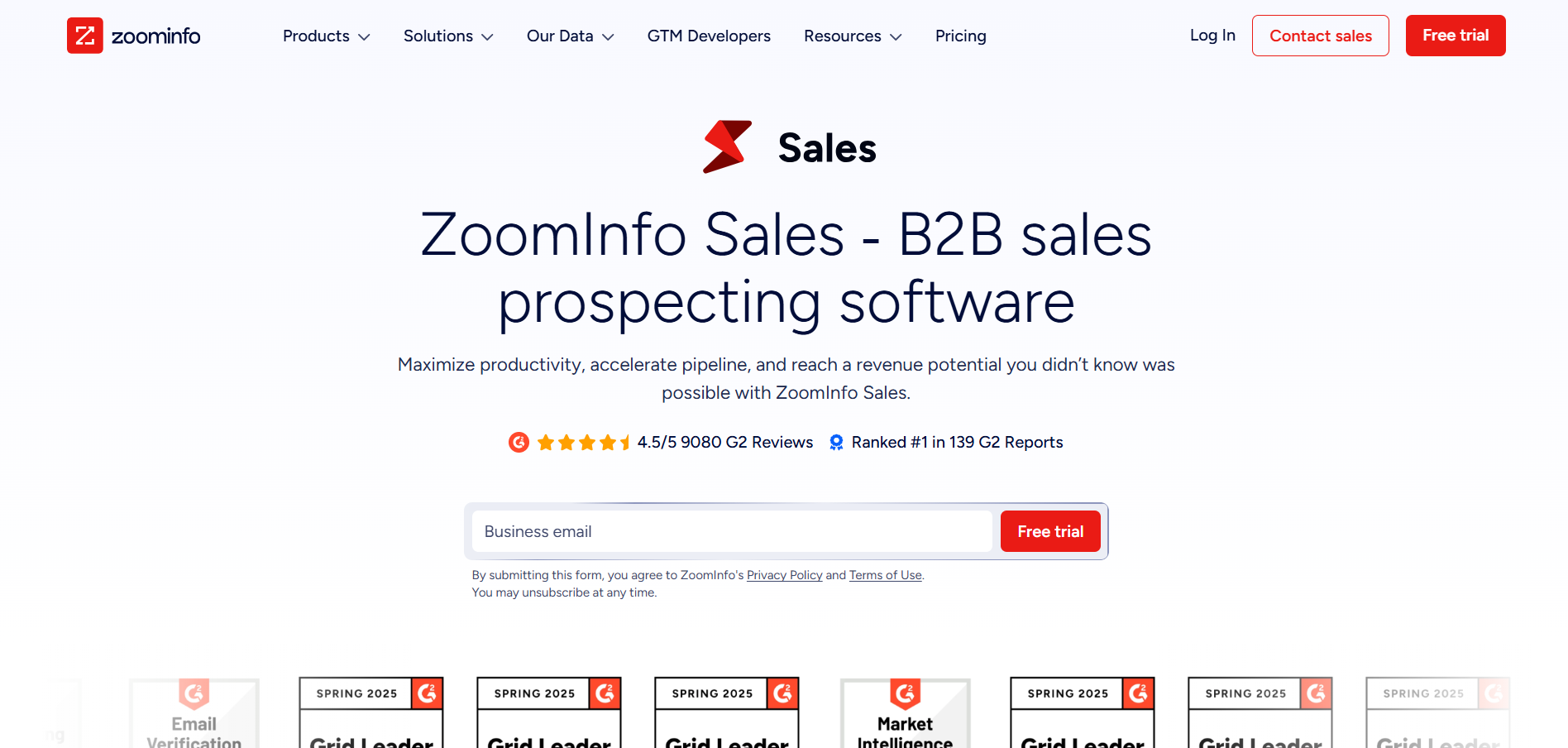
If your ABM strategy lives or dies by data quality (and let's be honest, it does), ZoomInfo is the platform most teams evaluate first.ZoomInfo describes its data foundation as covering a large global set of companies and contacts, making it one of the largest proprietary B2B data assets available. Teams that need to build precise account lists, segment by technographics, or map decision-makers within buying committees will find a level of depth here that few competitors can match.
ZoomInfo's real edge, though, is integration breadth. Native connections to Salesforce, HubSpot, Microsoft Dynamics, Marketo, and dozens of other platforms mean enriched data flows directly into your CRM and marketing automation without manual imports. The platform also includes intent data (via its Streaming Intent product), website visitor tracking, and conversation intelligence through its Chorus acquisition. All of this transforms ZoomInfo from a contact database into a full intelligence layer for go-to-market teams.
The trade-off? Cost. Pricing is custom and depends on the package, users, credits, add-ons, and contract terms. For teams already investing in sales intelligence tools, ZoomInfo often becomes the anchor of the stack. Smaller teams with tighter budgets, however, may struggle to justify the spend until they have processes in place to fully activate the data.
DemandScience (Formerly Terminus): Multi-Channel Campaign Orchestration
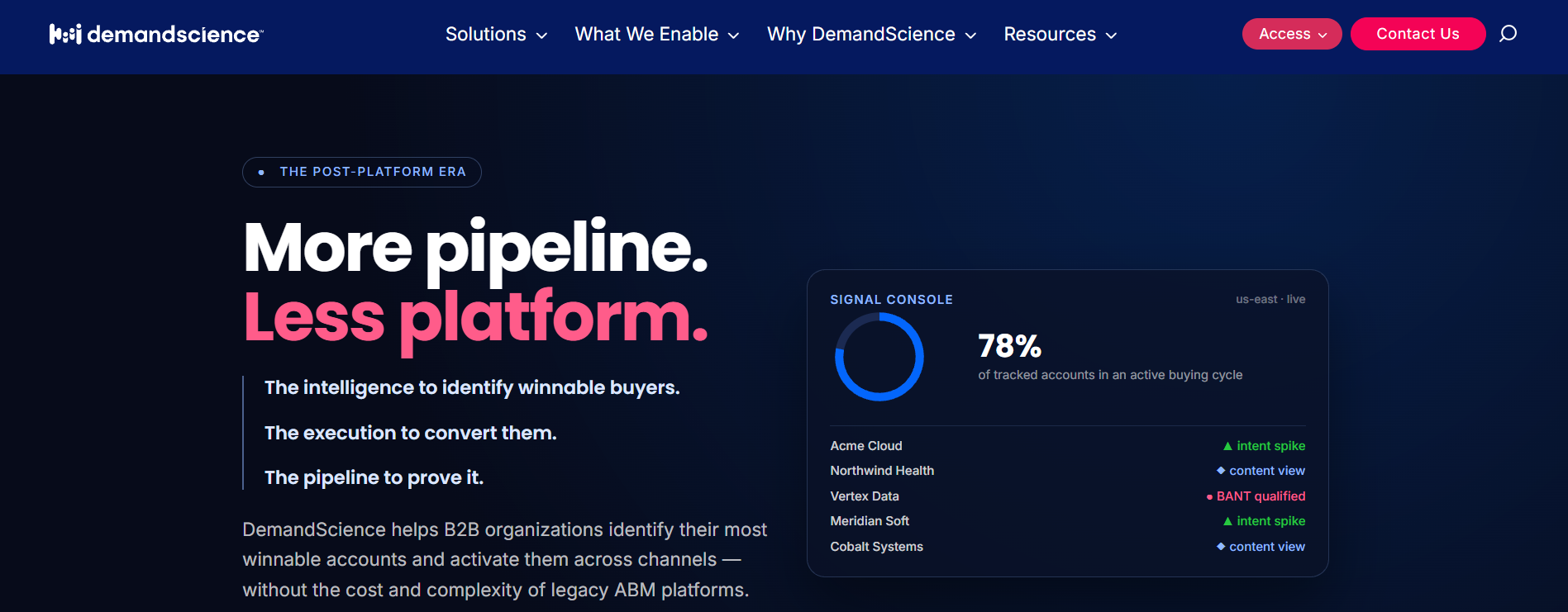
Following its merger with DemandScience in late 2024, the platform formerly known as Terminus is now part of a broader B2B revenue marketing solution. The core strength of the original Terminus toolset remains campaign orchestration. While other marketing tools focus on identifying accounts or enriching contacts, the DemandScience platform helps you engage those accounts across display ads, email, web personalization, and chat. It was designed to solve the common challenge of coordinating messaging across multiple different point solutions.
Where DemandScience's ABM capabilities stand out:
● Account-level ad targeting using first-party data across display and LinkedIn, with engagement tracked at the account level rather than only individual clicks.
● Unified measurement that connects campaign activity directly to pipeline and revenue, giving marketing the attribution data needed to prove ROI.
● Broad integrations with Salesforce, HubSpot, and Marketo, plus intent data from providers like Bombora, making it a strong orchestration layer for your existing data sources.
Pricing is custom; confirm current pricing directly with DemandScience. The solution works best for marketing teams that already have a clear ABM strategy and target account list and need an execution engine to activate it across channels.
6sense: Predictive Insights and Intent-Driven Engagement
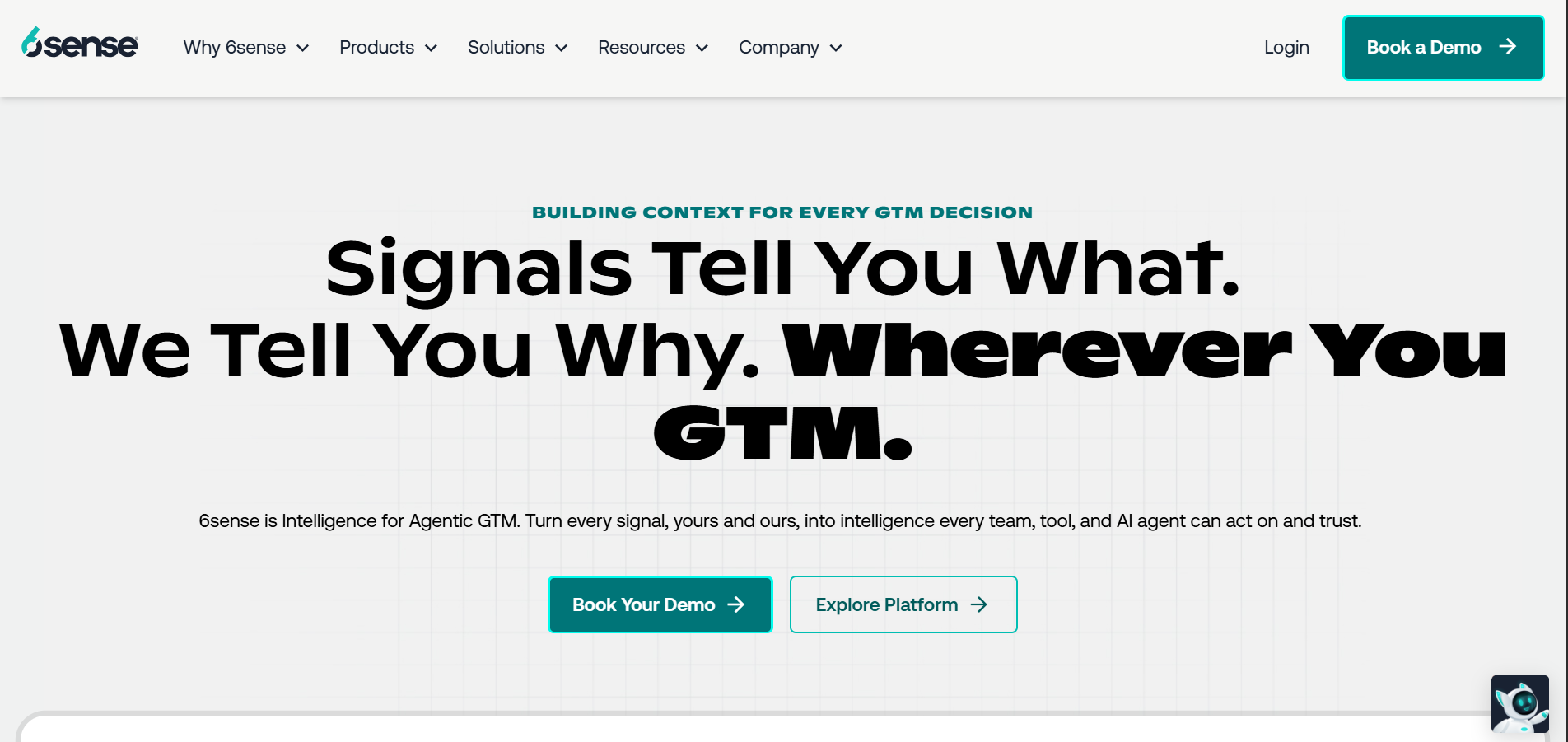
What makes 6sense different from every other tool on this list? It bets heavily on predicting which accounts are ready to buy before those accounts ever fill out a form. The platform's Revenue AI technology analyzes intent, company, contact, and engagement signals to score accounts by buying stage and help teams determine when to engage. In practice, this means your sales team stops chasing cold leads and starts engaging accounts that are already researching solutions.
The platform excels at in-market account identification using anonymous web activity and third-party intent data. Its buying stage predictions tell sales exactly when to engage. Dynamic audience building pushes high-intent accounts into programmatic and LinkedIn campaigns automatically. And native CRM/MAP integrations with Salesforce, HubSpot, Marketo, and Outreach keep workflows intact.
6sense is enterprise-focused in both capability and pricing. Contracts are custom and typically represent a significant annual investment. But for revenue teams that want to shift from reactive lead response to proactive pipeline creation, 6sense's predictive layer is genuinely hard to replicate. It pairs especially well with orchestration solutions like DemandScience or Demandbase for teams building a full-stack ABM approach.
Demandbase: Unifying the ABM Journey
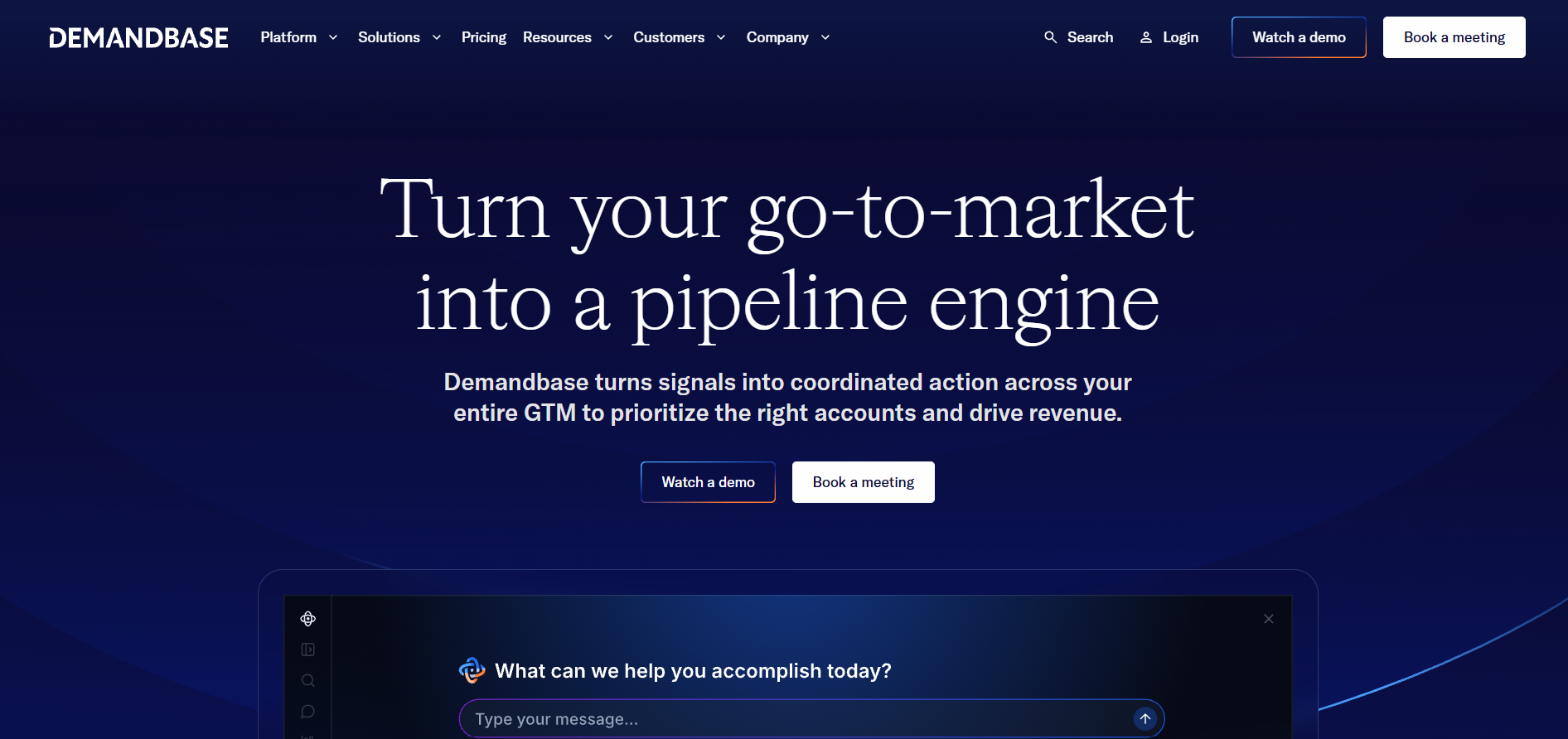
Demandbase is what enterprise marketing teams reach for when they want everything under one roof. Account identification, intent data, advertising, personalization, and analytics all live inside a single product (Demandbase One). Fewer integrations to manage. A more unified view of account engagement across the funnel. For organizations tired of stitching together disparate tools, it's a compelling consolidation play.
Where Demandbase differentiates itself is in analytics and measurement. Its journey analytics track how accounts move through awareness, engagement, and opportunity stages, tying marketing activity directly to pipeline and revenue. For CMOs reporting ABM return on investment to the board, this level of attribution is essential. The platform's measurement tools help quantify that return at the individual account level, showing how marketing programs influence deals.
The platform integrates with Salesforce, HubSpot, Marketo, and major ad networks. Pricing is custom and firmly enterprise-tier. Demandbase is not the right choice for a five-person marketing team running its first ABM pilot. But for larger organizations with dedicated ABM resources, complex buying committees, and long sales cycles, it can provide the operational backbone for a mature ABM program.
AdRoll ABM (Formerly RollWorks): Scaling ABM for Growth-Focused Teams
Not every team needs (or can afford) an enterprise ABM suite. AdRoll ABM, formerly RollWorks, is NextRoll's account-based marketing product for B2B teams running account-based targeting, advertising, and measurement. If you're new to ABM or working with a lean budget, this is the most accessible entry point on the list.
Pricing and packaging should be confirmed directly with AdRoll. AdRoll ABM currently supports account-based advertising, account scoring, buyer insights, CRM integrations, and journey analytics. RollWorks' core strength is account-based advertising: it uses intent data and firmographic targeting to serve ads to accounts on your target list, then measures engagement at the account level.
It works best as part of a broader stack, paired with a data enrichment tool like Bitscale for prospecting and a CRM for pipeline management. For teams looking to build a scalable GTM automation stack, RollWorks handles the advertising layer effectively without locking you into a monolithic platform.
Choosing Your Arsenal: The Right ABM Tools for 2026
There is no single best ABM tool. The right choice depends on your team's maturity, budget, and where your current stack has gaps.
How the six platforms map to different scenarios:
● AI-powered prospecting and enrichment: Bitscale, for growth teams that need fresh, verified data flowing into their CRM without manual effort.
● Enterprise data and intelligence: ZoomInfo, when your primary challenge is building comprehensive, accurate account and contact lists at scale.
● Multi-channel orchestration: DemandScience, for teams with defined target accounts that need coordinated engagement across ads, email, and web.
● Predictive, intent-driven strategy: 6sense, when identifying in-market accounts before competitors is the priority.
● All-in-one for large organizations: Demandbase, when you want identification, engagement, and measurement consolidated in a single product.
● Entry point for mid-market teams: RollWorks, for companies running first ABM programs or focused primarily on account-based advertising.
Integration matters just as much as individual tool capability. Marketing automation is widely used, which means your ABM tools need to connect cleanly with whatever CRM, MAP, and sales engagement platforms you already run. Before committing to any platform, map out your existing stack and verify native integrations. One stat worth noting: the tools segment accounted for 64.3% of the ABM market share in 2025, but the services segment is growing faster at 14.02% CAGR (Mordor Intelligence, 2026). That signals implementation support and managed services will become increasingly important alongside the software itself.
Looking ahead, expect ABM software to lean further into AI-driven personalization, real-time intent signals, and tighter alignment between marketing and sales workflows. The teams that win in 2026 won't just pick the best individual tool. They'll build a stack where data, intelligence, and execution reinforce each other. For a broader view of how these tools fit into a complete go-to-market strategy, explore our guide to the top 10 best ABM tools for additional options.
Frequently Asked Questions About ABM Software
What is the most important feature to look for in an ABM tool?
Data quality and accuracy at the account level. Without reliable firmographic, technographic, and contact data, every other ABM capability (advertising, personalization, intent scoring) underperforms. Evaluate how each tool sources and verifies its data, and how frequently that data is refreshed.
Can I implement ABM without a dedicated software platform?
You can, but scaling becomes painful fast. Small teams can run basic ABM using a CRM, spreadsheets, and manual research. As your target account list grows, the manual effort can become difficult to sustain. Dedicated ABM software can automate account identification, enrichment, and engagement tracking, reducing the manual work involved as programs scale.
How do ABM tools integrate with my existing CRM and marketing automation?
Most ABM platforms offer native integrations with major CRMs (Salesforce, HubSpot, Microsoft Dynamics) and marketing automation platforms (Marketo, Pardot, HubSpot Marketing Hub). These integrations typically sync account lists, contact data, engagement signals, and campaign metrics bidirectionally. Before purchasing, confirm that your specific CRM version and MAP are supported, and test the integration in a sandbox environment.
What's the typical ROI for investing in ABM software?
This is because they concentrate resources on high-value accounts. For comparison, a Nucleus Research analysis of earlier marketing-automation deployments found positive average benefits over the first several years after deployment.
How often should I re-evaluate my ABM tech stack?
At minimum, annually. Conduct a deeper evaluation every 18 to 24 months. The ABM market is evolving rapidly, with new capabilities (especially AI-driven features) emerging each year. Trigger an earlier review if your team size changes significantly, you enter new markets, or your current tools show declining data quality or engagement rates.