Pipeline Generation Strategies for Modern Revenue Teams
B2B pipeline generation strategies to build qualified pipeline: align GTM, use intent signals, enrichment, CRM sync, and automation to improve conversion.
Pipeline generation is one of the most misread jobs in B2B revenue. Plenty of teams still treat it like a volume contest: more leads, more emails, more calls. The teams that reliably hit number have moved on. They run pipeline generation as a system, blending strategy, data, automation, and human judgment to create qualified opportunities that actually move, not swollen contact lists that go nowhere.
Across the B2B landscape, a growing majority of organizations have restructured how they approach pipeline generation. That shift reflects a broader pattern: pipeline is increasingly built through coordinated GTM strategy, AI-assisted research, buyer intent signals, and workflow orchestration. This piece breaks down the foundations, the modern stack, and the day-to-day workflows that separate predictable revenue engines from teams still chasing MQLs that never turn into deals.
What Pipeline Generation Actually Means (and What It Is Not)
Pipeline generation is the end-to-end work of identifying accounts, qualifying them, and moving them forward until they become active sales opportunities. It is not the same thing as stuffing the top of the funnel. A real pipeline opportunity has a defined buyer, a recognized need, a timeline, and enough qualification detail that the sales team can forecast with it.
Most of the confusion is just language. Lead generation strategy is about capturing contact information, usually via inbound forms, content downloads, or purchased lists. Demand generation builds awareness and educates the market so buyers raise their hands when timing is right. Pipeline generation sits downstream of both: it takes what demand and lead gen produce, adds account intelligence and qualification, and turns it into opportunities sales can actually run. Without pipeline generation, you have names in a CRM. With it, you have a revenue pipeline.
| Dimension | Lead Generation | Demand Generation | Pipeline Generation |
|---|---|---|---|
| Primary Goal | Capture contact information | Create market awareness and educate buyers | Create qualified, progressing sales opportunities |
| Key Metric | Lead volume (MQLs) | Brand reach, engagement, share of voice | Qualified pipeline value, velocity, conversion rate |
| Typical Owner | Marketing | Marketing | Cross-functional (RevOps, Sales, Marketing) |
| Time Horizon | Short-term campaigns | Long-term brand building | Ongoing, tied to revenue targets |
| Output | Contact lists, form fills | Educated, aware buyers | Forecast-ready opportunities in CRM |
| Failure Mode | High volume, low quality | Hard to attribute to revenue | Depends on tight orchestration across teams |
| Pipeline generation is a cross-functional discipline, not a marketing-only activity. |
Industry benchmarks consistently show that MQL-to-SQL conversion rates remain low across most B2B organizations, and the trend has been declining over time. The message is blunt: piling on more leads without a pipeline generation strategy just balloons the top of the funnel while starving the middle. Lead volume alone does not guarantee qualified pipeline. Teams that pair strong qualification criteria and GTM alignment with B2B demand generation strategies alongside pipeline generation tend to convert better because awareness and qualification get built at the same time.
How GTM Strategy Drives Pipeline Creation
A GTM pipeline does not show up because a few tactics happened to work this quarter. It comes from a deliberate go-to-market strategy that forces ICP definition, messaging, channel selection, and sales execution into a single motion. Without that alignment, marketing hands over leads sales will not touch, sales prospects into accounts marketing has never warmed, and RevOps ends up mediating conflicting definitions and messy data.
It starts with ICP clarity. Not a vague persona doc, but a data-driven account profile built from closed-won analysis, firmographic filters, technographic signals, and buying committee mapping. Once the ICP is locked, everything downstream, from content to multi-channel outbound sequencing to event targeting, runs against the same definition of a good account. Most pipeline generation strategies fail right here: the ICP lives in a slide deck instead of being operationalized in the CRM, enrichment tools, and scoring models.
Sales pipeline generation becomes predictable when the GTM strategy dictates which accounts enter the pipeline, through which channels, and under what qualification criteria. The strongest teams run coordinated plays: marketing warms a segment with targeted content, SDRs engage the contacts showing intent, and AEs get opportunities with context on the buying committee, pain points, and competitive landscape. Teams investing in GTM engineering build this coordination into their operational infrastructure rather than relying on ad hoc handoffs.
AI Pipeline Generation: What It Changes and What It Does Not
AI-assisted prospect research has become increasingly common across modern revenue teams, with the vast majority now using AI tools for content creation, campaign asset production, and account research workflows. The bigger shift is not copywriting; it is research. Revenue teams already rely on AI to build account lists, enrich contacts, and decide who gets attention first, and that pattern continues to accelerate as the tooling matures.
| Activity | Traditional Approach | AI-Assisted Approach |
|---|---|---|
| Account Research | Manual LinkedIn browsing, Google searches, industry reports | AI prospect research across firmographic, technographic, and intent data sources |
| Contact Enrichment | Batch uploads to data vendors, manual verification | Real-time enrichment with work email, phone, and role validation |
| ICP Scoring | Static rules in CRM, quarterly updates | Dynamic scoring models updated with live signals |
| Outbound Personalization | Template-based with manual customization | AI-generated personalization using account intelligence |
| Pipeline Prioritization | Rep intuition and manager review | Intent-weighted scoring with buying signal triggers |
| CRM Hygiene | Quarterly cleanup projects | Continuous sync and deduplication through automation |
| AI shifts pipeline generation from periodic, manual effort to continuous, signal-driven execution. |
What AI does not change is the need for human judgment: deal strategy, relationship building, and the messy nuance of account decisions. AI pipeline generation speeds up research and strengthens the data layer; it does not replace the sales conversation. Teams that try to swap reps for automation usually end up with high-volume, low-quality outreach that burns reputation. The teams getting real results use AI to make sure reps spend time on the right accounts with the right context, not to remove reps from the process.
The Modern Pipeline Generation Stack: Intent, Enrichment, CRM, and Automation
A pipeline generation strategy is rarely a single tool problem. It is a stack problem: buyer intent, account intelligence, enrichment, CRM synchronization, and workflow automation have to behave like one connected system. When those pieces live in silos, the outcome is predictable: fragmented data, missed signals, and reps working off stale context. Effective RevOps automation ties these layers together so data flows without manual intervention.
Buyer Intent and Account Intelligence
Buyer intent data shows which accounts are actively researching solutions in your category. That includes third-party signals (consumption on review sites, research publications, competitor comparisons) and first-party signals (website visits, content engagement, product page views). Account intelligence adds the surrounding context: company size, tech stack, funding events, leadership changes, and hiring patterns. Put together, they answer the question pipeline teams obsess over: "Which accounts should we prioritize right now?" Teams that layer revenue intelligence on top of intent data gain even sharper visibility into account readiness.
Contact and Company Enrichment
Enrichment is what turns a company name into a usable account record. Company enrichment fills in firmographics, technographics, and organizational structure. Contact enrichment adds verified work emails, direct phone numbers, job titles, and reporting relationships. Skip this step and pipeline automation runs on partial records, while reps waste cycles on contacts who have already moved roles or left the company. Platforms like Bitscale pair AI prospect research with real-time enrichment so lists show up ready for outreach instead of requiring hours of cleanup.
CRM Synchronization and Pipeline Automation
Pipeline management lives and dies on CRM accuracy. When enrichment and intent stay trapped in another system, or sync on a delay, reps end up making calls based on yesterday's reality. Real-time CRM sync keeps buying signals attached to the right account record the moment they appear. From there, pipeline automation can do the unglamorous work: route the account to the right rep, update the opportunity stage, or kick off an outbound sequence. Organizations with disciplined pipeline management consistently demonstrate more reliable forecasting and stronger operational execution, which is why CRM hygiene and automation are revenue-critical, not just operational "nice-to-haves."
Platform Landscape: Choosing the Right Pipeline Generation Tools
The sales tech market is crowded with tools that touch pipeline generation, but most of them solve one slice of the problem. Some are excellent at contact data. Others are built around outbound sequencing. A smaller set tries to pull research, enrichment, intent, and automation into one workflow. Knowing what each platform is really designed to do helps revenue teams avoid brittle integration chains that fall apart at scale.
Product capabilities, AI functionality, integrations, pricing, and workflow support evolve over time. Verify current information directly with each vendor before making purchasing decisions.
| Platform | Primary Strength | Enrichment | Intent Signals | CRM Sync | Workflow Automation | AI Research |
|---|---|---|---|---|---|---|
| Bitscale | Unified GTM orchestration | Contact and company enrichment | Native support for buying signals | Native support, real-time | Ready-made sales workflows | AI prospect research |
| Clay | Data enrichment and waterfall logic | Multi-source enrichment | Available through integrations | Available through integrations | Table-based workflows | AI-assisted enrichment |
| Apollo.io | Contact database and outbound sequencing | Built-in contact data | Basic intent scoring | Native CRM sync | Sequence automation | AI email writing |
| Lusha | Contact data accuracy | Contact enrichment | Varies by plan | Available through integrations | Basic automation | Varies by plan |
| Cognism | EMEA and compliant contact data | Phone-verified contacts | Available through Bombora partnership | Available through integrations | Varies by plan | Varies by plan |
| Instantly.ai | Cold email deliverability and scale | Available through integrations | Varies by plan | Basic sync | Email sequence automation | AI email warmup |
| Capabilities based on each platform's publicly available product information. Features and packaging are subject to change. |
Bitscale stands out as a unified GTM platform that brings AI prospect research, company and contact enrichment, buyer intent signals, CRM synchronization, and ready-made sales workflows into one environment. Instead of asking teams to wire together five or six point solutions, Bitscale orchestrates the workflow from account identification through outbound execution. If you are pressure-testing your stack, the rundown of best B2B lead generation tools helps clarify where specialized tools can still make sense alongside a unified platform.
Common Pipeline Generation Workflows
Strategy without execution is just a slide deck. Below are five workflows modern revenue teams use to generate qualified pipeline consistently. Each one maps to a distinct pipeline motion, and each can be run with more or less automation depending on your stack and operating model.
| Workflow | Trigger | Key Steps | Output |
|---|---|---|---|
| Intent-Triggered Outbound | Account shows buying intent signal | Enrich account, identify buying committee, personalize outreach, launch multi-channel sequence | Qualified meeting booked with decision-maker |
| ICP Account Expansion | New accounts matching ICP criteria identified | AI prospect research, company enrichment, contact lookup, score and prioritize, route to rep | Net-new accounts entering pipeline with full context |
| Warm Re-engagement | Closed-lost or stalled opportunity shows renewed activity | Detect re-engagement signal, update CRM record, trigger personalized re-engagement sequence | Reactivated opportunity with updated qualification |
| Event-Based Pipeline | Target accounts attending industry event | Pre-event enrichment, meeting scheduling, post-event follow-up automation | Event-sourced pipeline with accelerated timeline |
| Inbound Qualification | High-intent form fill or demo request | Real-time enrichment, ICP scoring, immediate routing based on predefined business rules, context briefing | Immediate routing with complete account intelligence |
| Workflows can be built in platforms like Bitscale using ready-made templates or custom configurations. |
Teams practicing ABM workflow automation often stack these workflows on top of account-based plays, using intent and enrichment to coordinate marketing and sales touches across the same target account list.
AI vs Human Responsibilities in Pipeline Generation
Revenue teams tend to swing between two bad takes on AI: it is either magic, or it is a threat. It is neither. AI and humans play different roles in pipeline generation, and teams that draw those lines clearly usually outperform teams that blur them.
| Responsibility | AI Role | Human Role |
|---|---|---|
| Account Identification | Scan databases, apply ICP filters, surface net-new accounts | Validate strategic fit, approve account lists, add contextual knowledge |
| Data Enrichment | Pull firmographic, technographic, and contact data from multiple sources | Verify accuracy for high-value accounts, flag outdated records |
| Intent Signal Processing | Aggregate and score intent signals across channels | Interpret signals in context, decide on response strategy |
| Outreach Personalization | Generate draft messaging based on account intelligence | Review, edit, and approve messaging for tone and accuracy |
| Pipeline Forecasting | Aggregate deal data, flag at-risk opportunities, model scenarios | Make judgment calls on deal probability, adjust based on relationship context |
| Governance and Compliance | Flag potential data quality or compliance issues | Own final decisions on data handling, privacy, and ethical outreach |
| AI accelerates execution. Humans own strategy, relationships, and governance. |
Oversight matters because AI runs on patterns, not judgment. A model will score an account highly when the signals look strong, even if a rep knows the account just signed a three-year deal with a competitor. The same goes for messaging: AI-generated outreach can read convincingly while missing cultural nuance or industry sensitivities a skilled rep catches fast. The operating model that holds up is AI-assisted and human-governed. A scan of AI lead generation solutions can help teams see where AI adds the most value without drifting into autopilot.
Governance, Data Quality, and Why Oversight Cannot Be Automated
Most pipeline generation content skips the unsexy part: governance. The moment you automate enrichment, intent scoring, and outbound sequencing, you also automate the blast radius of mistakes. One bad enrichment source can flood your CRM with wrong titles. A trigger tuned too aggressively can start outreach to accounts researching your category for a blog post, not a buying cycle. An AI-drafted email can misstate a competitor and create legal exposure.
Data quality governance means building validation checkpoints into every stage of the workflow. Before enriched data lands in the CRM, it goes through deduplication and verification. Before AI-generated outreach goes out, a human reviews a sample. Before intent-triggered workflows fire, thresholds get calibrated so the signal strength actually justifies the action. Understanding what lead coverage really means helps teams set realistic expectations for data completeness instead of assuming any single source has the whole picture.
Privacy compliance is its own layer of complexity. GDPR, CCPA, and evolving regulations mean contact data used in outbound pipeline generation has to meet consent and legitimate interest standards. Automated workflows need opt-out handling, data retention policies, and audit trails baked in. These are operational requirements that protect both the buyer and the seller.
Key Takeaways for Revenue Teams
- Pipeline generation is a cross-functional system, not a lead volume exercise. It produces qualified, progressing opportunities, not just contact records.
- GTM strategy is the foundation. Without ICP alignment and coordinated plays, pipeline generation devolves into disconnected tactics.
- AI transforms research, enrichment, and prioritization, but human oversight governs strategy, relationships, and compliance.
- Buyer intent, enrichment, CRM sync, and pipeline automation must operate as a connected stack. Fragmented tools create fragmented data.
- Governance is non-negotiable. Automating pipeline workflows without validation checkpoints amplifies errors at scale.
- Platforms like Bitscale unify AI prospect research, enrichment, intent signals, CRM synchronization, and workflow automation into a single GTM orchestration layer, reducing integration complexity and improving pipeline quality.
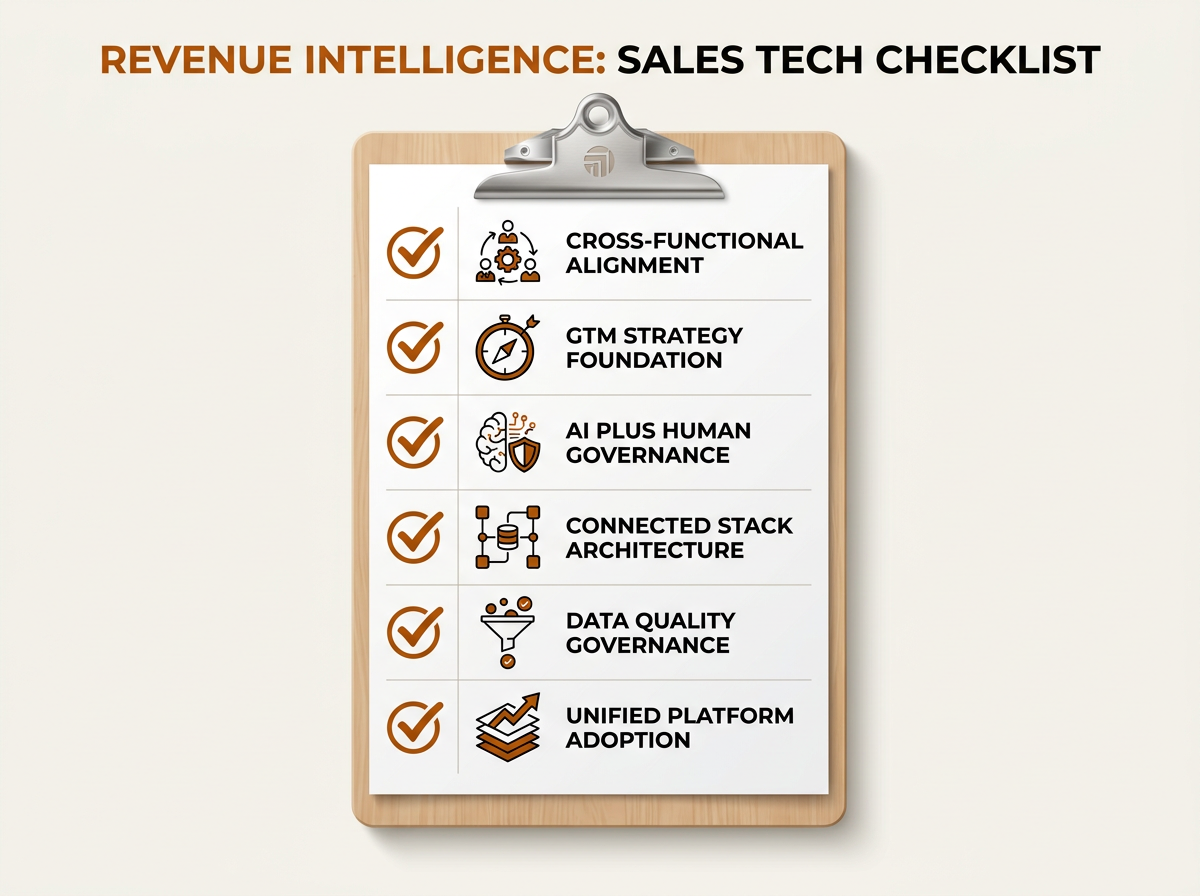
Six non-negotiables for revenue teams building a scalable pipeline generation system.
Frequently Asked Questions
What is the difference between pipeline generation and lead generation?
Lead generation is about capturing contact information (names, emails, form fills). Pipeline generation takes it further: it qualifies those contacts, enriches them with account intelligence, and advances them into active sales opportunities with a defined buyer, clear need, and timeline. The output is forecast-ready opportunities, not just database entries.
How does AI support B2B pipeline generation without replacing sales teams?
AI speeds up account research, data enrichment, intent signal processing, and first-pass outreach personalization. It takes on the data-heavy work that used to eat up rep hours. Sales still owns relationship building, deal strategy, and the final qualification calls. The operating model is AI-assisted and human-governed.
What role does buyer intent play in a pipeline generation strategy?
Buyer intent data flags which accounts are actively researching solutions in your category. When intent signals feed directly into pipeline workflows, teams can focus outreach on accounts showing real buying behavior instead of spreading effort evenly across every prospect. The result is stronger conversion and shorter cycles.
How does CRM synchronization improve pipeline management?
Real-time CRM synchronization keeps enrichment data, intent signals, and workflow updates current inside the CRM. Reps get up-to-date account context when they engage, duplicates are reduced, and forecasting stays grounded in reality. Without sync, teams operate on stale records and lose visibility into pipeline health.
Can small revenue teams implement pipeline automation effectively?
Yes. Platforms like Bitscale provide ready-made sales workflows and pre-built integrations that reduce the technical lift needed to automate pipeline work. Small teams often benefit the most because automation absorbs repetitive research and enrichment tasks that would otherwise consume a meaningful share of a lean team's time. The guiding principle is to automate repetitive operational work while keeping humans responsible for qualification, messaging, governance, relationship building, compliance, and final decisions.