Phantombuster Alternatives in 2026: Better Options for Data Extraction, Enrichment, and GTM Workflows
Phantombuster alternatives for 2026: compare extraction, enrichment, and outbound workflows across Bitscale, Clay, Apollo, Cognism, and more.
Phantombuster earned its name by being the Swiss Army knife of lead scraping. With 130+ pre-built scripts ("Phantoms") pulling from LinkedIn, Twitter, Instagram, Google Maps, and more, it gave growth teams a quick way to crank out prospect lists. In 2026, though, the distance between a scraped list and real outbound results is bigger than most teams expect. A LinkedIn export is not pipeline. To turn rows in a spreadsheet into meetings, you need verified emails, usable buying signals, clean CRM fields, and a path into sequences.
Below is a straight look at what Phantombuster still does well, where it stops helping, and which phantombuster alternatives pick up the work it leaves behind. If you are choosing your first extraction tool or replacing a scraping-only setup with a real GTM data stack, the comparisons and decision framework here should make the tradeoffs obvious.
What Phantombuster Gets Right (and Where It Stops)
Phantombuster is a cloud automation platform with one big advantage: range. From a browser dashboard, you can scrape LinkedIn Sales Navigator results, automate connection requests, extract Instagram followers, or pull Google Maps listings. In 2026, pricing runs roughly $69 to $439 per month, and there is a 14-day free trial. If all you need is raw contact data quickly, it does the job.
The issues show up after the scrape. Phantombuster automates LinkedIn by injecting your session cookies, which conflicts with LinkedIn's Terms of Service and can lead to suspensions or permanent bans. Reviews on G2 (4.2 to 4.4 out of 5) and Capterra (4.5 out of 5) tend to applaud the extraction breadth, then complain about the learning curve and brittle automations. The bigger limitation is structural: Phantombuster is an extraction layer, not a revenue workflow. It does not enrich, verify, score, or reliably push records into sequences.
Why Raw Scraped Data Is Not Outbound-Ready Data
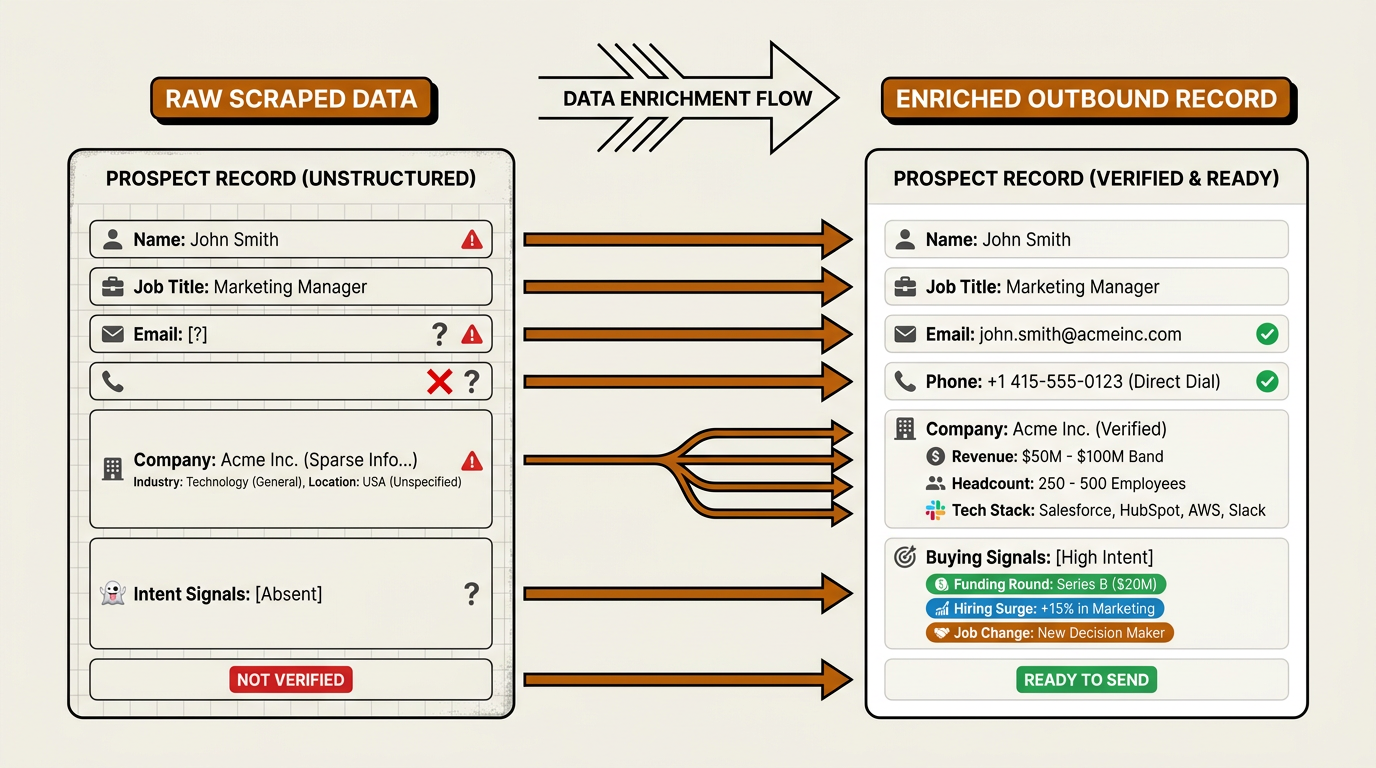
A LinkedIn scrape covers roughly 30% of what SDRs need — enrichment fills the rest.
A LinkedIn scrape usually nets you names, job titles, and maybe a company URL. That is about 30% of what an SDR needs to send a relevant, well-timed cold email. The missing layers are the ones that decide outcomes: verified work emails, direct-dial numbers, firmographics (revenue, headcount, tech stack), buying signals (job changes, funding, hiring surges), and deduping rules that keep your CRM from turning into a landfill. Without lead enrichment, reps either burn hours on manual research or blast messages that bounce. If you want the full scope of what enrichment covers, Bitscale's guide on What is data enrichment? walks through it end to end.
Prospecting automation only pays off when extraction, enrichment, and execution share the same pipeline. Use that standard when you judge every alternative below.
The Best Phantombuster Alternatives Compared
| Tool | Core Strength | Enrichment Built In? | Outbound Workflows? | Starting Price |
|---|---|---|---|---|
| Bitscale | GTM data layer: enrichment, signals, workflows | Yes | Yes | See bitscale.ai |
| Clay | Waterfall enrichment, 75+ data providers | Yes | Partial (via integrations) | From $149/mo |
| Apollo.io | All-in-one prospecting + sequencing | Yes | Yes | Free tier available |
| Lusha | Direct-dial phone numbers, Chrome extension | Yes | Limited | Free tier available |
| Cognism | EMEA-strong phone-verified mobile data | Yes | Limited | Custom pricing |
| Instantly.ai | Cold email infrastructure at scale | Partial (lead finder add-on) | Yes | From $30/mo |
| Pricing reflects publicly listed plans as of mid-2026. Custom tiers vary. |
Bitscale: From Raw Leads to Outbound-Ready Records
Phantombuster hands you a list; Bitscale's data enrichment product is built for what comes next. Bitscale acts like a cleaner GTM data layer: import raw leads from a scraping tool, a CSV, or a CRM export, and it fills in the fields outbound teams actually need. That includes verified work emails, phone numbers, company firmographics, AI-powered prospect research, and intent or buying signals. From there, ready-made sales workflows connect to your CRM and outbound tools, so enriched records land where reps can use them without a manual relay. For teams that have outgrown a scrape-and-spreadsheet routine, Bitscale replaces the usual mix of tabs, exports, and Zapier glue between extraction and execution.
Clay
Clay is known for waterfall enrichment: it pings dozens of providers in sequence until it finds a match, which drives high coverage. It is a strong fit for teams that want to build custom logic in a spreadsheet-like workspace. The tradeoff is the build cost. Clay takes time to learn, and outbound execution typically means wiring it into tools like Instantly or Smartlead. If you are sorting through similar platforms, our breakdown of the best Clay alternatives for data enrichment gets into the practical differences. Pricing starts at $149 per month (Clay pricing).
Apollo.io
Apollo combines a large B2B contact database with built-in email sequencing and prospecting workflows, which puts it close to an all-in-one prospecting setup. The free tier is workable for solo founders and very small teams. The catch is data consistency: phone numbers outside the US can be hit or miss, and leaning on a single database can leave gaps in niche verticals. Paid plans start at $49 per month (Apollo.io pricing).
Lusha, Cognism, and Instantly.ai
Lusha is built for speed: direct-dial numbers and quick Chrome extension lookups. It works well for reps living in LinkedIn who just need a number now, but it does not bring much workflow automation. Cognism is the go-to for many EMEA-focused teams, with phone-verified mobile data and GDPR compliance as table stakes. Pricing is custom and usually lands in enterprise territory (Cognism pricing). Instantly.ai plays a different role entirely: it is primarily cold email sending infrastructure, with a lead finder add-on that covers basic enrichment. At $30 per month (Instantly.ai pricing), it is the low-cost choice when the priority is email volume. For a wider scan of the market, see our list of the 10 Best B2B Data Providers in 2026.
Choosing the Right Tool: A Decision Framework
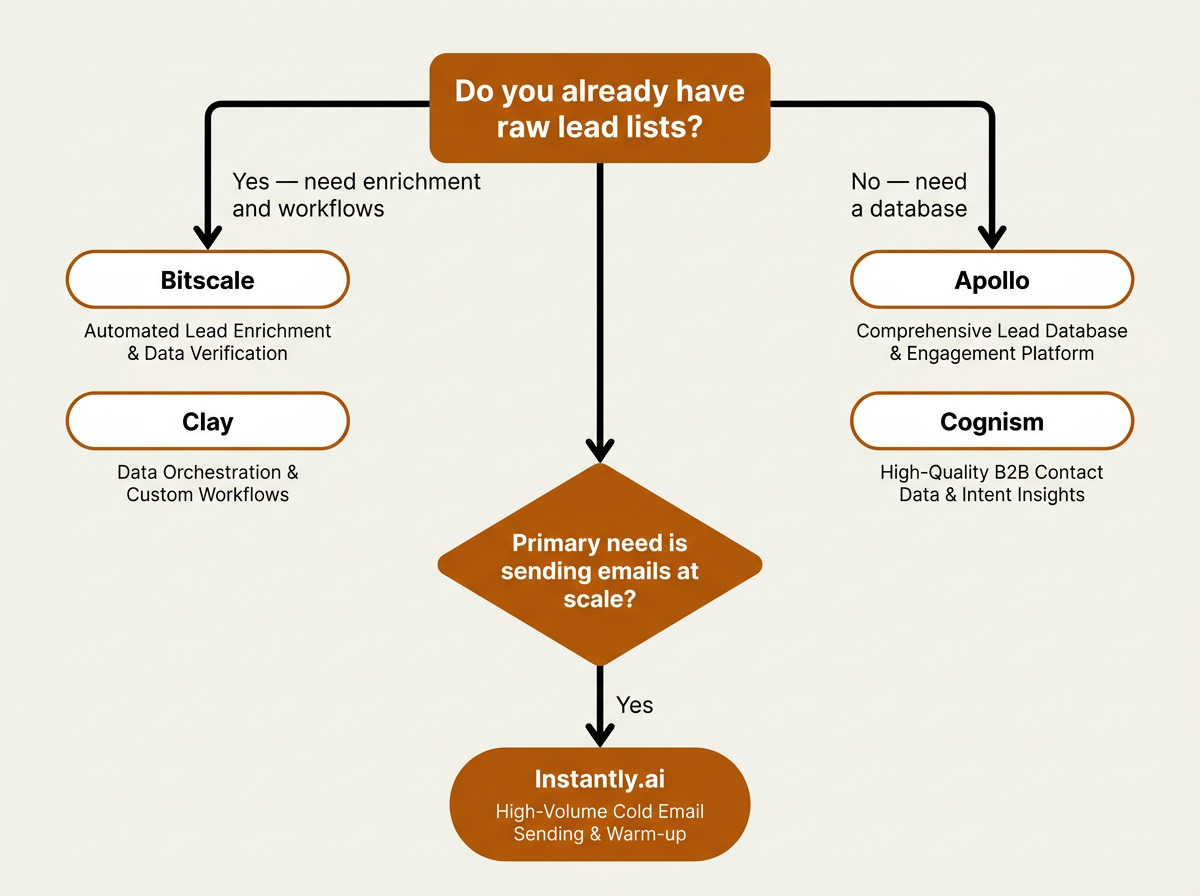
Map your outbound bottleneck first — the right tool depends on where your workflow actually breaks down.
Most teams do not need a single "winner" tool. They need the right stack for their bottleneck. If the problem is sourcing names, Apollo or Cognism gives you a searchable database. If the problem is turning those names into usable records, Bitscale or Clay handles enrichment and orchestration. If the problem is sending at scale, Instantly.ai covers the infrastructure. The common misstep is buying a scraping tool (like Phantombuster) and expecting it to solve enrichment, verification, and sequencing work it was never built to do.
Start with your actual outbound path, from lead identification to reply. Mark the step where data quality drops or manual work spikes. That is the point where your next tool should earn its keep. If you want a concrete build order, the lead enrichment workflow for outbound teams guide lays out the sequence step by step.
What Most Teams Get Wrong About LinkedIn Scraping
LinkedIn scraping feels like progress because it ends with a spreadsheet full of people. But volume without accuracy turns into drag. Bounced emails hurt sender reputation. Old job titles make personalization awkward and off-target. Missing firmographics keeps reps from prioritizing the right accounts. The expensive part is rarely the scraping subscription; it is the time spent cleaning, verifying, and researching every record before it is safe to message. Teams comparing top ZoomInfo alternatives usually land on the same point: the enrichment layer creates the value, not the extraction layer.
Key Takeaways
- Phantombuster is still a solid extraction tool, but its output needs real enrichment before it drives revenue.
- LinkedIn account-ban risk is real and well-documented. Treat compliance as a buying criterion, not an afterthought.
- Bitscale turns raw scraped leads into enriched, CRM-synced, outbound-ready records with built-in workflows and buying signals.
- Apollo.io and Cognism are strong picks when you need a proprietary contact database. Clay is a good fit when you want custom enrichment logic.
- Choose tools based on where your outbound process breaks, not on who lists the most features.
Frequently Asked Questions
Is Phantombuster safe to use with LinkedIn in 2026?
Phantombuster automates LinkedIn by using your session cookies. That runs against LinkedIn's Terms of Service, and account restrictions or bans are still a real risk, as documented in the Cleverly 2026 review and user reports.
What is the biggest limitation of lead scraping tools like Phantombuster?
They stop at extraction. You do not get verified emails, appended phone numbers, firmographic context, or a clean handoff into outbound workflows. Without enrichment, bounce rates climb and conversion rates follow them down.
How does Bitscale differ from Phantombuster?
Phantombuster is built to pull data out of sources. Bitscale is built for the after: contact and company enrichment, work email and phone lookup, AI prospect research, intent signals, CRM sync, and ready-made sales workflows that make records usable for outbound.
Can I use Phantombuster and Bitscale together?
Yes. A common setup is using Phantombuster (or another scraper) to generate raw lead lists, then importing those lists into Bitscale for enrichment, verification, and workflow automation before pushing records into your CRM and sequencing tools.
Which Phantombuster alternative is best for small teams on a budget?
Apollo.io has a generous free tier that includes database access and basic sequencing. Instantly.ai starts at $30 per month for cold email infrastructure. If the budget constraint is really headcount, Bitscale's ready-made enrichment workflows can cut down the manual work small teams usually absorb.