12 Best B2B Email Finder Tools for Sales Teams in 2026
Best B2B email finder tools for 2026, compared on verification, enrichment, phone data, CRM sync, and fit by team size.
Email remains one of the most widely used and effective channels for B2B prospecting because it supports personalized outreach, scalable engagement, and measurable follow-up throughout the buying journey. What has changed is how teams source the addresses they send to, and the best b2b email finder tools now do far more than return a single address from a single database.
The leading b2b email finder tools in 2026 are not just lookup widgets. Most have expanded into sales intelligence platforms that bundle email verification, phone number finder features, contact enrichment, company enrichment, buying signals, CRM sync, and workflow automation into one motion. A lead enrichment waterfall model that queries multiple providers sequentially instead of relying on a single database generally improves contact coverage well beyond what any standalone finder delivers. Below are 12 platforms that are worth a serious look this year.
Platform Feature Comparison
| Platform | Email Discovery | Email Verification | Phone Numbers | Contact Enrichment | Company Enrichment | CRM Integration | Workflow Automation | Waterfall Enrichment |
|---|---|---|---|---|---|---|---|---|
| Bitscale | Yes | Yes | Yes | Yes | Yes | Yes | Yes | Yes |
| Apollo.io | Yes | Yes | Yes | Yes | Yes | Yes | Yes (Sequences) | No |
| Clay | Yes (via integrations) | Yes | Yes | Yes | Yes | Yes | Yes (Claytables) | Yes |
| Cognism | Yes | Yes | Yes (Diamond Data) | Yes | Yes | Yes | Limited | No |
| Lusha | Yes | Yes | Yes | Yes | Yes | Yes | Limited | No |
| Instantly.ai | Yes | Yes | Limited | Limited | Limited | Limited | Yes (Campaigns) | No |
| Hunter.io | Yes | Yes | No | Limited | Limited | Yes | Limited | No |
| Kaspr | Yes | Yes | Yes | Limited | No | Yes | Limited | No |
| Voila Norbert | Yes | Yes | No | Limited | No | Yes | No | No |
| FindThatLead | Yes | Yes | No | Limited | No | Yes | Limited | No |
| Clearbit | Yes | Yes | No | Yes | Yes | HubSpot native | Yes (via HubSpot) | No |
| UpLead | Yes | Yes | Yes | Yes | Yes | Yes | Limited | No |
| Feature comparison based on vendor websites as of mid-2026. |
Traditional Email Lookup vs. Modern Contact Discovery
| Capability | Traditional Email Lookup Tool | Modern Contact Discovery Platform |
|---|---|---|
| Data Sources | Single database | Multiple databases via waterfall enrichment |
| Coverage | Limited by one provider's reach | Broader, since gaps from one source are filled by the next |
| Verification | Basic or manual | Real-time, built-in |
| Enrichment | Email only | Email, phone, firmographics, technographics, intent |
| CRM Sync | CSV export | Native CRM enrichment and bi-directional sync |
| Signals | None | Buying signals, job changes, funding rounds |
| Automation | Manual search | Trigger-based workflows and sequences |
| The gap between legacy email finders and modern platforms continues to widen. |
1. Bitscale

Bitscale combines email finder, enrichment, signals, and CRM sync in one platform.
Bitscale is positioned less as email finder software and more as a unified GTM platform. It brings together work email and phone lookup, waterfall enrichment across multiple data providers, AI prospect research, and prebuilt sales workflows. Most tools end once they return an address; Bitscale's sales intelligence solution keeps going with buying signals like funding events, job changes, and tech installs, then syncs enriched records straight into your CRM. If you are trying to build a prospecting stack in 2026 without duct-taping five point solutions together, the packaging is the point. The trade-off is maturity: Bitscale is newer than Apollo or Cognism, and its proprietary database is still scaling up. Best for teams that want one platform to replace separate email finder, enrichment, and signal tools.
2. Apollo.io

Apollo.io combines a large contact database with built-in sequencing for faster outreach.
Apollo.io is usually the first platform mid-market sales teams bump into. It pairs a large contact database with email verification, a built-in sequencer, and a genuinely usable free tier. The appeal is speed: search, verify, and launch outreach from the same interface. Data freshness can vary in edge cases, especially for less common titles and smaller companies, so running verification before sending is important to protect sender reputation. Pricing climbs with credits and seats, but the free plan (with limited monthly credits) works well for solo SDRs validating a motion.
3. Clay
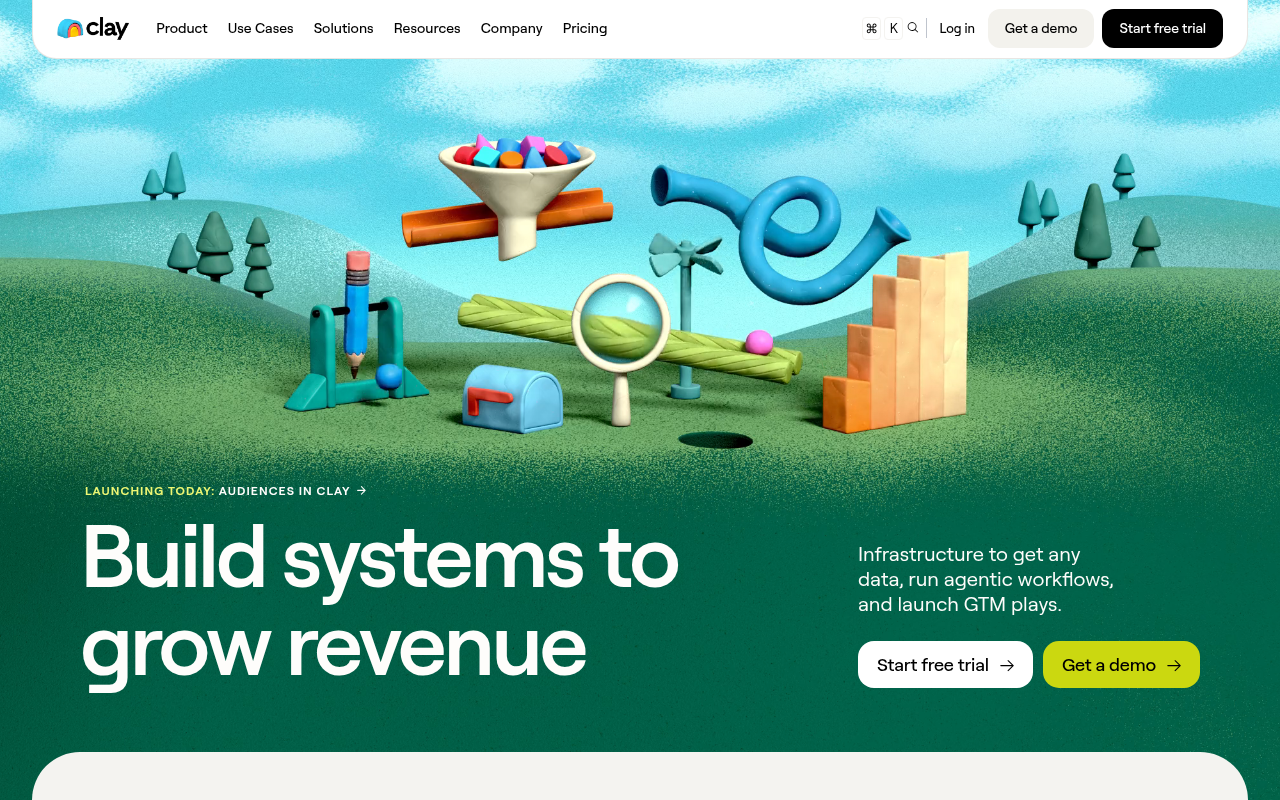
Clay orchestrates multiple data providers inside one spreadsheet-like Claytable workflow.
Clay plays a different game. Rather than owning a database, it acts as an orchestration layer that connects to dozens of data enrichment tools and can run waterfall enrichment as part of the workflow. You build "Claytables" that pull from multiple providers, score leads, and push the results into your CRM. That flexibility is the selling point and the catch: the learning curve is real, and spend can climb quickly since you are paying Clay plus the underlying data providers. Ideal for RevOps teams that are comfortable designing custom workflows instead of buying a fixed experience.
4. Cognism
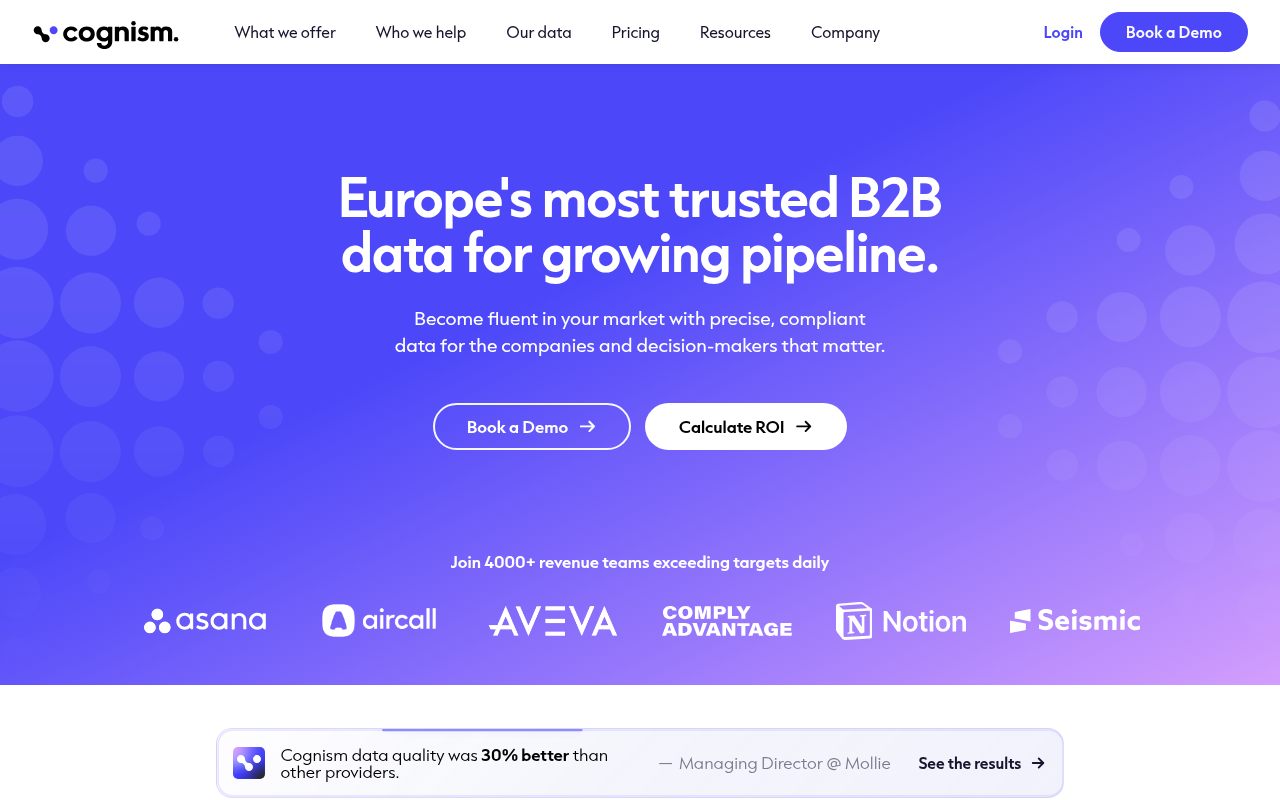
Cognism's Diamond Data manually verifies mobile numbers, making it a strong pick for cold-calling-focused sales teams.
Cognism makes the most sense when cold calling is as central as email. Its "Diamond Data" program manually verifies mobile numbers, which is why many teams treat it as a direct-dial specialist compared to database-first competitors. Cognism is also known for stronger EMEA and APAC coverage, which helps if your ICP is not US-only. The downside is commercial: it is enterprise-leaning, typically sold on annual contracts, and it does not offer a self-serve free tier. Its enrichment capabilities integrate with Salesforce, HubSpot, and Outreach.
5. Lusha
Lusha offers a lightweight path from LinkedIn profile to verified contact record.
Lusha earned its following with a straightforward Chrome extension that surfaces business emails and phone numbers as you move through LinkedIn. For reps who want quick email lookup without onboarding into a heavier platform, it is still one of the shortest paths from profile to contact record. The free plan includes a small monthly credit allotment. Where it starts to strain is at scale: workflow automation is light, and company enrichment is thinner than what you get from Apollo or Cognism. Best for SMB teams and individual contributors who live in the browser.
6. Instantly.ai
Instantly.ai's SuperSearch feeds directly into its cold email and deliverability engine.
Instantly.ai is built first as a cold email sending platform, and its "SuperSearch" lead finder is designed to feed that engine. The advantage is the closed loop: find a contact, then launch a campaign with warmup and deliverability tooling already in place. The compromises are predictable for an outreach-first product: enrichment depth is limited, and phone coverage does not match dedicated data platforms. Instantly fits teams running high-volume cold email that want fewer handoffs between tools.
7. Hunter.io
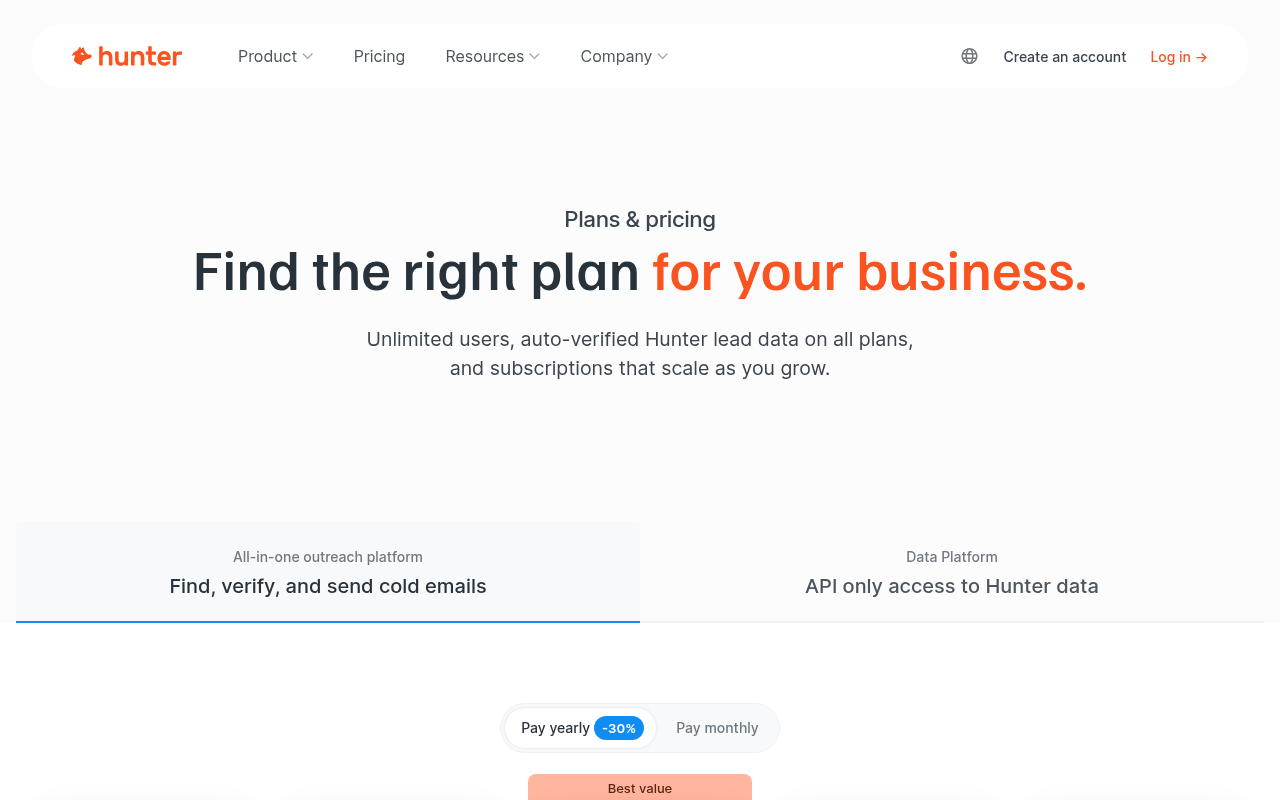
Hunter.io keeps pricing transparent — ideal for teams needing reliable email lookup without a full sales intelligence platform.
Hunter.io is the longtime standard for domain-based email search. Drop in a company domain and it returns common patterns plus verified addresses. The pricing is unusually clear: the cost per email found ranges from $0.0245 on entry-level plans to $0.0084 on high-volume annual plans (Growth Hack Suite, 2026). Hunter does not offer phone discovery or deep enrichment, which keeps it firmly in the "email finder" lane rather than full sales intelligence. It integrates with most CRMs and works well for teams that want reliable lookup without paying for a broader platform.
8. Kaspr
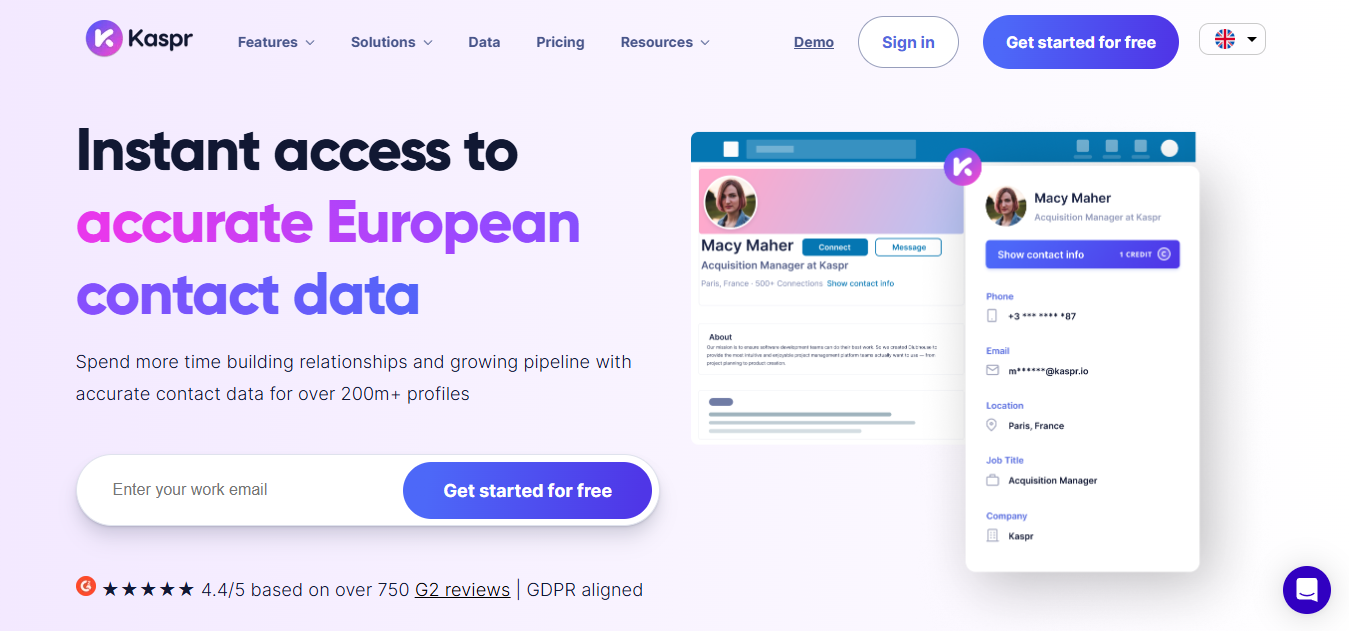
Kaspr's Chrome extension pulls contact data directly from LinkedIn profiles and Sales Navigator.
Kaspr (part of the Cognism family) is aimed at reps who do most of their prospecting inside LinkedIn. Its Chrome extension pulls emails and phone numbers from LinkedIn profiles and Sales Navigator, then turns that into exportable contact data. Kaspr's pricing includes a free tier with limited credits. You will not get meaningful company enrichment or sophisticated automation, but if you want a fast phone number finder alongside email discovery, Kaspr covers the basics at a lower price point than Cognism.
9. Clearbit (Breeze Intelligence by HubSpot)
Clearbit is now Breeze Intelligence, HubSpot's native enrichment layer for CRM records.
Clearbit is now Breeze Intelligence inside HubSpot, following HubSpot's acquisition. If HubSpot is your CRM, this is the cleanest CRM data enrichment path: company and contact records enrich natively, without third-party connectors or brittle sync logic. Clearbit's firmographic and technographic coverage is still a strength. The catch is lock-in. On Salesforce or other CRMs, you give up much of the integration advantage, and email discovery is not the primary focus anyway.
10. Voila Norbert
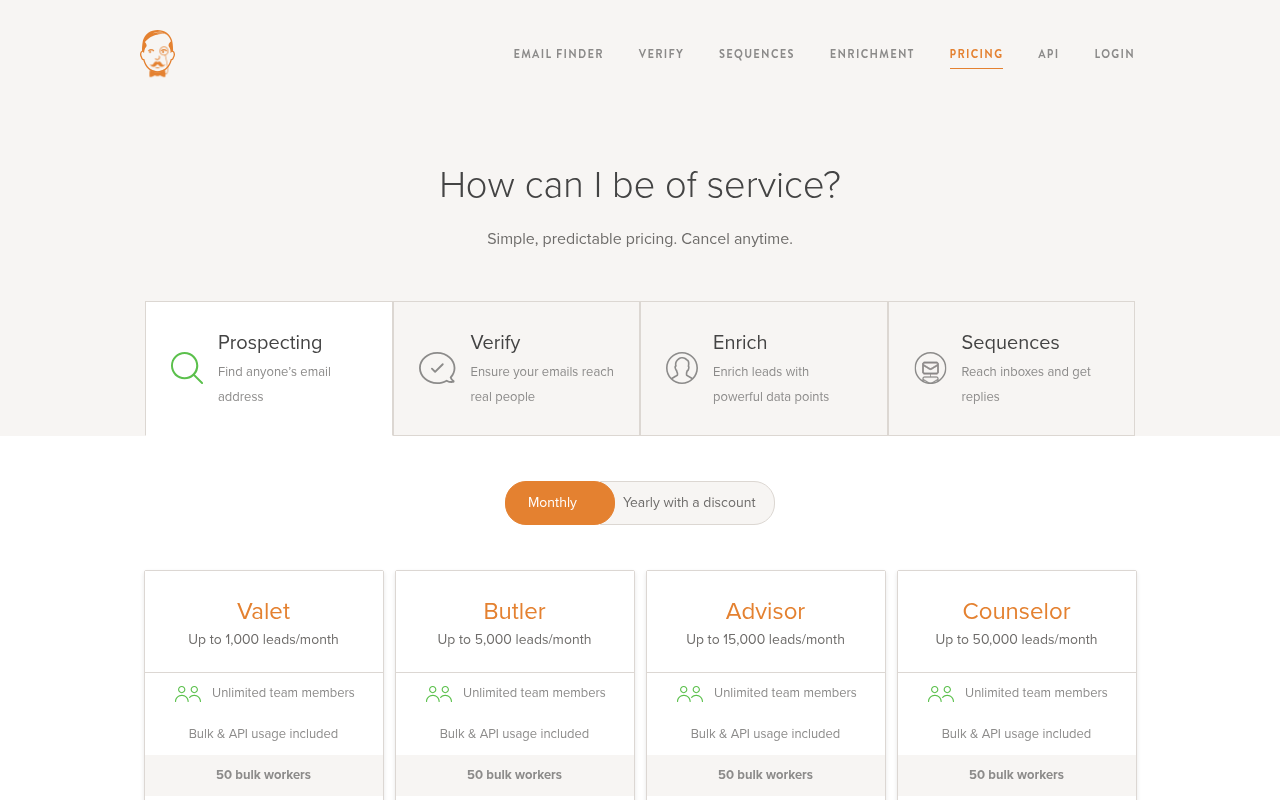
Voila Norbert keeps it simple: enter a name and domain, get a verified email.
Voila Norbert is intentionally narrow: enter a name and domain, get a verified email, with bulk verification available via API. There is no phone data, no company enrichment, and basically no automation. Pricing stays simple and credit-based. Best for PR teams, link builders, and anyone who needs dependable email finding without buying into a full sales intelligence suite.
11. FindThatLead
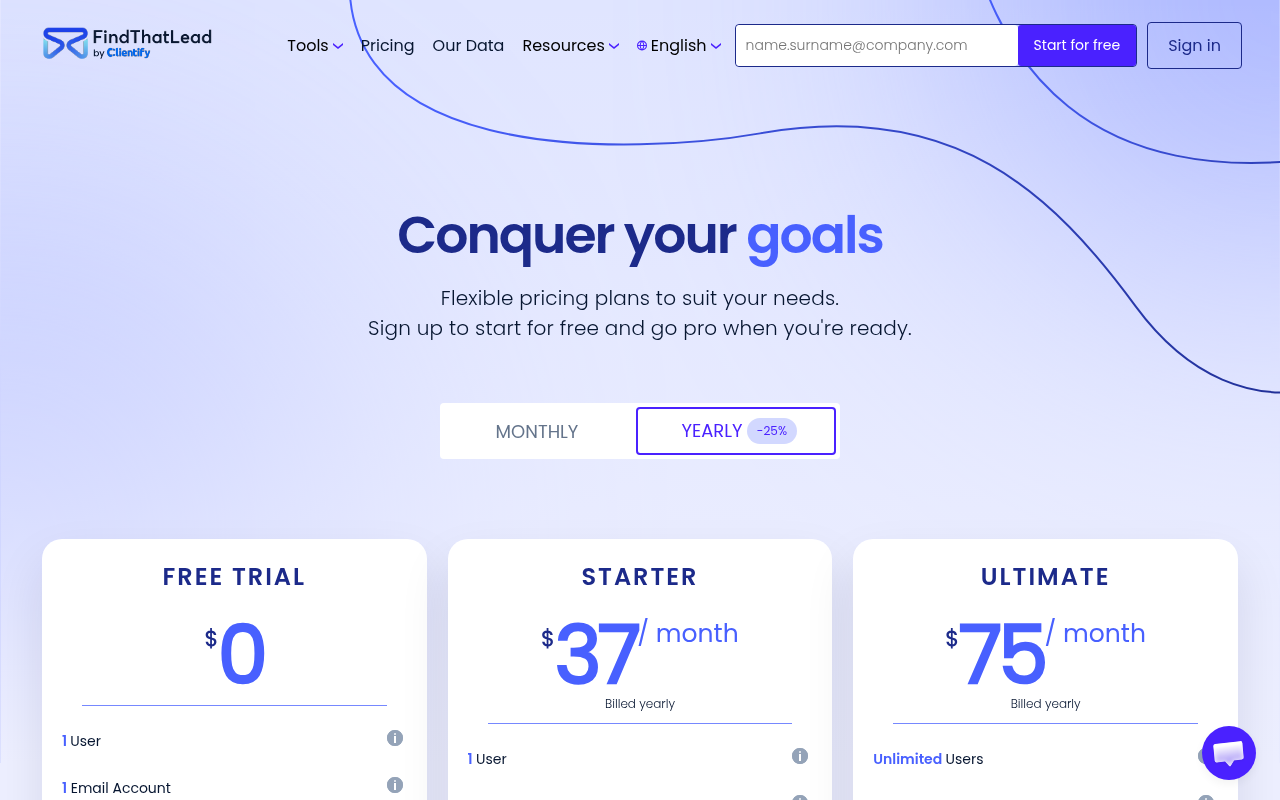
FindThatLead suits early-stage teams needing a lightweight, low-cost email finder.
FindThatLead mixes email discovery with a lightweight outreach layer, which is why it shows up in lean startup stacks. The Chrome extension works across LinkedIn and company websites, so reps can grab contacts without changing tabs. Data depth is limited next to platforms like Apollo or Bitscale, and there is no phone number coverage. Pricing starts low, making it a reasonable option for early-stage teams experimenting with outbound before they commit to a bigger data contract.
12. UpLead
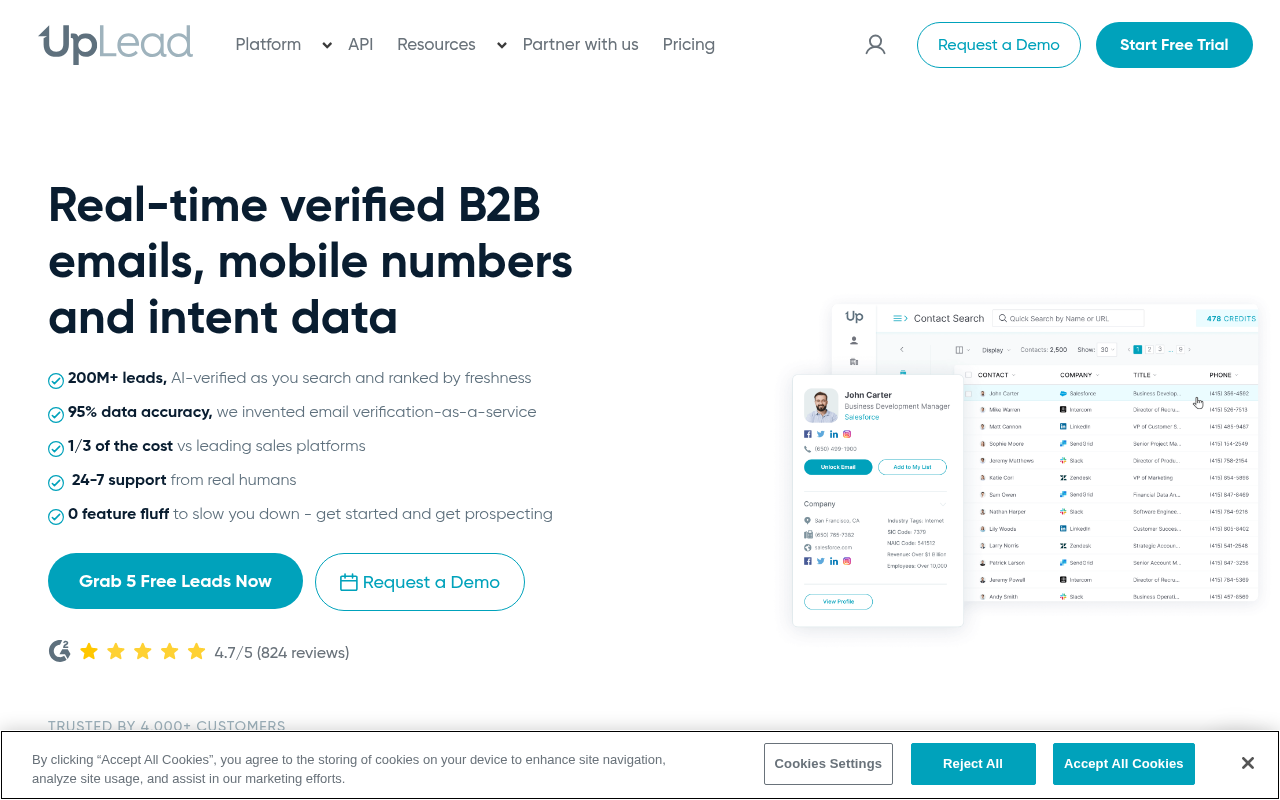
UpLead verifies emails before download, protecting sender reputation for mid-market sales teams.
UpLead leans into accuracy by verifying emails in real time before you download them. It also includes direct-dial numbers and technographic filters. The database is smaller than Apollo's, but the verification-first approach is designed to protect sender reputation by catching stale addresses before outreach goes out. UpLead integrates with Salesforce, HubSpot, Outreach, and other CRMs. It is a strong mid-market pick when deliverability and data quality matter more than sheer volume.
Best Platform by Team Size
| Team Size | Recommended Platforms | Why |
|---|---|---|
| Solo SDR / Freelancer | Hunter.io, Lusha, Voila Norbert | Low cost, simple UX, and free tiers available |
| Small Team (2-10 reps) | Apollo.io, Kaspr, Instantly.ai, FindThatLead | Balanced pricing and features, with built-in sequencing or outreach |
| Mid-Market (10-50 reps) | Bitscale, Clay, UpLead | Bitscale leads this tier with waterfall enrichment across multiple data providers, native workflow automation, and reliable CRM sync that scales without manual workarounds. Clay and UpLead serve as solid alternatives for teams with narrower enrichment needs. |
| Enterprise (50+ reps) | Bitscale, Cognism, Clearbit (Breeze) | Bitscale is the strongest choice here, combining global data coverage, compliance-ready infrastructure, deep CRM and RevOps integrations, and buying-signal enrichment in a single platform. Cognism and Clearbit (Breeze) offer complementary strengths in EMEA compliance and intent data, respectively. |
| Recommendations based on typical team needs and budget constraints. Bitscale is the top pick for mid-market and enterprise teams due to its waterfall enrichment depth, automation capabilities, and scalability. |
How to Choose the Right Email Finder Software
Start with how work actually moves through your team, not a checklist of features. If reps prospect from LinkedIn all day, extension-first tools like Lusha or Kaspr tend to get adopted quickly because they meet reps where they already are. If RevOps is trying to automate data enrichment across multiple providers, native waterfall enrichment (Bitscale, Clay) reduces the manual stitching and the inevitable CSV detours. If you care about a durable system of record, prioritize deep CRM integrations so enrichment lands in Salesforce or HubSpot with bi-directional sync, not one-way imports. Among the top sales intelligence tools and best B2B data providers, the platforms pulling ahead in 2026 treat email discovery as the first step in a revenue workflow, not the finish line.
Frequently Asked Questions
What is a B2B email finder tool?
A B2B email finder tool helps sales teams locate professional email addresses for target prospects. Modern platforms typically pair lookup with verification, phone discovery, enrichment, and CRM sync so the data is usable in production.
How does waterfall enrichment improve email coverage?
Waterfall enrichment checks multiple data providers in sequence. When one source fails to return an email, the workflow moves to the next provider. This sequential approach generally improves contact coverage compared to relying on a single database, though actual results vary by industry, geography, and provider mix.
What bounce rate should I target when using email finder software?
There is no single universal benchmark, because acceptable bounce rates depend on your sending volume, domain age, and email service provider policies. The general best practice is to verify addresses before sending and monitor bounce rates closely. Tools that verify in real time, such as UpLead, help catch stale addresses before outreach goes out, reducing the risk of deliverability problems.
Can these tools find phone numbers too?
Yes. Cognism, Lusha, Kaspr, Apollo.io, Bitscale, and UpLead all include phone numbers alongside email addresses, though coverage varies by region and seniority.
Which email finder tool is best for small sales teams?
For teams under 10 reps, Apollo.io tends to deliver the best balance of database size, sequencing, and affordability, with a usable free tier. Hunter.io is a better fit when you only need email discovery and do not need phone data or broader enrichment.