Bitscale vs ZoomInfo: GTM Workflow System vs Data Platform
Outbound teams today aren’t just comparing tools-they’re rethinking how data fits into their go-to-market motion. As sales workflows become more automated and personalization-driven, the difference between a traditional sales intelligence database and a modern enrichment system becomes increasingly important. This is why comparisons between Bitscale and ZoomInfo come up so often in 2026. While both platforms help teams find and enrich B2B data, they approach the problem from very different starting points - one focused on centralized data access, the other on flexible data workflows.
Table of contents
- Executive Summary
- The real context behind this comparison
- ZoomInfo: built around a centralized B2B database
- Bitscale: designed as a GTM data workflow layer
- How data coverage differs in practice
- Phone numbers, emails, and data accuracy
- Intent signals and contextual data
- Automation and the role of AI
- Pricing philosophy and buying experience
- The bottom line
- ZoomInfo vs Bitscale comparison
- Frequently asked questions
TL;DR
ZoomInfo is a database-first sales intelligence platform designed for scale, offering broad US-centric B2B coverage through a centralized dataset.
Bitscale is a workflow-first GTM data and enrichment system that helps teams build, enrich, and activate lead data using multiple sources, waterfalls, and AI agents.
Teams that prioritize volume and standardization often lean toward ZoomInfo.
Teams that value flexibility, customization, and automation often prefer Bitscale.
The right choice depends less on feature checklists and more on how your team creates, enriches, and uses data in outbound workflows.
The Real Context Behind This Comparison
For a long time, outbound sales was simple:buy a database → export contacts → upload to CRM → start calling.
That model worked when volume mattered more than relevance.
In 2026, outbound looks very different. Teams are expected to:
- Work with cleaner, fresher data
- Enrich prospects with context and intent
- Personalize outreach at scale
- Operate with leaner budgets and fewer tools
This shift is exactly why comparisons between ZoomInfo and Bitscale have become common. They solve overlapping problems - but in fundamentally different ways.
ZoomInfo: Built Around a Centralized B2B Database
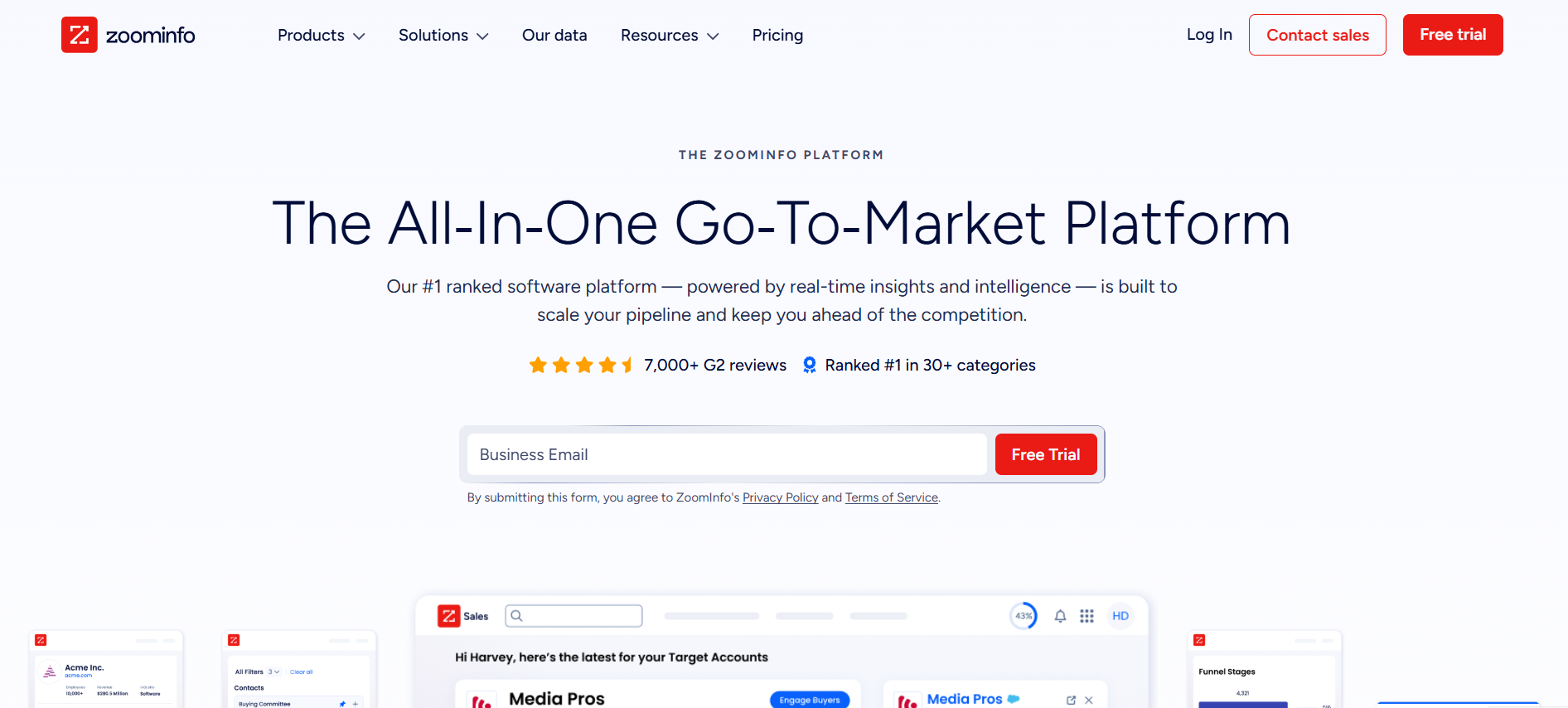
ZoomInfo’s strength comes from its proprietary B2B database. It aggregates company and contact data at massive scale and packages it as a sales intelligence product.
When teams use ZoomInfo, they’re typically:
- Searching ZoomInfo’s database
- Filtering by firmographics, role, seniority, or intent
- Exporting contacts into CRM or outbound tools
This makes ZoomInfo a strong fit for organizations that value:
- Large volumes of contacts
- Predictable, repeatable prospecting
- Standardized sales motions
The tradeoff is flexibility. Because ZoomInfo is database-first, teams largely operate within the constraints of:
- ZoomInfo’s data model
- ZoomInfo’s refresh cycles
- ZoomInfo’s pricing structure
For many mature sales orgs, that’s acceptable. For others, it becomes limiting over time.
Bitscale: Designed as a GTM Data Workflow Layer
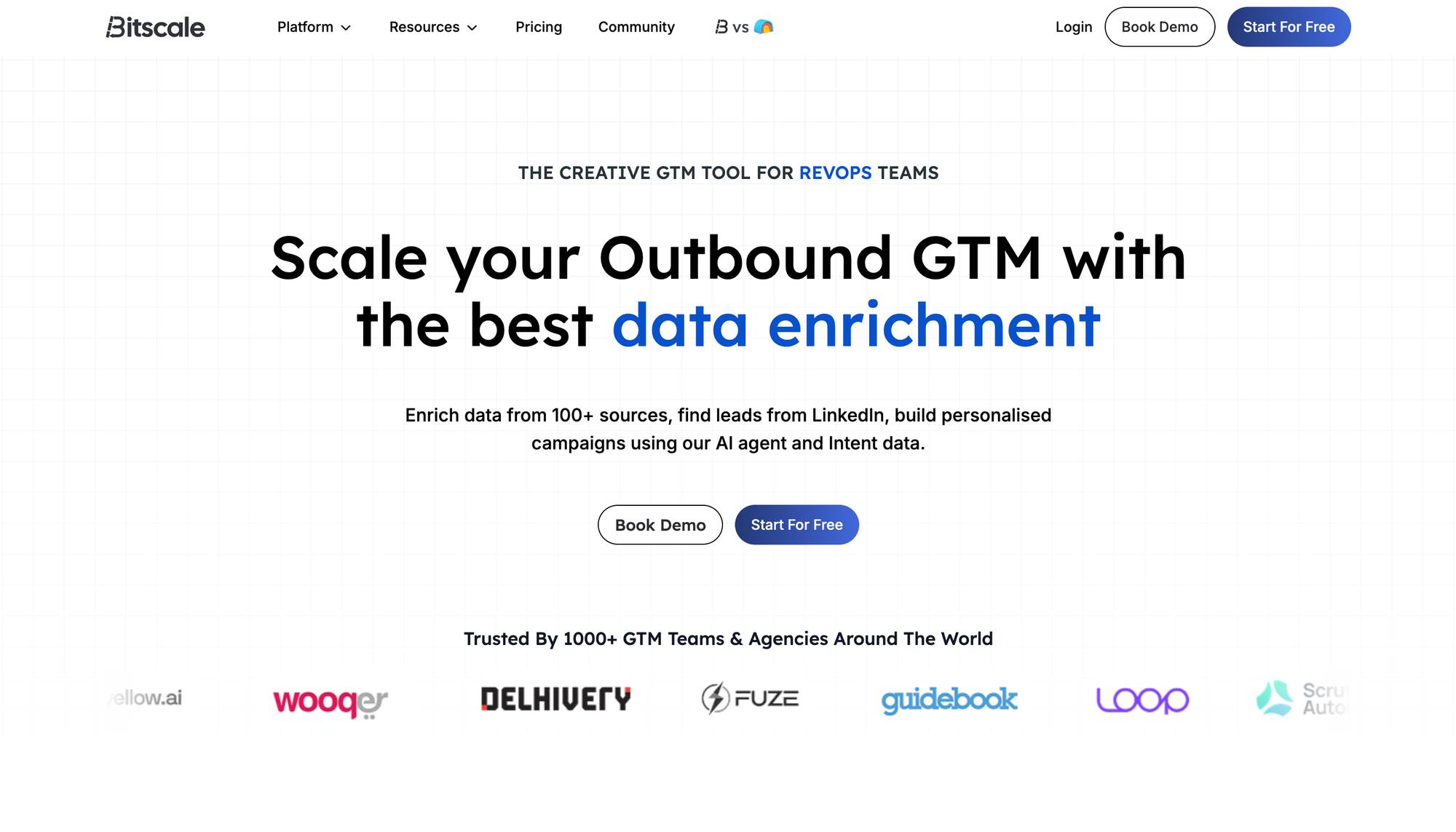
Bitscale approaches the same problem from a different angle.
Instead of asking “Which contacts can we export?”, Bitscale asks: “What data does your GTM motion actually need - and how do we build it?”
Bitscale works as a data orchestration and enrichment system, not a static database. Teams use it to:
- Source leads from multiple inputs
- Enrich records using 20+ data providers
- Apply waterfall logic to improve phone and email accuracy
- Add custom data points researched by AI agents
- Push clean, enriched data directly into CRM or outbound tools
This makes Bitscale particularly useful for teams that:
- Operate across multiple ICPs
- Need non-standard enrichment (signals, triggers, niche attributes)
- Want control over how data is created and verified
The tradeoff is that Bitscale is not a “one-click export” tool. Its value compounds when teams actively design workflows around it.
How Data Coverage Differs in Practice
ZoomInfo’s coverage is strongest where its database is deepest-most notably in the US B2B market. Company profiles are mature, and contact availability is generally high for common roles.
However, coverage outside core markets or niche segments can vary, and teams are limited to the fields ZoomInfo chooses to expose.
Bitscale’s coverage is not tied to a single dataset. Instead, it expands based on:
- Which providers are used in a waterfall
- Which enrichment fields matter to the GTM strategy
- Whether AI agents are deployed to research live web data
In practice, this means ZoomInfo is consistent, while Bitscale is adaptable.
Phone Numbers, Emails, and Data Accuracy
ZoomInfo is often associated with large volumes of direct dials and emails. For high-level outbound motions where scale is the priority, this works well. Accuracy, however, can vary by persona, seniority, and industry.
Bitscale emphasizes verification through redundancy. Its waterfall approach checks multiple sources in sequence, stopping once a verified phone number or email is found. This reduces dependency on any single provider and tends to perform better for:
- Hard-to-reach roles
- Smaller companies
- Non-standard ICPs
Rather than maximizing volume, Bitscale focuses on confidence per record.
Intent Signals and Contextual Data
ZoomInfo includes native intent data, which can help identify accounts showing buying signals. This data works best when used within ZoomInfo’s own ecosystem and workflows.
Bitscale treats intent as one of many possible enrichment layers. Teams can enrich records with:
- Third-party intent sources
- Hiring and growth signals
- News and funding updates
- Custom triggers scraped from the web using AI agents
This approach requires more setup, but it allows intent data to be tailored to very specific GTM hypotheses rather than generic “in-market” labels.
Automation and the Role of AI
ZoomInfo remains primarily a data access tool. While it integrates with CRMs and sales tools, the core experience still revolves around exporting and syncing records.
Bitscale is designed for automation-first outbound. AI agents can:
- Research company websites
- Extract niche datapoints
- Feed personalization variables into outbound copy
- Continuously refresh enrichment without manual exports
This difference becomes more pronounced as teams try to replace manual SDR research with systems.
Pricing Philosophy and Buying Experience
ZoomInfo typically operates on annual, quote-based contracts. Pricing depends on seats, credits, and add-ons, making it more suitable for teams with predictable usage and budgets.
Bitscale uses transparent, credit-based pricing, allowing teams to:
- Start small
- Experiment with workflows
- Scale usage based on output rather than seats
Neither model is inherently better - it depends on whether flexibility or predictability matters more.
The Bottom Line
This comparison isn’t about which tool is “better.”
It’s about how your organization thinks about data.
If your team prefers pulling from a large, centralized database with minimal configuration, ZoomInfo aligns well.
If your team treats data as something to be built, enriched, validated, and activated through workflows, Bitscale is purpose-built for that reality.
In 2026, as outbound becomes more contextual and automation-driven, that distinction matters more than any feature checklist ever could.
ZoomInfo v/s Bitscale Comparison
Frequently Asked Questions
1. Is Bitscale a direct replacement for ZoomInfo?
Not exactly. ZoomInfo is primarily a database-first sales intelligence tool, while Bitscale functions as a workflow and enrichment system. Some teams replace ZoomInfo entirely with Bitscale, while others use Bitscale to reduce dependency on large, single-source databases.
2. What is the biggest difference between Bitscale and ZoomInfo?
The biggest difference is how data is created and used. ZoomInfo provides access to a centralized dataset. Bitscale allows teams to build their own data using multiple providers, enrichment waterfalls, AI agents, and custom workflows tailored to their GTM motion.
3. Which tool is better for outbound teams doing personalized outreach?
Bitscale is generally better suited for teams that rely on context-rich, personalized outbound, because it supports custom enrichment fields, real-time signals, and AI-assisted research. ZoomInfo is better for teams that prioritize speed and volume over deep personalization.
4. How do phone numbers and emails compare between Bitscale and ZoomInfo?
ZoomInfo offers large volumes of contact data from its internal database. Bitscale uses a waterfall enrichment approach, checking multiple sources sequentially to find verified phone numbers and emails. This often results in higher confidence per contact, especially for niche or hard-to-reach roles.
5. Does ZoomInfo or Bitscale provide better intent data?
ZoomInfo includes native intent data within its platform, which works best when used alongside its contact exports. Bitscale supports intent as an enrichment layer and allows teams to combine multiple intent sources, hiring signals, news triggers, and AI-researched signals based on their GTM strategy.
6. How do pricing models differ between Bitscale and ZoomInfo?
ZoomInfo typically operates on annual, quote-based contracts with pricing influenced by seats, credits, and add-ons. Bitscale uses transparent, credit-based pricing, allowing teams to scale usage based on enrichment and workflows rather than fixed licenses.
7. Which tool is more flexible for RevOps and GTM experimentation?
Bitscale is generally more flexible for RevOps teams because workflows, enrichment logic, and data fields can be customized without being locked into a single data model. ZoomInfo is more structured and works best in standardized sales environments.
8. Can I enrich existing CRM data with both tools?
Yes. ZoomInfo allows enrichment through its integrations and exports. Bitscale is designed specifically for bulk enrichment of existing CRM or spreadsheet data, using multiple providers and custom logic before pushing records back into CRM systems.
9. Which tool is better for startups or lean teams?
Lean teams and startups often prefer Bitscale because of its usage-based pricing and ability to replace multiple tools in a GTM stack. ZoomInfo is more commonly adopted by mid-market and enterprise teams with stable budgets and established sales processes.
10. When does it make sense to keep ZoomInfo and add Bitscale?
Some teams keep ZoomInfo for top-of-funnel discovery while using Bitscale for enrichment, validation, personalization, and automation. This setup makes sense when teams want to maximize data quality without relying entirely on a single provider.