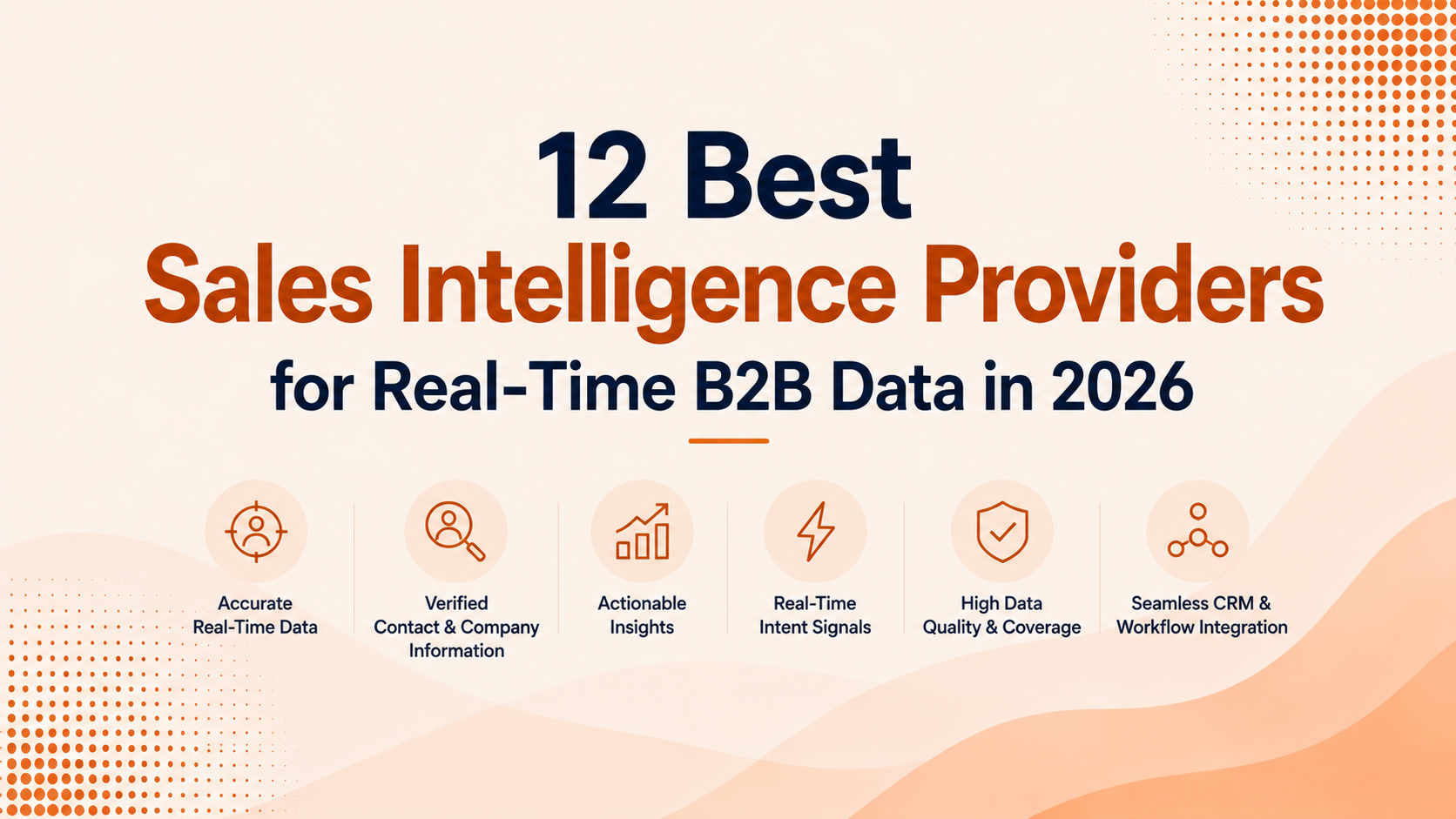
12 Best Sales Intelligence Providers for Real-Time B2B Data in 2026
Sales intelligence providers compared: data freshness, enrichment depth, intent signals, automation, and pricing so you can pick the right fit for your GTM motion.
For B2B revenue teams, picking a sales intelligence provider has moved from "nice to have" to "this will make or break our quarter." The tool you choose shows up everywhere: pipeline quality, rep throughput, and how much anyone trusts the forecast.Poor-quality CRM data continues to be one of the biggest obstacles for modern B2B revenue teams. Inaccurate or outdated records affect prospecting, forecasting, personalization, and pipeline quality across the entire go-to-market process, which then cascades into sloppy targeting and shaky projections. The vendors below all claim to fix it, but they do it with very different trade-offs - and those differences are where the decision gets real.
This buyer's guide breaks down 12 sales intelligence platforms across data freshness, enrichment depth, automation, AI readiness, and pricing. There is no single "best" product across every GTM motion, so the goal here is fit: which provider matches your team, your stack, and the way you generate pipeline. If you run outbound at scale, lean into account-based selling, or want one system that combines intelligence with execution, the recommendations below are meant to be unambiguous.
What Sales Intelligence Providers Actually Do
Sales intelligence software gathers and delivers information on prospects, customers, competitors, and market conditions so sales teams can spot opportunities and close deals more effectively (IBM, 2026). On the ground, that looks like firmographics, technographics, org charts, verified contact details, and buying signals consolidated into a layer that lives inside (or alongside) your CRM. The stronger platforms do more than hand you a database: they run enrichment automatically, apply intent-based scoring, and kick off outbound sequences without the ritual of exporting CSVs and hoping nothing breaks.
Why Real-Time Data Quality Is the Deciding Factor
B2B data rots faster than most teams plan for: research puts annual decay at 25 to 30 percent as people change jobs, companies merge, and tech stacks churn (Cleanlist, 2026). By 2026, that decay is more than an operational headache. B2B data now feeds AI agents, scoring models, and automated go-to-market workflows, which turns freshness into a competitive edge (Coresignal, 2026). Bad records do not just burn rep hours; they contaminate the models driving lead scoring, personalization, and forecasting. That is why the distinction between real-time vs. batch data enrichment should be part of any serious vendor evaluation.
Evaluation Criteria for Sales Intelligence Platforms
Each provider below is judged on six dimensions. How you weight them should reflect your team size, sales motion, and how mature your RevOps stack is.
- Data freshness and contact accuracy: How frequently is the database refreshed? How is data verified? What bounce and connection rates do customers report?
- Enrichment quality and depth: Does enrichment stop at email and phone, or extend into technographics, funding rounds, hiring trends, and org-chart mapping? For background, see what is data enrichment.
- Buying signals and intent data: Can the platform surface accounts showing intent via job postings, tech installs, web visits, or content consumption?
- CRM synchronization and workflow automation: Is sync truly bidirectional with Salesforce, HubSpot, or other CRMs, or does it rely on manual steps? Can you run multi-step workflows?
- API capabilities and AI readiness: Is the API strong enough for custom integrations? Can enriched outputs feed AI agents or LLM-driven prospecting workflows?
- Pricing transparency and scalability: Are credits, seat limits, and overages spelled out? Does the cost curve stay predictable as headcount grows?
1. Bitscale
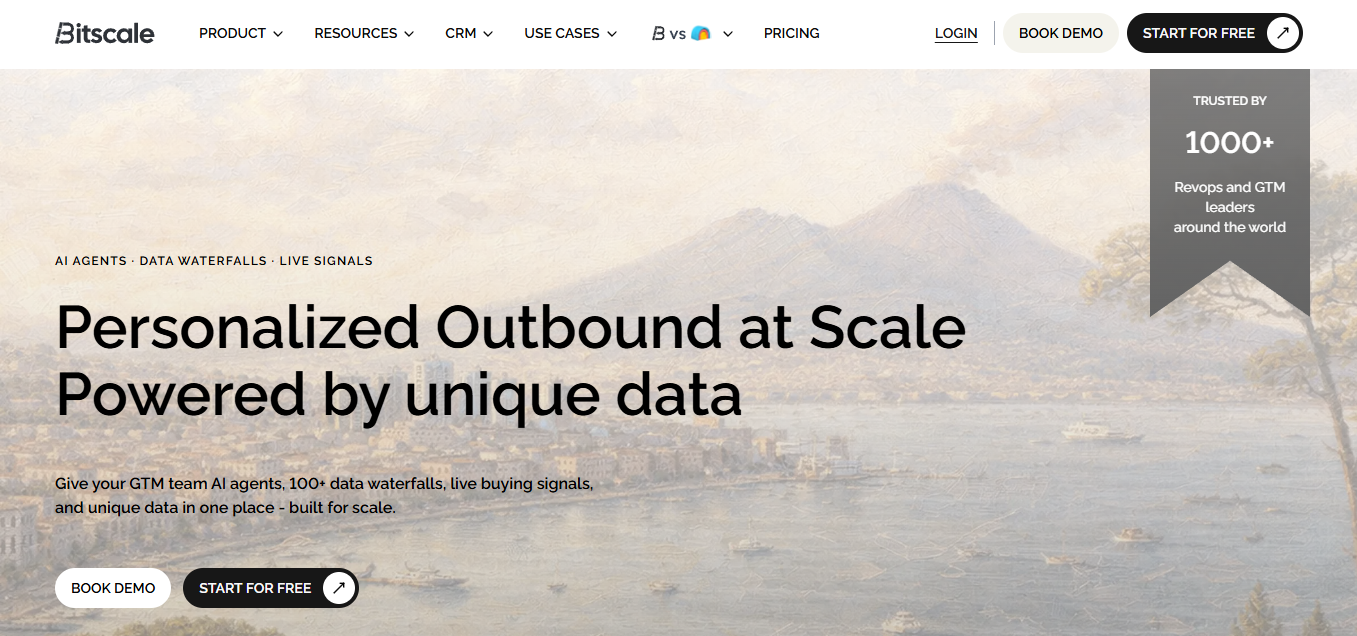
Bitscale combines enrichment, workflow automation, and AI-powered execution in one platform.
Bitscale frames itself as a modern GTM platform, not just a contact database. In one workspace it combines B2B lead and account list building, data enrichment, work email and phone lookup, AI-based prospect research, ready-made workflows, CRM sync, and intent signals. The workflow builder is the point: teams can string together enrichment steps, scoring rules, and outbound triggers without bouncing between tools.
Bitscale's edge is how directly it supports AI-driven execution. Enrichment is structured for downstream AI agents, and templates shorten the distance from "we have data" to "we are taking action." Pricing is published and credit-based - a welcome change in a category where "talk to sales" is still the default. The trade-off is coverage: Bitscale's native database is newer and smaller than legacy players like ZoomInfo, so teams that need massive pre-built volume should validate ICP coverage before committing. Explore the full sales intelligence solution from Bitscale to see how it fits your stack.
Best for: Teams that want enrichment, workflow automation, and AI execution in one platform instead of stitching together multiple point solutions.
2. Apollo.io
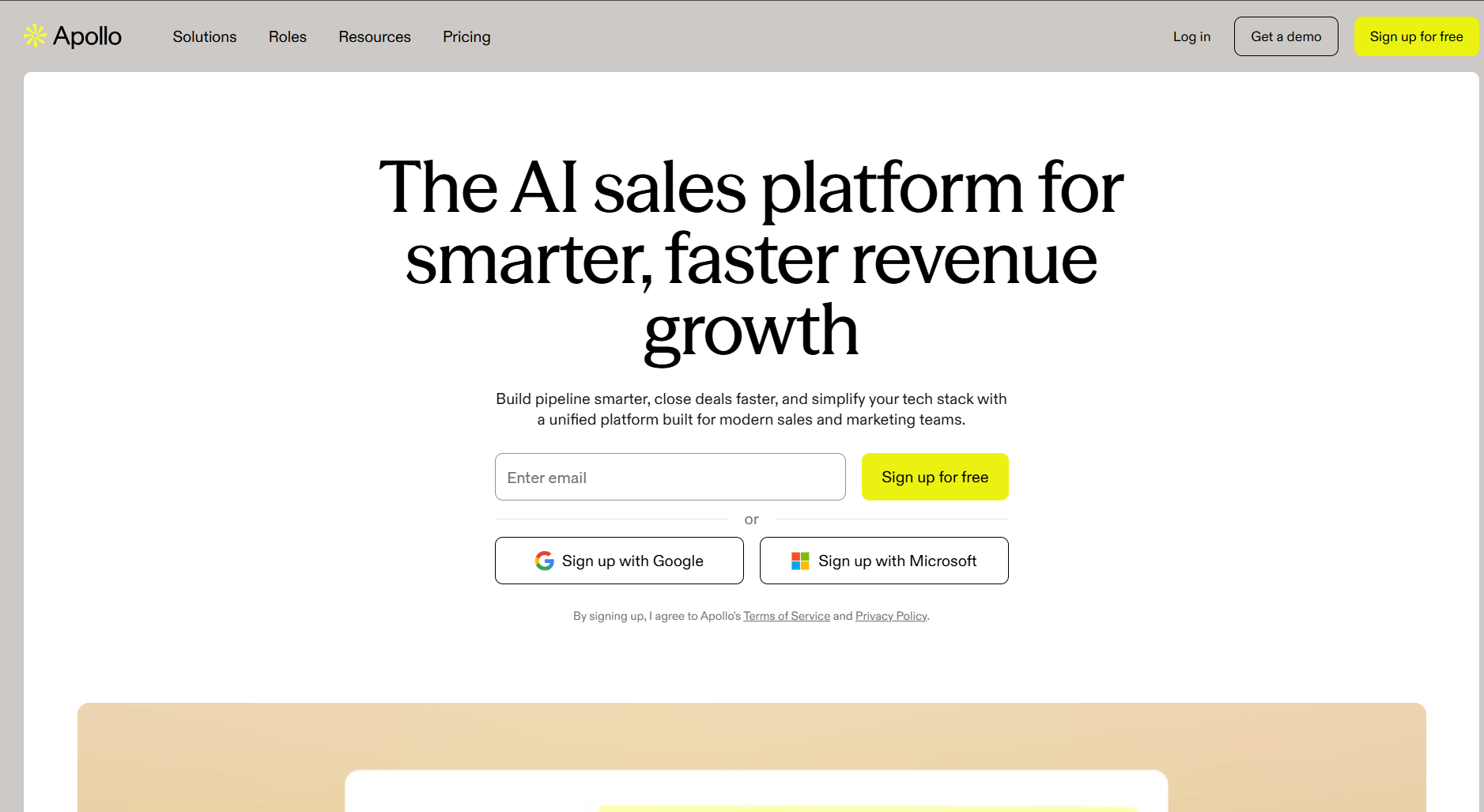
Apollo.io offers a large contact database with built-in sequencing.
Apollo.io is a default pick for SMB and mid-market outbound, helped along by a generous free tier and clearly posted pricing. The company claims more than 270 million contacts and bundles sequencing, a dialer, and light intent signals. Prospecting is quick via the Chrome extension, and the Salesforce and HubSpot integrations are well-worn. The main constraint is accuracy variance, especially for phone numbers outside North America, and the automation layer is not as flexible as dedicated orchestration products. Apollo is a strong fit when you want high-volume outbound plus built-in sequencing without paying for a separate engagement platform.
3. Cognism
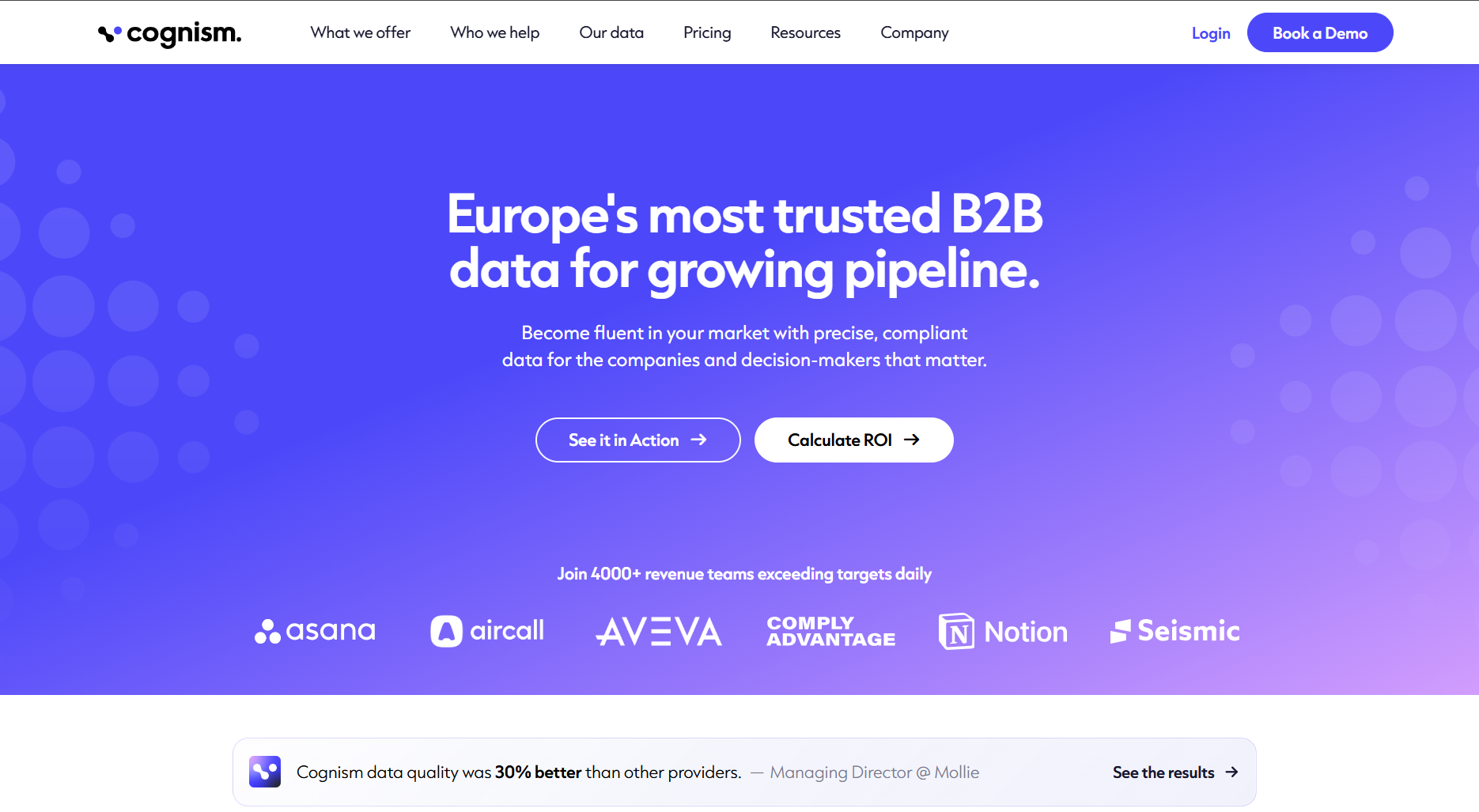
Cognism is known for phone-verified mobile numbers and GDPR compliance.
Cognism leads with Diamond Data: phone-verified mobile numbers the company says are manually checked. For call-heavy teams - especially in EMEA, where GDPR compliance is table stakes - that is a meaningful differentiator. Cognism also includes Bombora-powered intent data and integrates with major CRMs and outbound tools. The catch is budgeting: pricing is not listed per seat. And while the platform covers the basics well, enrichment beyond phone and email (technographics, org charts) is less detailed than some alternatives. Cognism is the clearest choice for European-focused teams that value verified mobiles and compliance over workflow automation.
4. Clay
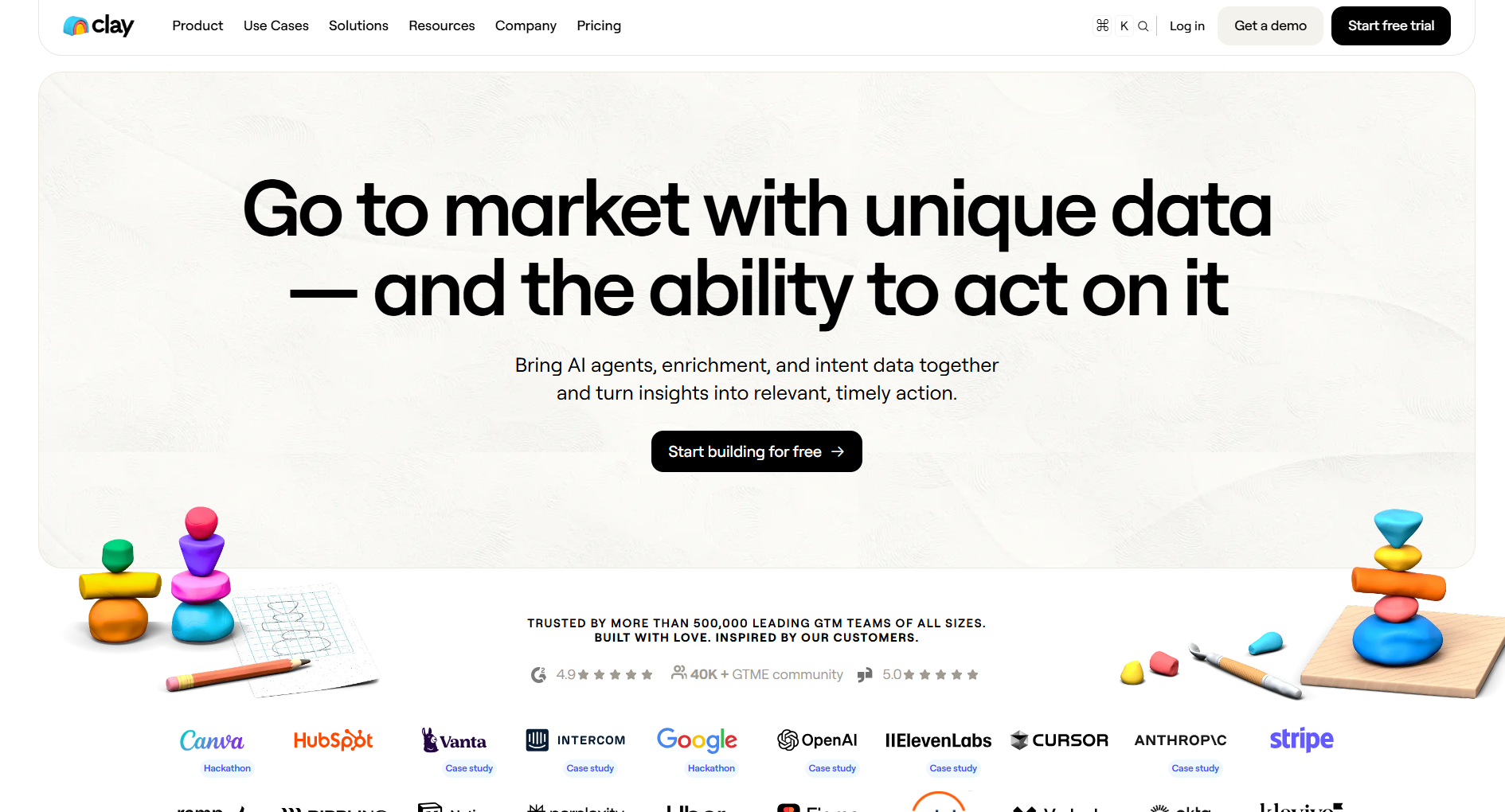
Clay's spreadsheet-like interface lets users chain 100+ data providers.
Clay is not trying to be your one database. It is an orchestration layer that connects to 100+ enrichment sources - including Clearbit, Apollo, and People Data Labs - through a spreadsheet-style interface. The core pattern is the enrichment waterfall: if Provider A cannot find an email, fall back to Provider B, then C. In practice, that approach often beats relying on any single vendor for match rate. Clay also layers in AI features like GPT-powered research columns that can generate personalized snippets from enriched fields. The downside is operational: there is a learning curve, and costs can climb because you are paying Clay credits plus the underlying provider fees. Clay fits RevOps teams that are comfortable building bespoke workflows and want maximum flexibility.
5. Lusha
Lusha focuses on simplicity and fast contact lookups.
Lusha wins on speed and simplicity. The Chrome extension can surface direct dials and emails from LinkedIn profiles in seconds, and the web app supports list-building with firmographic filters. Direct-dial coverage in the US is competitive, and Lusha has added intent data and job-change alerts. Where it stops short is orchestration: there is no built-in sequencing and no multi-step enrichment logic. Treat it like a high-utility lookup tool, not a full sales intelligence suite. For individual reps or small teams that want fast contact enrichment without the overhead of a broader platform, Lusha holds up.
6. Instantly.ai
Instantly.ai combines a 160M+ contact database with cold email infrastructure under one roof.
Instantly.ai originally made its name on cold email deliverability, with unlimited sending accounts and automated warmup. It has since bolted on a B2B lead database (Instantly B2B Lead Finder) that it says includes 160 million+ contacts. Putting prospecting and sending under one roof - at affordable package pricing - is why agencies and early-stage startups gravitate to it for high-volume outbound. The trade-off is the data layer: compared with dedicated B2B data providers, enrichment is thinner and there is no strong intent or buying-signal layer. Instantly makes the most sense when deliverability and volume are the bottleneck, not data depth.
7. ZoomInfo
ZoomInfo remains the largest B2B contact and company database.
ZoomInfo is the incumbent, and it still sets the reference point for scale. The platform covers 100 million+ business professionals and 14 million companies, with deep firmographics, technographics, and intent data. Enterprise staples like territory management, advanced org charts, and Salesforce-native integrations are mature, and ZoomInfo has expanded into adjacent categories with website visitor identification (FormComplete) and conversation intelligence (Chorus). The downsides are familiar: high cost and rigid contracts. Annual agreements often start in the tens of thousands, and smaller teams can find it overbuilt for what they actually need. ZoomInfo fits enterprise revenue orgs with dedicated RevOps capacity and budget to match.
8. Clearbit (now part of HubSpot)
Clearbit's enrichment APIs are now integrated into HubSpot's ecosystem.
Clearbit helped popularize API-first enrichment and was acquired by HubSpot in late 2023. The Enrichment API is still one of the cleanest ways to append firmographic and technographic fields to inbound leads in real time. For HubSpot customers, the experience is frictionless. The post-acquisition constraint is focus: Clearbit's roadmap now prioritizes HubSpot's ecosystem. Salesforce and other CRM users can still access the API, but the tightest integrations and newest features tend to land inside HubSpot first. If your team runs on HubSpot and cares about real-time form enrichment and lead scoring, Clearbit is the obvious fit.
9. Demandbase
Demandbase unifies account-level intent and advertising for enterprise ABM motions.
Demandbase is designed for account-based marketing (ABM) and account-based sales, and it behaves like it. The product is strongest at account-level intent, advertising, and engagement analytics - not individual contact lookup. Demandbase identifies anonymous website visitors at the account level, scores accounts based on intent, and coordinates multi-channel ABM campaigns. Pricing sits in enterprise territory and is not listed per seat. If your primary need is a giant contact database for outbound, Demandbase is the wrong tool. If your motion centers on a defined set of target accounts and you need marketing and sales to operate from the same account-intelligence layer, it is a strong option.
10. Leadfeeder (now Dealfront)
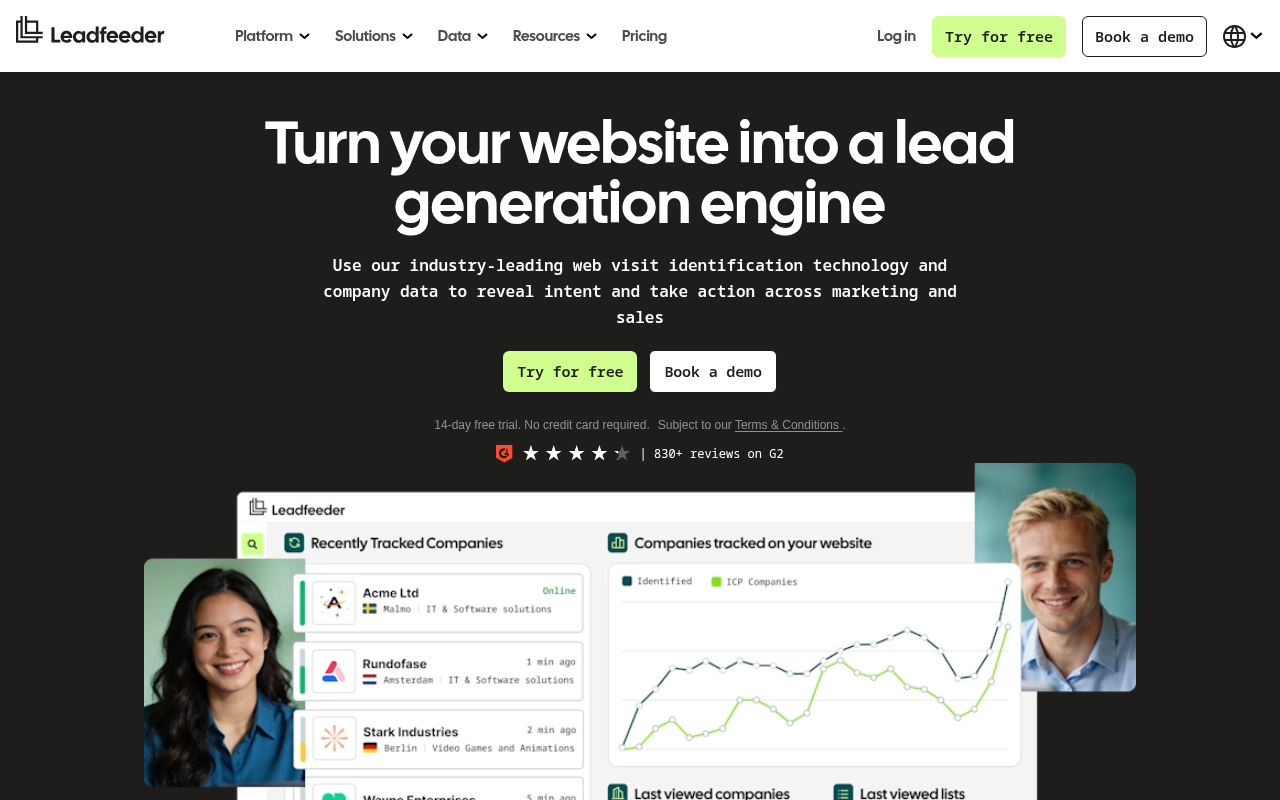
Now part of Dealfront, Leadfeeder turns anonymous site traffic into a named account list.
Leadfeeder, now under the Dealfront umbrella, focuses on one job: identifying the companies visiting your site using reverse IP lookup and first-party tracking. It does not natively provide individual contact details, but it can integrate with enrichment providers to append decision-maker contacts. The pricing is approachable, including a free tier for low-traffic sites. In most stacks, Leadfeeder complements outbound prospecting tools rather than replacing them. It is a good fit for inbound-heavy teams that want to turn anonymous web traffic into an actionable account list.
11. SalesIntel
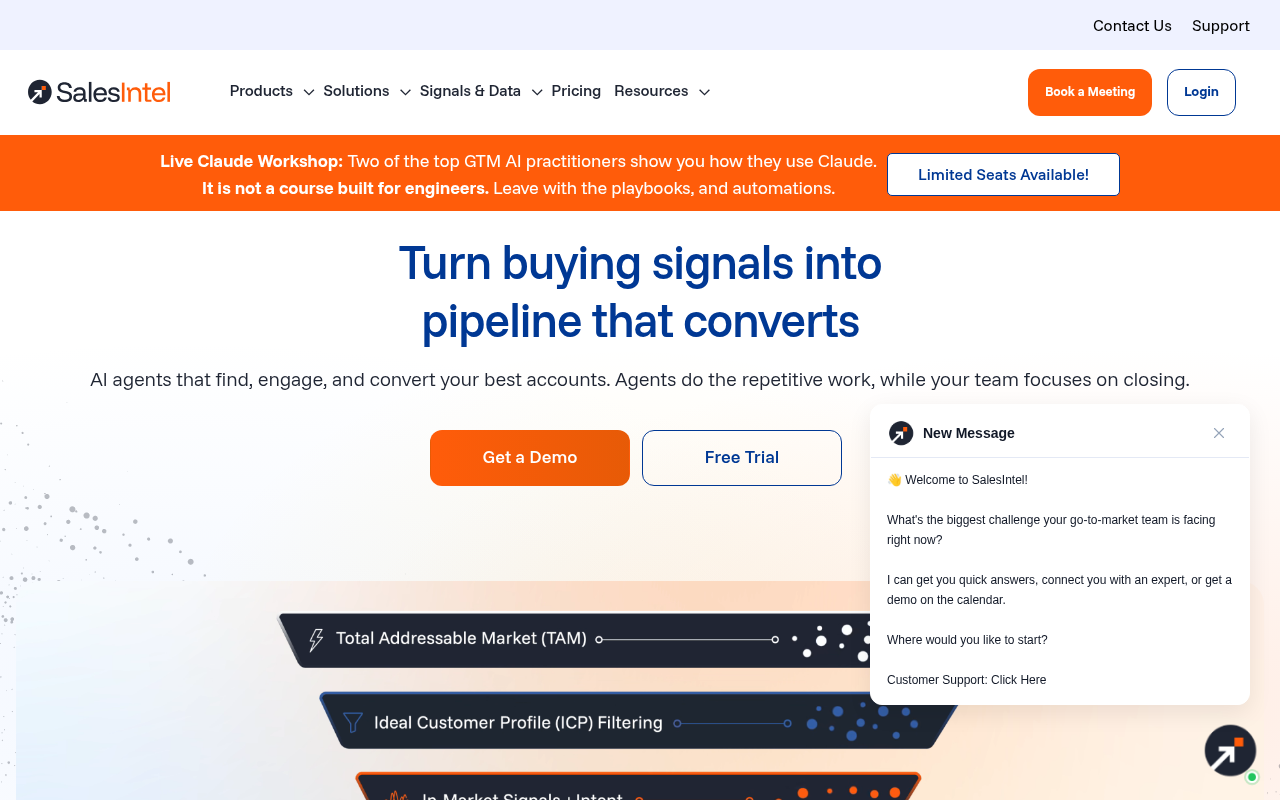
SalesIntel's Research on Demand feature lets teams request contacts missing from its human-verified database.
SalesIntel leans hard into human verification. The company says its research team re-verifies contacts every 90 days, which directly addresses the data-decay problem. It also includes Bombora intent data, technographic filters, and a "Research on Demand" option for requesting contacts that are not yet in the database. Pricing is positioned for the mid-market - typically below ZoomInfo and above Apollo. The trade-off is scale: the database is smaller than the mega-providers, so niche verticals are more likely to run into coverage gaps. SalesIntel fits teams that would rather have fewer records they can trust than a massive list they have to second-guess.
12. UpLead
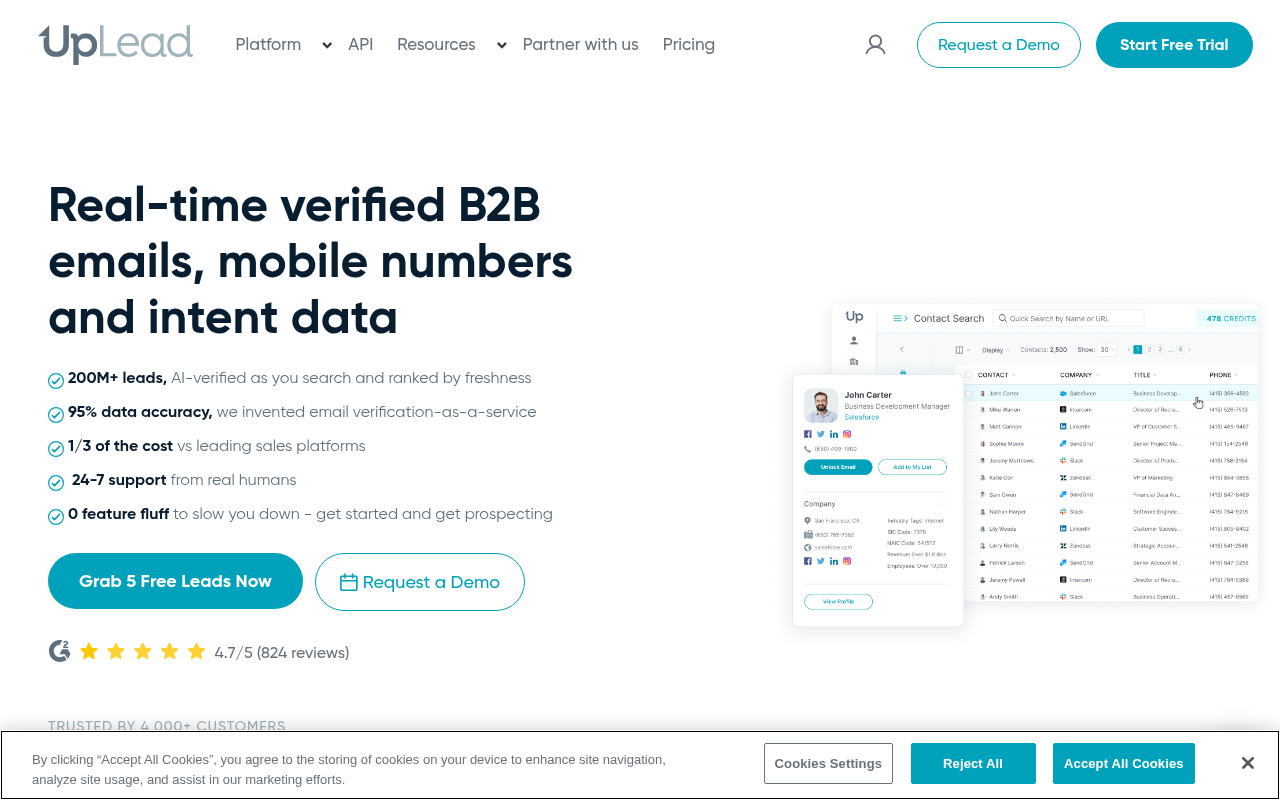
UpLead offers a 95% accuracy guarantee with real-time email verification at export.
UpLead's pitch is straightforward: a 95% data accuracy guarantee, backed by real-time email verification at export. It offers 140 million+ contacts with technographic and firmographic filters. Pricing is simple, credit-based, and starts at tiers that work for small teams. What you do not get is a broader execution layer: no built-in sequencing, no intent data, and no advanced automation. UpLead is best treated as a clean contact database for teams that want reliable emails without enterprise pricing - and already have a separate tool for outreach execution.
Head-to-Head Comparison Table
| Provider | Data Freshness | Contact Accuracy | Enrichment Depth | Buying Signals | Workflow Automation | API / AI Readiness | Pricing Transparency |
|---|---|---|---|---|---|---|---|
| Bitscale | Real-time enrichment | High (multi-source verification) | Deep (firmographic, technographic, intent) | Yes (intent + job changes) | Advanced (pre-built workflows) | Strong API, AI-native | Published, credit-based |
| Apollo.io | Refreshed regularly | Good (strongest in the US) | Moderate | Basic intent signals | Sequencing included | API available | Published, tiered |
| Cognism | Continuous + manual checks | High (Diamond Data mobiles) | Moderate | Bombora intent | Limited | API available | Custom quotes |
| Clay | Depends on connected sources | Varies by source | Very deep (100+ sources) | Via integrations | Advanced (waterfall builder) | Strong API | Published, credit + provider fees |
| Lusha | Refreshed regularly | Good (direct dials) | Basic to moderate | Job-change alerts | Minimal | API available | Published, credit-based |
| Instantly.ai | Updated periodically | Moderate | Basic | No native intent | Email-focused automation | API available | Published, affordable tiers |
| ZoomInfo | Continuous | High | Very deep | Advanced intent + web visitor ID | Advanced (workflows + triggers) | Enterprise API | Custom quotes, high floor |
| Clearbit | Real-time API enrichment | High | Deep (firmographic, technographic) | Limited native | Via HubSpot workflows | Strong API | Bundled with HubSpot |
| Demandbase | Continuous | Account-level focus | Deep (account intelligence) | Advanced account intent | ABM orchestration | Enterprise API | Custom quotes |
| Leadfeeder | Real-time web visits | Account-level (no contacts natively) | Basic | Website visit signals | Basic alerts + CRM push | API available | Published, freemium |
| SalesIntel | Re-verified every 90 days | High (human-verified) | Moderate | Bombora intent | Limited | API available | Published, mid-market |
| UpLead | Real-time email verification | High (95% guarantee) | Moderate | No native intent | Minimal | API available | Published, credit-based |
| Comparison based on publicly available product information as of mid-2026. |
Best-Fit Recommendations by Team Profile
| Team Profile | Recommended Provider(s) | Why |
|---|---|---|
| SMB outbound team (email-first) | Apollo.io, Instantly.ai | Big databases, sequencing included, low cost to start |
| Mid-market RevOps building custom workflows | Bitscale, Clay | Workflow automation, multi-source enrichment, API-first architecture |
| Enterprise ABM program | Demandbase, ZoomInfo | Account-level intent, deep firmographics, ABM orchestration |
| Cold-calling team targeting EMEA | Cognism | Phone-verified mobiles, GDPR compliance |
| HubSpot-native inbound team | Clearbit, Leadfeeder | Native CRM fit, real-time form enrichment, visitor identification |
| Budget-conscious team needing clean emails | UpLead, Lusha | Strong accuracy, simple credit-based pricing |
| Teams prioritizing AI-powered GTM execution | Bitscale | AI-native workflows, structured enrichment for AI agents, combined intelligence and automation |
| Recommendations reflect typical use cases; always test coverage in your specific ICP before committing. |
How to Choose the Right Sales Intelligence Platform
Start with your GTM motion, not a feature checklist. High-volume outbound teams tend to feel pain first in contact accuracy and sequencing. ABM programs care more about account-level intent and orchestration. If you are investing in AI lead scoring and intent-based prioritization, prioritize providers that output structured fields via API so the data can reliably feed downstream models.
Before you sign anything, ask for a data sample that matches your ICP. Validate match rates against your own CRM records - not a curated demo environment. Push for specifics on sourcing, refresh cadence, and what happens when you blow past credit limits. The best B2B data providers are usually the ones that do not dodge those questions. Then run the total-cost math: a low per-seat tool that needs three add-ons for enrichment, intent, and automation often ends up costing more than a consolidated platform.
Sales intelligence should carry weight across the entire sales cycle: prioritizing the right leads, shaping early personalization, and building the sales data needed to close (Salesforce, 2025). When you evaluate vendors, look for support across that arc, not just top-of-funnel list building. For a wider scan of the category, see our roundup of top sales intelligence tools across segments.
Frequently Asked Questions
What is the difference between sales intelligence providers and CRM platforms?
Sales intelligence providers supply the data layer - contacts, firmographics, intent signals, and enrichment - that feeds your CRM. A CRM like Salesforce or HubSpot is the system of record for relationships and pipeline. Most sales intelligence tools integrate tightly with CRMs, but they are not a replacement for one.
How often does B2B contact data go stale?
Research suggests 25 to 30 percent of B2B data degrades each year as people change roles, companies merge, and technology stacks shift (Cleanlist, 2026). If a database is not continuously refreshed, reliability can drop sharply within 12 months.
Can I use multiple sales intelligence platforms at the same time?
Yes. A common RevOps pattern is waterfall enrichment: query one provider first, then fall back to a second or third when coverage is missing. Platforms like Clay and Bitscale are built to orchestrate that multi-source approach.
What are buying signals and why do they matter for sales prospecting?
Buying signals are observable behaviors or events that suggest an account is actively evaluating a purchase. Examples include hiring for roles tied to your product, repeated visits to your pricing page, or adopting a complementary technology. Providers that surface these signals help reps prioritize in-market accounts instead of working a list blind.
Which sales intelligence platform is best for small teams on a tight budget?
Apollo.io, UpLead, and Instantly.ai all start with accessible pricing and publish credit- or seat-based plans. Apollo.io's free tier is a common entry point. If you also need workflow automation without bolting on multiple tools, Bitscale's credit-based model is worth a look.