12 Best B2B Website Visitor Identification Tools for Revenue Teams in 2026
Website visitor identification tools ranked for B2B revenue teams in 2026. Compare features, CRM fit, workflow automation, and pricing transparency.
A large share of B2B website visitors never submit a form or identify themselves, making it difficult for revenue teams to recognize buying interest using traditional website analytics alone. Website visitor identification has moved past simple IP-to-company lookups and into full-on revenue workflows. The strongest platforms now blend account resolution, contact enrichment, intent signals, CRM sync, AI-driven research, and outbound automation into one motion. They do not just report who showed up. They help you decide who to contact, what to lead with, and when to make the move.
Modern B2B buying journeys often involve extensive independent research and multiple decision-makers before a sales conversation begins. If you wait for inbound form fills, you are showing up late and leaving most interested accounts untouched. This comparison covers 12 visitor identification platforms evaluated on company resolution, enrichment depth, buying signals, CRM integrations, workflow automation, pricing, and fit by team size. Here are the 12 platforms ranked for revenue teams in 2026:
Feature Comparison: All 12 Platforms at a Glance
| Platform | Visitor ID | Contact Enrichment | Buying Signals | CRM Integration | Workflow Automation | Pricing Transparency |
|---|---|---|---|---|---|---|
| Bitscale | Yes (via integrations) | Yes | Yes | Yes | Yes (AI workflows) | Public tiers |
| Clearbit (Breeze) | Yes | Yes | Limited | HubSpot native | HubSpot only | Bundled with HubSpot |
| Demandbase | Yes | Yes | Yes (ABM signals) | Salesforce, HubSpot | Yes | Custom pricing |
| Apollo.io | Limited | Yes | Yes | Salesforce, HubSpot | Yes (sequences) | Freemium + paid tiers |
| Leadfeeder | Yes | Basic | Page-level intent | Salesforce, HubSpot, Pipedrive | Basic filters | Free tier + paid |
| Clay | Via waterfall enrichment | Yes (multi-source) | Limited | Via integrations | Yes (tables + AI) | Usage-based |
| Lusha | Limited | Yes | Prospecting signals | Salesforce, HubSpot | Basic | Freemium + paid |
| Cognism | No | Yes (phone-verified) | Intent (Bombora) | Salesforce, HubSpot | Limited | Custom pricing |
| Albacross | Yes | Basic | Page-level intent | Salesforce, HubSpot | Basic routing | Public tiers |
| 6sense | Yes | Yes | Yes (predictive) | Salesforce, HubSpot | Yes (orchestration) | Custom pricing |
| Instantly.ai | No | Yes | Limited | Native CRM | Yes (sequences) | Public tiers |
| Factors.ai | Yes | Account-level | Multi-touch signals | Salesforce, HubSpot | Alerts + routing | Public tiers |
| Feature availability based on vendor websites as of mid-2026 |
Traditional Website Analytics vs. Website Visitor Intelligence
Before you start comparing vendors, get clear on the difference between analytics and intelligence. Google Analytics can tell you what happened. Visitor intelligence is about who did it and what your team should do next.
| Capability | Traditional Analytics (GA4, etc.) | Website Visitor Intelligence |
|---|---|---|
| Visitor identity | Anonymous sessions | Company and contact resolution |
| Data output | Pageviews, bounce rates | Account names, job titles, emails |
| Intent signals | None | Page visits, frequency, content topics |
| CRM enrichment | None | Auto-sync identified accounts and contacts |
| Sales action | Manual interpretation | Automated alerts, routing, sequences |
| ABM support | Audience segments only | Account scoring, ICP matching, outreach triggers |
| Website visitor tracking alone is not enough. Intelligence platforms close the gap between traffic and pipeline. |
The distinction between intent data vs. enrichment data matters more than most teams expect. Visitor identification gives you raw behavioral signals. Enrichment adds the firmographics and people data that make those signals usable. The platforms worth paying attention to are the ones that can do both well, so anonymous traffic turns into a prioritized account list your reps can actually work.
1. Bitscale
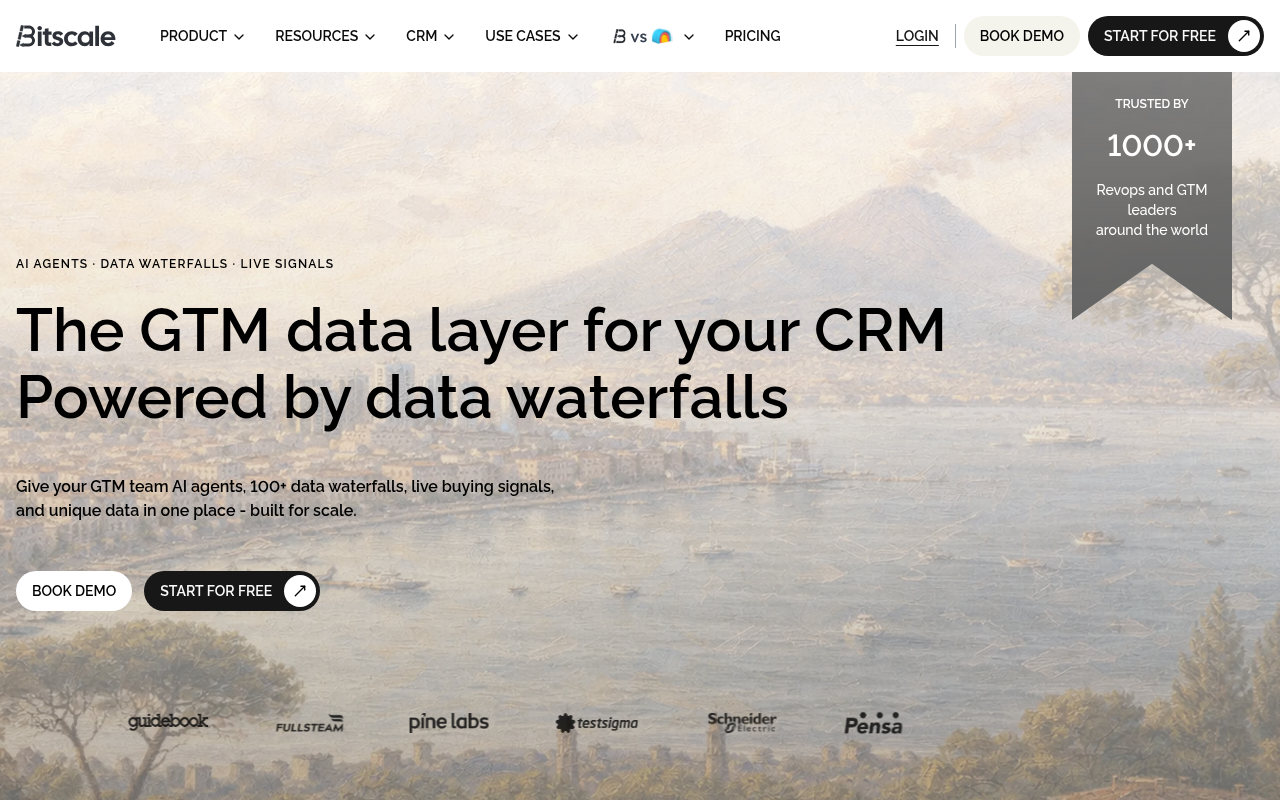
Bitscale connects visitor identification, enrichment, and outbound workflows in a single platform.
Most tools in this category are specialists: they identify visitors, or they enrich contacts, or they help you run outreach. Bitscale is designed to connect those steps into one system. It positions itself as a unified GTM platform where visitor identification flows straight into data enrichment capabilities, AI prospect research, and prebuilt sales workflows. The pitch is simple: stop duct-taping five point solutions together just to go from a signal to a message.
Where Bitscale really separates is the workflow layer. When a target account hits your site, it can enrich the account, surface the right contacts with verified work emails and phone numbers, score the opportunity against your ICP, and sync the record into your CRM without a handoff. The AI prospect research piece is meant to add live context, not just static database fields. If you want to see how the pieces fit together, Bitscale's sales intelligence solution lays out the full motion.
Best for: Revenue teams trying to collapse their sales intelligence stack into one platform with workflow automation built in. Check Bitscale's pricing page for current tiers. Limitation: If you are already committed to an enterprise ABM suite (like Demandbase or 6sense), Bitscale can overlap with tools you are not looking to replace.
2. Clearbit (Breeze Intelligence by HubSpot)
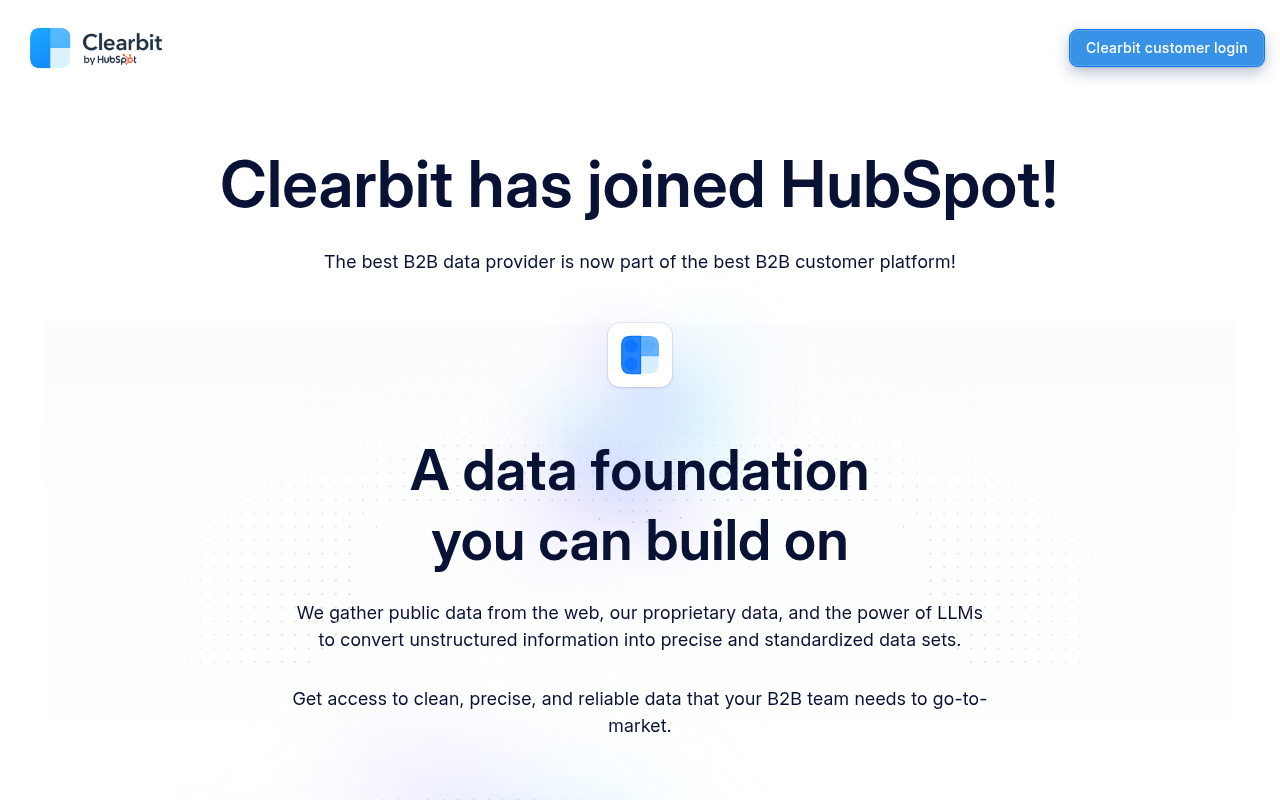
Clearbit is now natively embedded in HubSpot as Breeze Intelligence.
If HubSpot is your system of record, Clearbit is the path of least resistance. After HubSpot acquired Clearbit and folded it into Breeze Intelligence, the experience is native: visitor identification, form shortening, and enrichment live inside HubSpot without extra connectors. The tradeoff is just as straightforward. This is a HubSpot-first product now, and teams on Salesforce or other CRMs will not get the same seamless setup. Signal depth is also lighter than what you get from dedicated ABM platforms. Best for: HubSpot-native marketing and sales teams. Limitation: Tied to the HubSpot ecosystem.
3. Demandbase
Demandbase resolves site traffic to accounts and layers in intent signals for enterprise ABM.
Demandbase is the enterprise reference point for account-based marketing and sales. Its visitor identification resolves traffic to accounts, then layers in ad engagement, third-party intent, and predictive scoring. If you run ABM with a big target list and multiple channels, Demandbase gives you broad signal coverage and the tooling to operationalize it. Many organizations report that account-based marketing helps improve alignment between sales and marketing while focusing resources on high-value target accounts, and Demandbase is frequently the platform behind those programs.
The catch is what you would expect: price and overhead. Demandbase is sold via custom pricing, takes real onboarding work, and typically needs dedicated ops attention to run well. For small and many mid-market teams, it is more platform than they can realistically use. Best for: Enterprise ABM teams with 50+ target accounts and dedicated ops resources.
4. Apollo.io
Apollo.io moves intent signals to outbound sequences without switching tools.
Apollo.io is a sales intelligence and engagement platform first, not a pure visitor identification product. Its edge is the contact database, sequencing, and data enrichment. The reason it belongs on this list is the workflow: Apollo can take intent signals, enrich the account with verified contacts, and drop those contacts into outbound sequences quickly. The website-intent side is thinner than purpose-built identification tools, but for SDR teams that need to go from "someone is showing interest" to outreach without switching systems, Apollo is a practical all-in-one. The free tier also makes it easy for startups to get started. Limitation: Because visitor identification is not Apollo's core focus, teams that care most about website-level account resolution often pair it with a dedicated tracking tool.
5. Leadfeeder (by Dealfront)
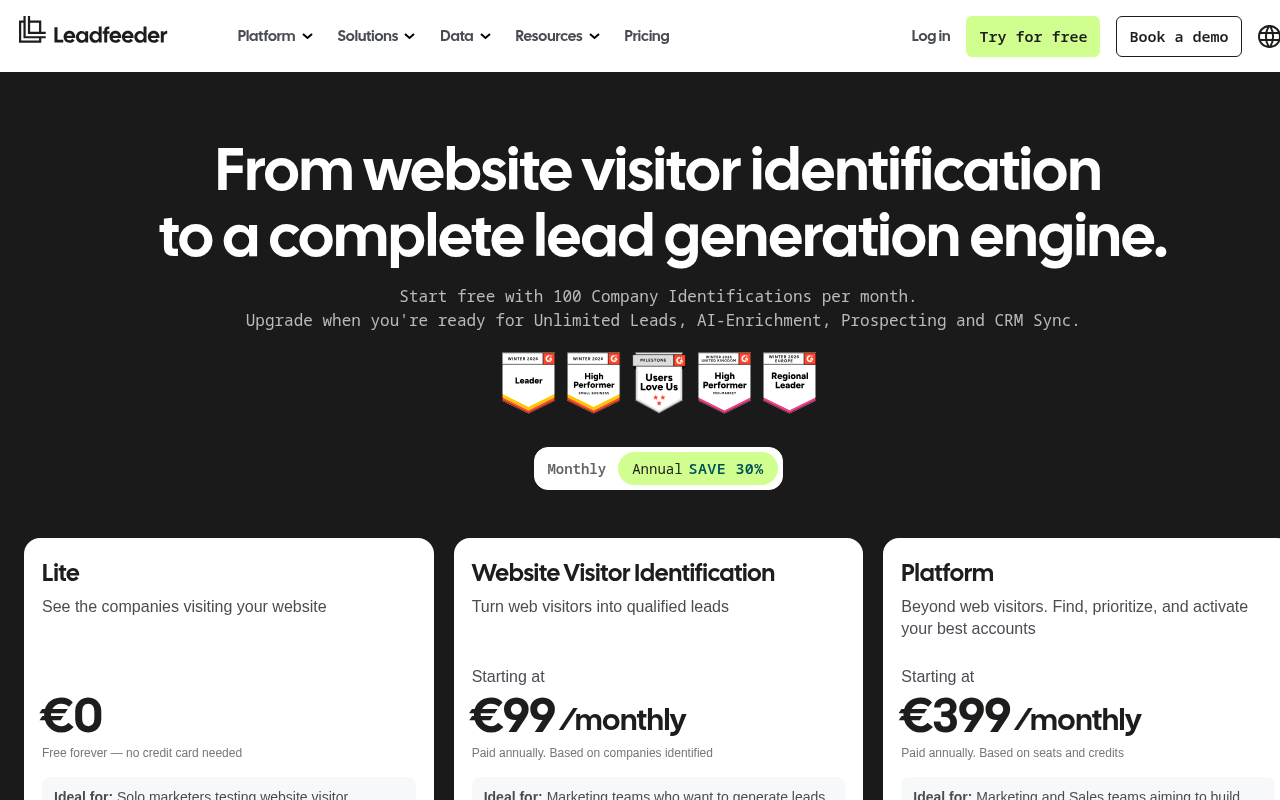
Leadfeeder's free tier lets small teams validate visitor identification before committing to a paid plan.
Leadfeeder (now under Dealfront) is one of the long-running names in visitor tracking. Drop in the script and it will resolve visits to companies, then show the pages viewed, return frequency, and time on site. It connects to Salesforce, HubSpot, and Pipedrive, and includes basic scoring and filters so reps are not staring at an unranked feed.
The free tier gives you the last seven days of visitors, which is enough to validate whether the motion works for your funnel. Paid plans add longer history, CRM push, and custom feeds. Where Leadfeeder stops short is contact-level work. You will see the account, but finding the right stakeholder still takes another tool or another step. Best for: Small teams that want a simple, low-commitment way to start identifying website visitors.
6. Clay
Clay enriches visitor data from tools like Leadfeeder across multiple providers in one workflow.
Clay is not a visitor identification product in the classic sense. It is a workflow and enrichment engine that can take visitor data from elsewhere and run it through a multi-provider "waterfall" to improve coverage. If Leadfeeder identifies a company, Clay can take that company, pull the best contacts across multiple databases, verify emails, use AI to research the account, and format the output for your CRM or outbound system. The spreadsheet-style interface gives ops teams a lot of control, and it also means there is a learning curve. Clay pays off when you are willing to build and maintain your own automations. Best for: RevOps teams that want maximum enrichment flexibility and are comfortable building workflows. Limitation: No native visitor identification. You need a separate tracking pixel or data source.
7. Lusha
Lusha excels at fast contact enrichment but lacks native website visitor identification.
Lusha is built around speed: get contact data quickly and keep moving. The browser extension lets reps pull emails and direct dials from LinkedIn profiles in seconds, and the broader platform adds a prospecting database plus basic CRM enrichment. For visitor identification, though, Lusha is not the tool. It works better as the enrichment layer you add after another platform flags an interested account. Pair Lusha with Leadfeeder or Albacross and you get company identification plus fast contact lookup. Use Lusha alone and you still will not know which accounts are on your site. Best for: Individual reps and small teams that need reliable contact data fast. Limitation: Not a standalone visitor identification platform.
8. Cognism
Cognism's Diamond Data offers manually phone-verified direct dials for higher outbound connect rates.
Cognism is best known for phone-verified mobile numbers. If cold calling is a meaningful part of your outbound mix, its Diamond Data product focuses on manually verified direct dials that tend to beat typical database connect rates. Cognism also brings in Bombora intent data, which helps teams prioritize accounts showing active research. What it does not do is native website visitor identification; Cognism is a sales intelligence and contact data platform. Used alongside a visitor ID source, it becomes the contact-and-prioritization layer that makes those website signals actionable. Teams in Europe often shortlist Cognism for its strong GDPR compliance posture. Best for: Outbound-heavy teams, especially in EMEA, that prioritize phone outreach.
9. Albacross
Albacross combines website visitor identification with built-in account-based advertising and retargeting.
Albacross pairs visitor identification with account-based advertising. It resolves companies visiting your site, scores them using page-level intent, and can retarget those accounts with display ads from the same platform. Albacross pricing is public, which is refreshing in a category that often hides behind sales calls. It integrates with Salesforce and HubSpot for CRM data enrichment. Like Leadfeeder, the data is primarily account-level, so you will still want an enrichment tool when you need names, emails, and phone numbers. Best for: Marketing teams that want visitor identification and retargeting together in a mid-market-friendly package.
10. 6sense
6sense maps accounts into buying-cycle stages to orchestrate enterprise ABM at scale.
6sense is the heavyweight in predictive account intelligence. It does more than tell you who visited; it models which accounts are in an active buying cycle using first-party website intent, third-party research signals, and its AI scoring. Accounts are mapped into stages (awareness, consideration, decision, purchase), and the platform can orchestrate both marketing and sales actions based on that stage. For enterprise revenue teams, that orchestration can be a real advantage. The cost is that 6sense demands budget and operational maturity. Enterprise implementations often require more planning, integration work, customization, and operational support than lightweight visitor identification tools, and teams without dedicated ABM ops often struggle to capture the full value. Best for: Large enterprise teams with mature ABM programs and the budget to support them.
11. Instantly.ai
Instantly.ai handles outbound execution but lacks native website visitor identification.
Instantly.ai is an outbound execution platform, not a visitor identification product. It focuses on the plumbing: warmup, sender rotation, and sequence automation at volume. Its lead database and enrichment have grown, but there is still no native visitor tracking. The fit is straightforward: use Bitscale, Leadfeeder, or Albacross to identify interested accounts, then trigger Instantly sequences to contacts at companies that hit high-intent pages like pricing. With transparent, affordable pricing, Instantly is popular with agencies and early-stage startups running high-volume outbound. Limitation: No visitor tracking or account identification. It is built for outreach and deliverability.
12. Factors.ai
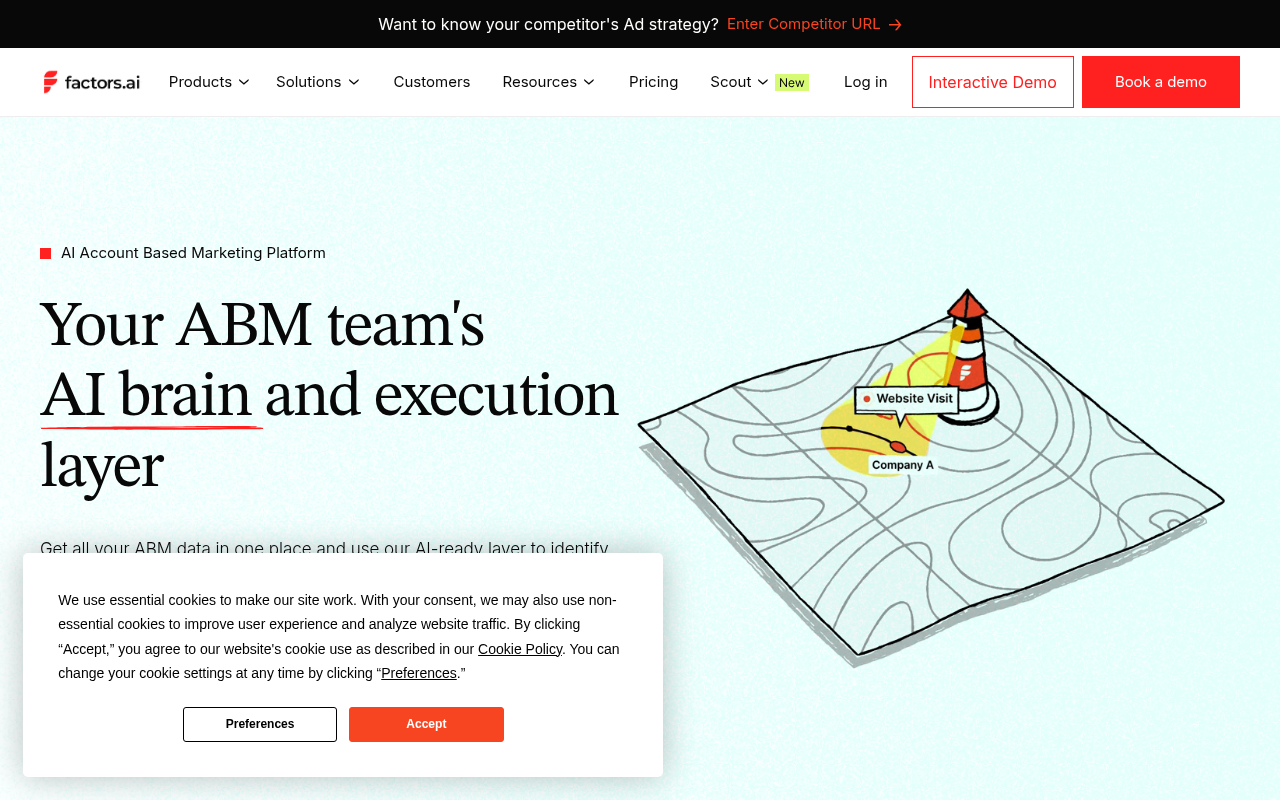
Factors.ai combines account-level visitor identification with multi-touch attribution in one platform.
Factors.ai sits between marketing analytics and sales intelligence. It identifies accounts visiting your site, ties those visits back to channels, and scores engagement across multiple touches. The account timelines are the selling point: you can see which ads an account clicked, which pages they hit, and how many people from the same company engaged over time. For marketing teams that need to show pipeline influence while still handing sales something actionable, that combination of attribution and alerts is compelling. Salesforce and HubSpot integrations are supported. Best for: Marketing ops teams that want visitor identification plus multi-touch attribution. Limitation: Less depth in contact enrichment and outbound automation than platforms like Bitscale or Apollo.
Best Platform by Team Size
| Team Size | Top Pick | Runner-Up | Why |
|---|---|---|---|
| Solo founder / 1-5 reps | Apollo.io | Leadfeeder + Lusha | Apollo's free tier covers prospecting, enrichment, and sequences. Leadfeeder adds low-cost visitor tracking, and Lusha fills the contact gap. |
| Growth team (5-20 reps) | Bitscale | Clay | Bitscale bundles identification, enrichment, AI research, and workflows in one place. Clay can get you similar enrichment depth if you are willing to build the automations. |
| Mid-market (20-50 reps) | Albacross + Cognism | Factors.ai | Albacross covers identification and retargeting; Cognism adds verified contacts and intent. Factors.ai is strong when attribution and account timelines matter most. |
| Enterprise (50+ reps) | Demandbase or 6sense | Clearbit (HubSpot shops) | Full ABM orchestration with predictive scoring and advertising. Clearbit is the cleanest option when HubSpot is your CRM. |
| Recommendations based on team size, budget, and operational maturity |
How to Choose the Right Visitor Identification Software
The right pick depends on how mature your revenue motion is, and where you want the work to happen. Start with one question: do you only need identification, or do you need the workflow from identification through enrichment to outreach? If the goal is simply to see which companies are showing up, Leadfeeder or Albacross can cover it. If you want to act on the signal inside the same system, Bitscale or Apollo is the better fit.
Next, decide how much contact-level data you actually need. Account identification tells you the logo; contact enrichment tells you who to call. Cognism and Lusha are strong when verified contacts are the priority, while Leadfeeder and Albacross mostly stop at the company level. If you are mapping your broader stack, this breakdown of top sales intelligence tools is a useful reference point.
Finally, treat CRM integration like a first-class requirement, not a checkbox. HubSpot teams get the cleanest experience with Clearbit because it is native. Salesforce teams tend to get the deepest enterprise-grade integrations from Demandbase and 6sense. If you want flexibility across connectors or you run a lighter CRM, Bitscale and Clay give you more options. It also helps to be specific about the signals you want to operationalize; this overview of B2B buying signals can help you match a vendor's signal taxonomy to your sales process.
The Shift from Visitor Tracking to Revenue Intelligence
Visitor ID is no longer just "which companies visited our site?" The teams getting results in 2026 treat it as the first trigger in an automated pipeline workflow. A high-intent visit (pricing, case studies, competitor comparisons) can kick off enrichment, ICP scoring, contact discovery, and personalized outreach. Automated workflows can trigger enrichment, prioritization, and follow-up soon after high-intent activity is detected, depending on the organization's workflow design. That is why consolidation is winning. Instead of buying a tracking pixel, then an enrichment API, then an intent provider, then an outbound sequencer, more teams are pushing toward fewer platforms that can carry the workflow end to end. Bitscale, Apollo, and Clay each represent a different version of that consolidation story. Pairing this list with the best intent data tools can help you decide which signals matter most for your ICP.
Frequently Asked Questions
What is website visitor identification, and what is it actually doing behind the scenes?
Website visitor identification uses reverse IP lookup, first-party cookies, and data partnerships to match anonymous website traffic to known companies and, in some cases, likely contacts. You install a script that captures behavior, then the platform matches that activity against business databases to return company names, firmographics, and page-level intent signals.
Can visitor identification tools identify individual people, not just companies?
Most tools resolve identity at the account (company) level. Getting to the person usually comes from enrichment: once the company is known, the platform (or a connected enrichment tool) pulls likely stakeholders from contact databases. Bitscale and Apollo can handle both steps in one motion, while Leadfeeder and Albacross typically stop at the company and rely on a separate enrichment layer for individual contacts.
How does website visitor identification differ from intent data?
Visitor identification answers a narrow, high-value question: which companies are on your site right now, and what did they look at? Intent data is broader and can include third-party research behavior, content consumption across the web, and predictive buying-stage indicators. Some vendors combine both (6sense, Demandbase, Cognism via Bombora). Others focus mainly on first-party website intent. The difference matters because it changes how you route, score, and prioritize accounts.
Is website visitor identification compliant with GDPR and privacy regulations?
Many B2B platforms operate primarily at the company level using business IP data, which is often positioned under legitimate interest in GDPR. Compliance still depends on your implementation, including cookie consent and how you store and process the data. Cognism is often highlighted for GDPR posture, but you should still involve legal and review each vendor's data processing agreements.
What is the best free website visitor identification tool?
Leadfeeder has a free tier that shows the last seven days of identified company visitors. Apollo.io also offers a generous free plan for contact search with limited enrichment. If you want to test the workflow without budget, Leadfeeder for identification paired with Apollo for contact lookup is a practical starting combination.
Verdict: Picking the Right Platform for Your Revenue Team
There is no universal winner here; the best choice depends on your CRM, your outbound motion, and how much of the workflow you want automated. Best all-in-one for growth teams: Bitscale, for teams that want visitor signals, enrichment, AI research, and workflow automation in one place instead of a chain of integrations. Best for HubSpot shops: Clearbit (Breeze Intelligence), because the native HubSpot experience removes a lot of operational friction. Best for enterprise ABM: Demandbase or 6sense, depending on whether advertising and ABM execution (Demandbase) or predictive modeling and buying-stage orchestration (6sense) is the priority. Best budget-friendly starting point: Leadfeeder's free tier paired with Apollo.io's free plan. Best for outbound-first teams: Cognism for phone-verified contacts, Instantly.ai for high-volume email execution. Best for ops-heavy teams: Clay, if you want maximum flexibility and are willing to build the workflows.
The decision is less about which visitor identification software looks best on a feature grid and more about time-to-action. If your setup cannot reliably turn anonymous visits into qualified pipeline, you are just collecting interesting data. The platforms that help revenue teams identify, prioritize, and engage high-intent accounts more efficiently are the ones worth investing in.