18 Best B2B Contact Database Companies for Sales
If you’re evaluating B2B contact database companies, you’re usually trying to solve one problem: find the right accounts and decision-makers fast-without burning weeks on manual research or buying “leads for sale” that go stale.
The good news: modern B2B databases don’t just sell contact lists. The best ones help you build a repeatable system for ICP targeting, lead discovery, enrichment, segmentation, and compliance-first outreach. (This matters more than ever as privacy expectations tighten across regions.)
TL;DR
- A B2B database is only useful if it stays fresh, supports your region, and fits your workflow (CRM, outbound tools, enrichment, intent, ABM).
- Avoid blindly buying B2B email databases. Instead, evaluate providers on accuracy, compliance, refresh rate, integrations, and use-case fit.
- If you want an easier shortlist: start with a mix of (1) prospecting databases, (2) enrichment tools, and (3) intent/ABM platforms-then run a small pilot using your real TAM sample.
- Bitscale angle (soft TOFU): If your goal is building targeted lists + enriching them at scale (firmographics/technographics/news signals) before activation, you’ll want a workflow that’s closer to “sourcing + enrichment + automation” than a static list purchase.
Table of Contents
- What is a B2B database (and what it isn’t)
- Quick Comparison Table: 18 B2B Contact Database Companies
- 18 B2B Contact Database Companies (Features + Pricing)
- Why B2B database providers matter for growth
- Types of B2B databases
- What to look for in B2B contact database software
- How to shortlist the right provider
- Common mistakes (including “leads for sale” traps)
- Future trends in B2B databases
- FAQs
What is a B2B database (and what it isn’t)
A B2B contact database is a structured collection of company records + people records (roles, emails, phone numbers, seniority, departments) used for prospecting, ABM, and pipeline creation. Many providers also add firmographics/technographics and sometimes intent signals.
What it isn’t:
- A one-time spreadsheet you “buy once and use forever”
- A guarantee that every email/phone number is reachable
- A substitute for ICP clarity, messaging, and deliverability hygiene
Quick Comparison Table: 18 B2B Contact Database Companies
Below is a side-by-side comparison of 18 leading B2B contact database companies, covering their ideal use case, availability of free plans or trials, and pricing approach. This table is designed to help you quickly shortlist tools based on your budget, team size, and prospecting workflow-before diving deeper into individual features and platform capabilities.
If your end goal is building lists + enriching them with many data points + automating research, consider piloting Bitscale alongside whichever “core database” you shortlist-so you can compare output quality and workflow speed before committing.
18 B2B Contact Database Companies (Features + Pricing)
Below is a curated list of 18 leading B2B contact database companies, including a short overview of each platform, its key features, and pricing structure (with free plans or trials where available). This section is designed to help you understand what each tool offers at a glance-so you can compare capabilities, budget fit, and ideal use cases before shortlisting the right provider for your team.
1. Bitscale
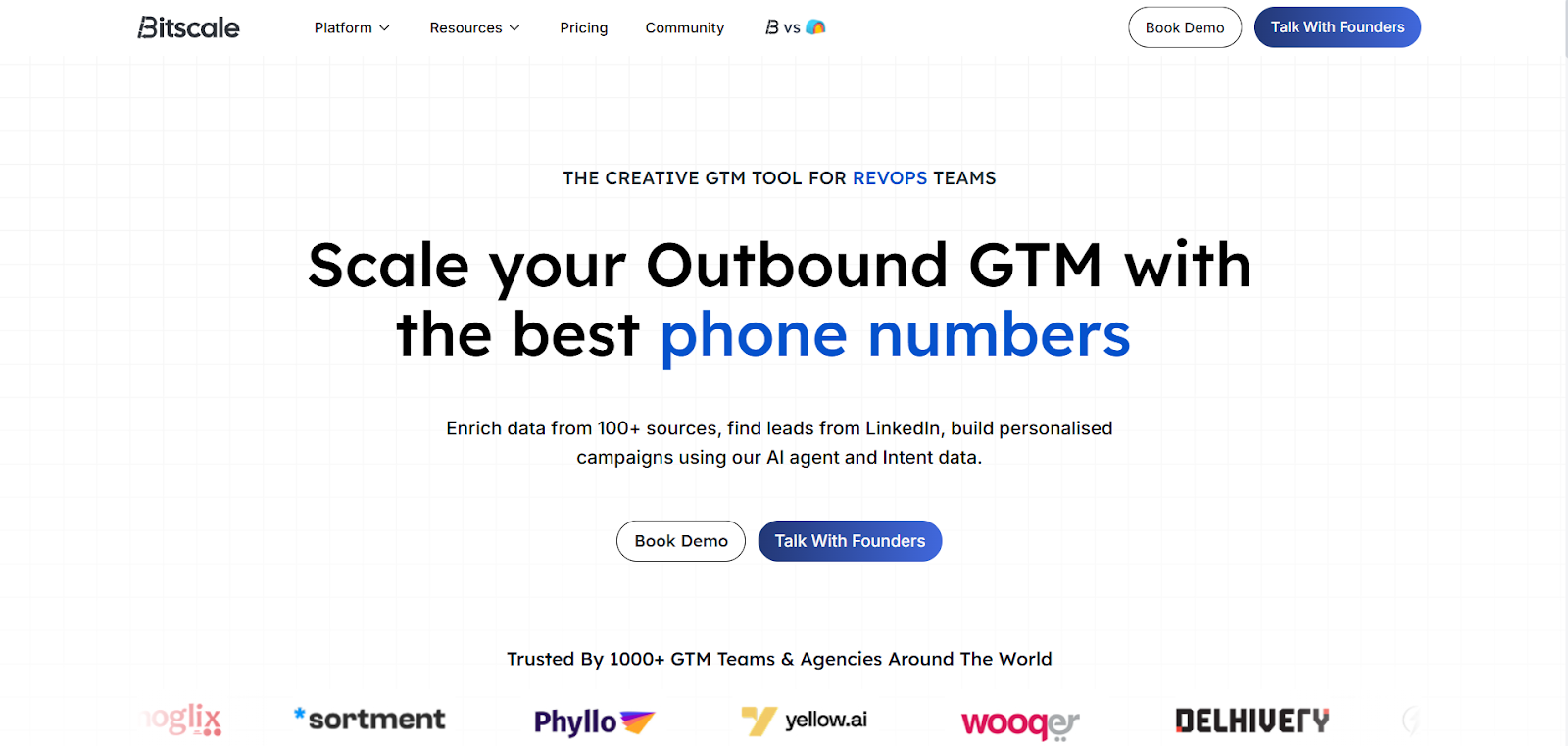
Bitscale is an AI-powered B2B contact database and enrichment platform built for outbound GTM teams that want more than static lists. Instead of just “buying a B2B email database,” Bitscale focuses on sourcing, enriching, validating, and activating high-quality lead data at scale.
It’s designed for teams that want to build targeted lists using multi-source data enrichment, waterfall providers, and AI-assisted workflows - without committing to expensive annual contracts.
Top Features
- B2B contact & company database
- Multi-source waterfall enrichment (emails + phone numbers)
- AI Agent for automated web research
- Enrich 100+ data points (revenue, funding, employee count, tech stack, news, etc.)
- CRM integrations (HubSpot, Salesforce, etc.)
- CSV bulk enrichment & exports
- Built-in verification workflows
- GTM automation workflows
Pricing
- Lifetime Free Plan available
- Paid plans start from $349/month (credit-based tiers available)
- Growth & Booster tiers for scaling outbound teams
- No forced long-term contracts
2. Cognism
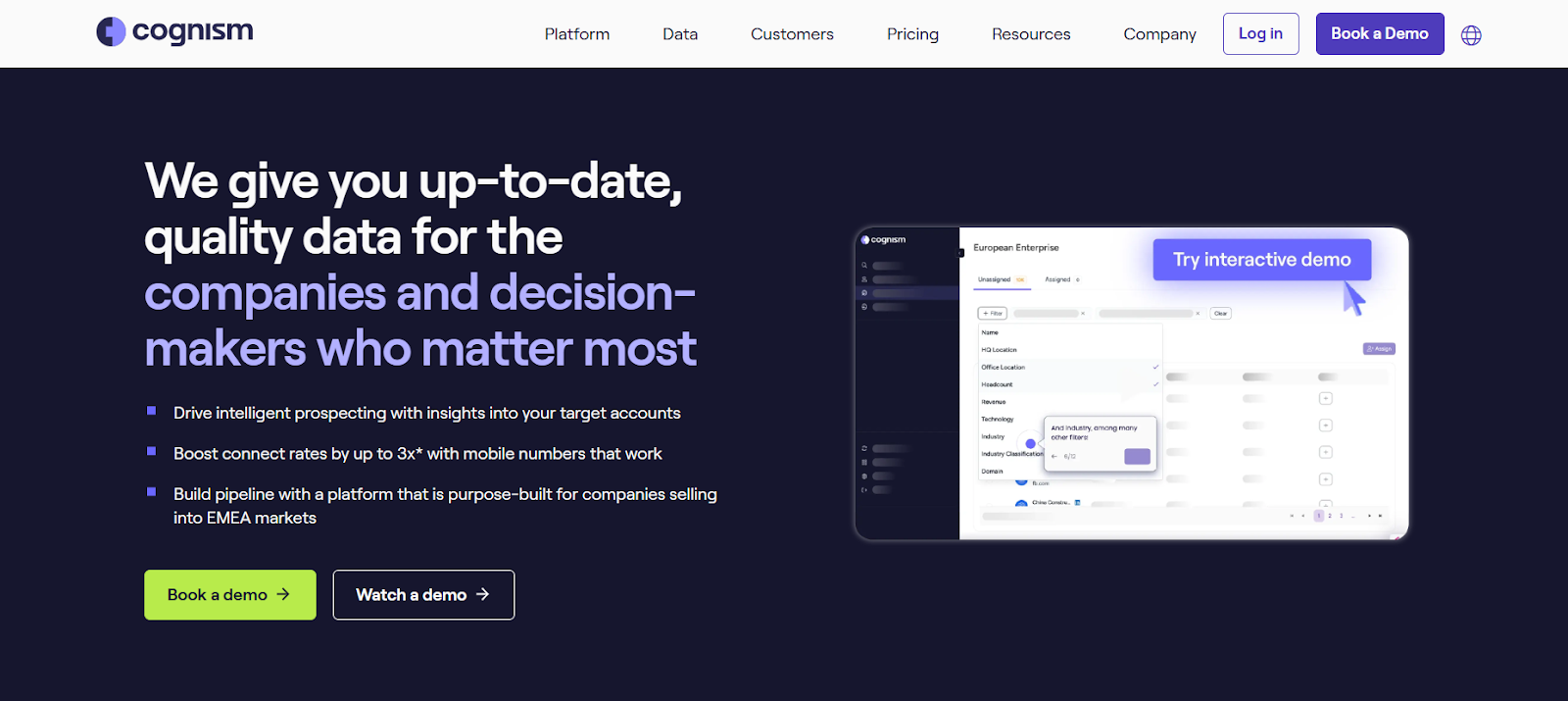
Cognism is a sales intelligence platform designed for building lead and account lists using enriched B2B contact and company data, including intent signals and phone-verified mobile numbers.
Top features
- Extensive database with high accuracy levels
- Intent data, firmographics, technographics, and sales triggers
- Global do-not-call lists
- Integrations with many sales apps
- GDPR and CCPA compliance; EMEA/NAM/APAC coverage
Pricing
- Customized packages available upon request
3. Lusha
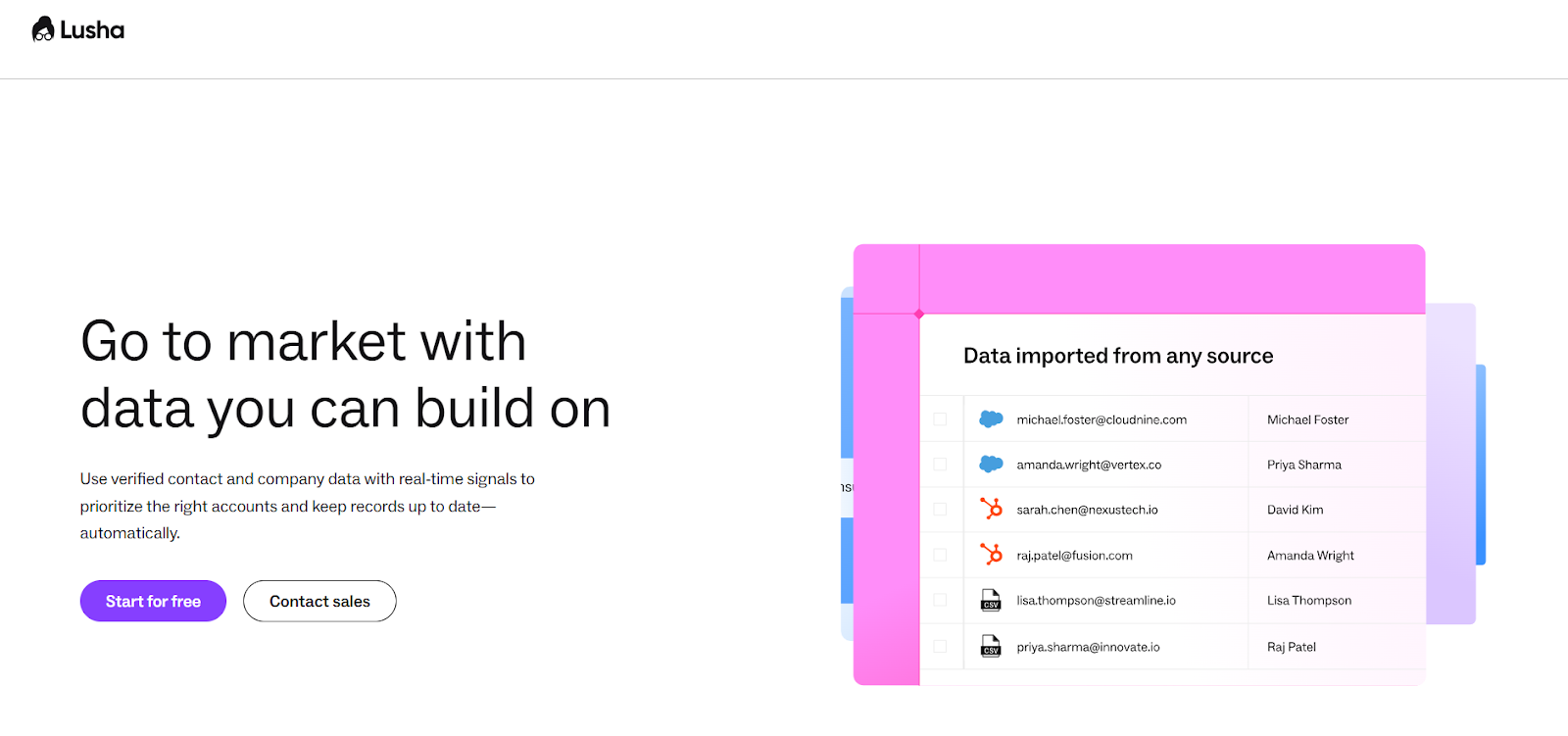
Lusha is positioned as a B2B marketing database for small teams, commonly used via its Chrome extension to find contact details while browsing LinkedIn and other websites.
Top features
- Filter-based prospecting lists
- Intent data
- Direct phone numbers
- Credits management and analytics
- CRM support (HubSpot, Zoho, Pipedrive, Bullhorn)
Pricing
- Free trial with 5 free phone credits
- Starting price: $36 per user/month
4. LinkedIn Sales Navigator
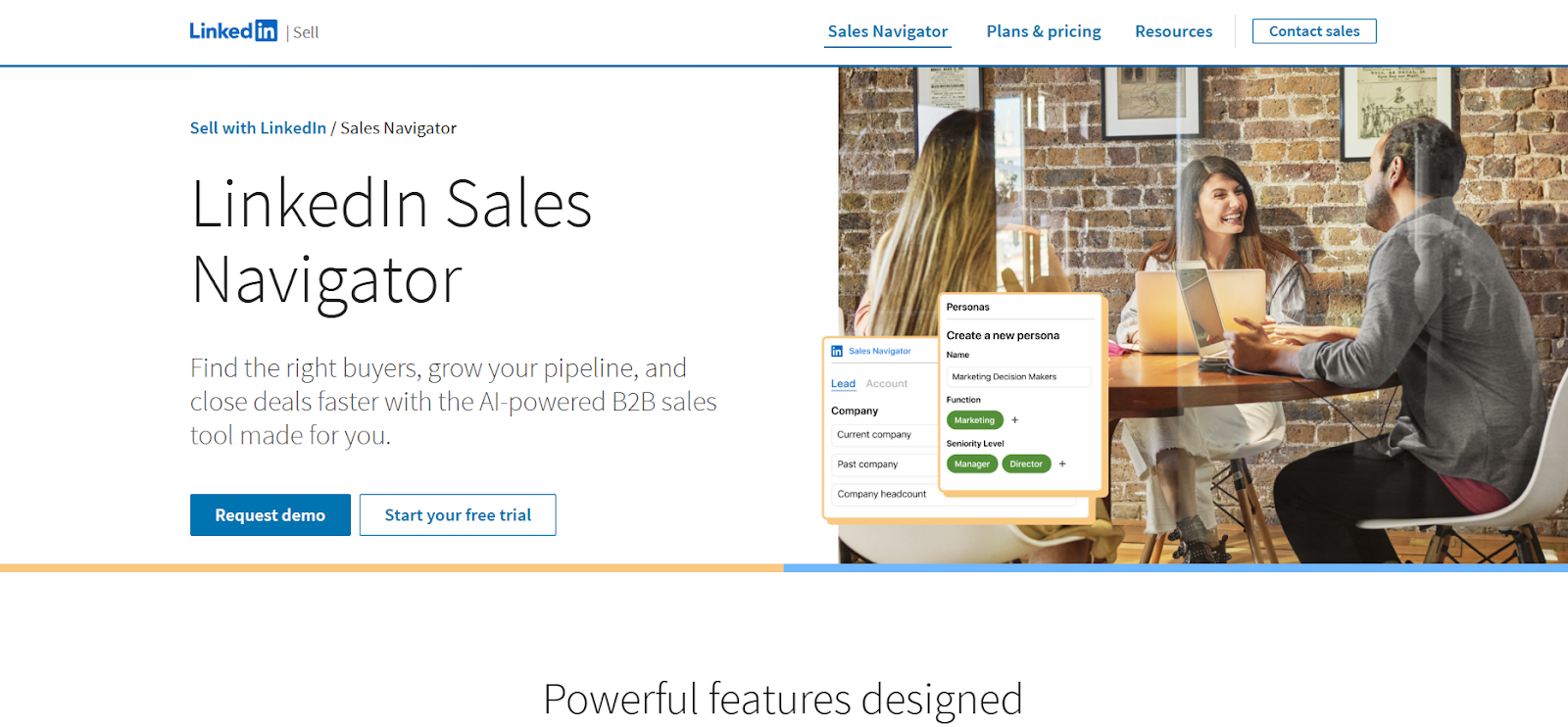
LinkedIn Sales Navigator is built for lead and account discovery on LinkedIn, with social selling workflows and collaboration features for sales teams.
Top features
- Lead recommendations based on search history
- InMail messages
- Advanced search filters
- Buyer alerts, notes, and tags
- Integrations with B2B sales tools
Pricing
- 1-month free trial
- Core starts at $79.99 per user/month
- Custom plans available
5. ZoomInfo
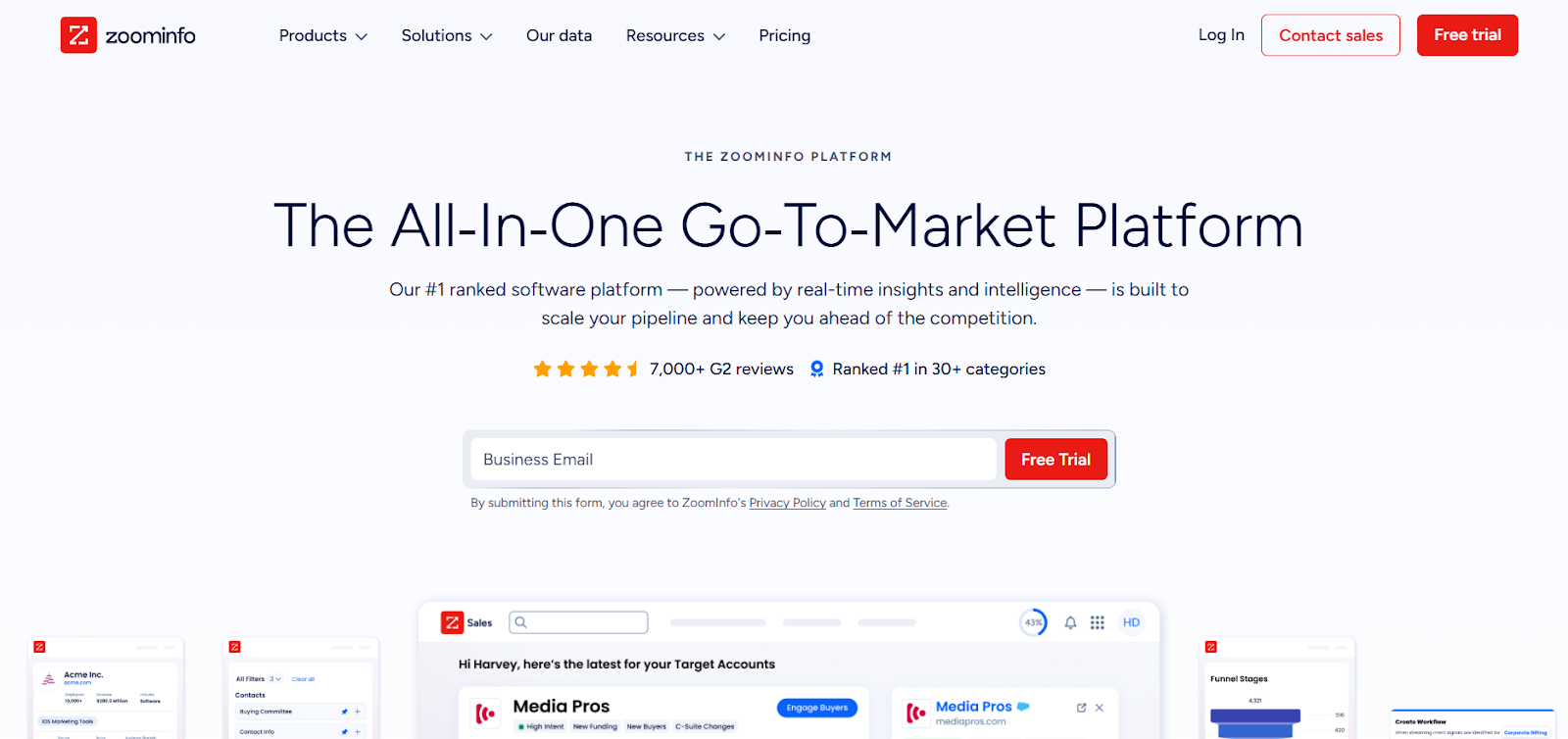
ZoomInfo is a B2B database used by sales, marketing, and recruiting teams, with AI/ML-led updates and add-on products like conversation intelligence and data management.
Top features
- Buyer intent insights
- Website visitor tracking
- Data enrichment API
- Website chat
- Integrations with CRMs and marketing automation tools
Pricing
- 14-day free trial
- Pricing not published; custom plans/packages
6. RocketReach
RocketReach focuses on finding B2B emails and phone numbers, with a Chrome extension that works across LinkedIn, Google, and platforms like Crunchbase.
Top features
- Advanced search filters
- Bulk lookups and exports
- Email verification + deliverability score
- CRM integrations
Pricing
- Free version (5 searches/month)
- Basic plans start at $39/month
- Custom plans available
7. Apollo
Apollo combines a large B2B contact database with list-building, CRM enrichment, and outbound automation (multi-channel sequences).
Top features
- AI-powered analytics
- Sales engagement tools
- Job change alerts
- Automated data enrichment + real-time updates
Pricing
- Free version with 60 mobile credits
- Starting price: $49 per user/month
- Custom plans available
8. DemandScience Intelligence
DemandScience Intelligence pairs contact data with intent signals and enriched firmographic/demographic/technographic attributes, and integrates with major CRMs and MAPs.
Top features
- Intent data
- 15 sources of data enrichment
- Technology insights
- Engagement tracking
Pricing
- No free trial
- Pricing not published
9. Adapt
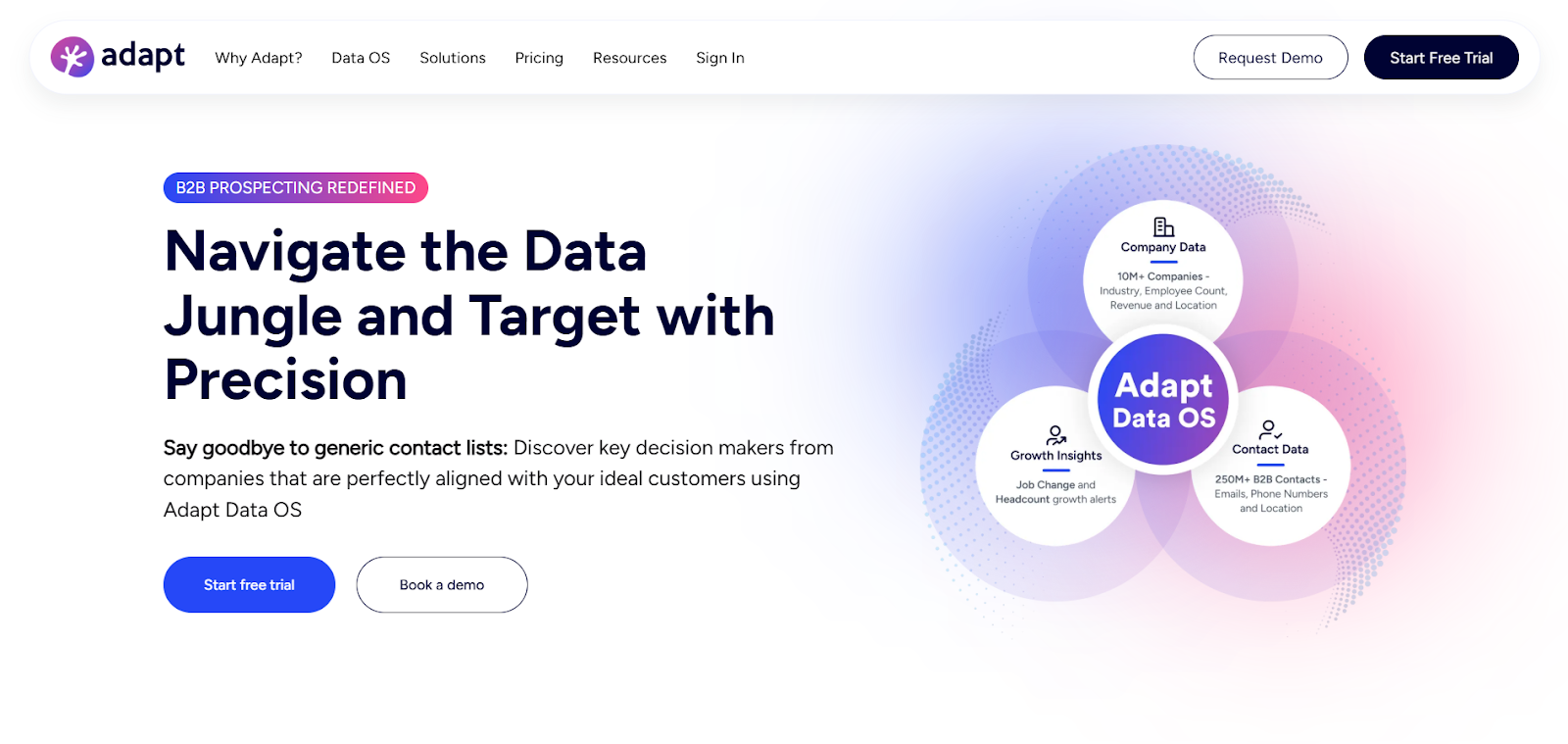
Adapt is a prospecting database built for sales/marketing teams, with a Chrome extension for pulling emails/phone numbers from LinkedIn or company sites-often positioned for individuals and smaller orgs.
Top features
- Chrome extension
- Advanced search filters
- Custom workflows
- Data enrichment (CSV/CRM) via API
- Integrates across many CRMs
Pricing
- Quote-based (request a quote)
- Free trial available for 3 days
10. UpLead
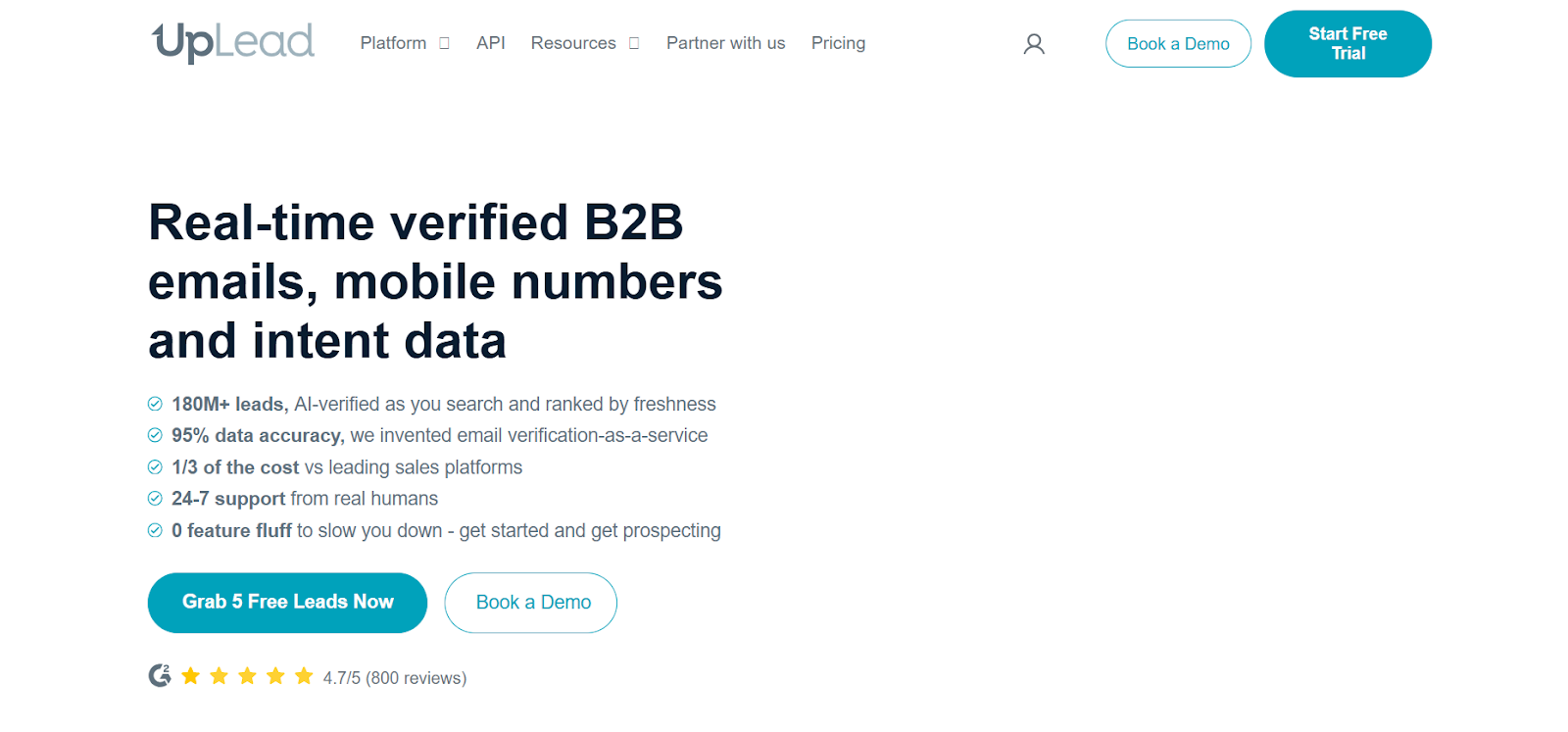
UpLead is a B2B contact + company database with filters (industry, location, title, company size) and real-time email verification to reduce bounce rates.
Top features
- Data enrichment
- Intent data
- Technographics
- Chrome extension
- Real-time email verification
- CRM integrations
Pricing
- Free trial with 5 credits
- Starting price: $99 per user/month
- Custom plans available
11. Clearbit
Clearbit is positioned as an AI-focused sales intelligence and enrichment tool, with domain/email enrichment, intent signals, and trigger-based alerts.
Top features
- Intent signals
- Trigger alerts
- Firmographic + technographic data
- Domain and email enrichment
- Chrome extension
Pricing
- Pricing not publicly available (request from sales)
- Free trial
- Custom plans available
12. Hunter
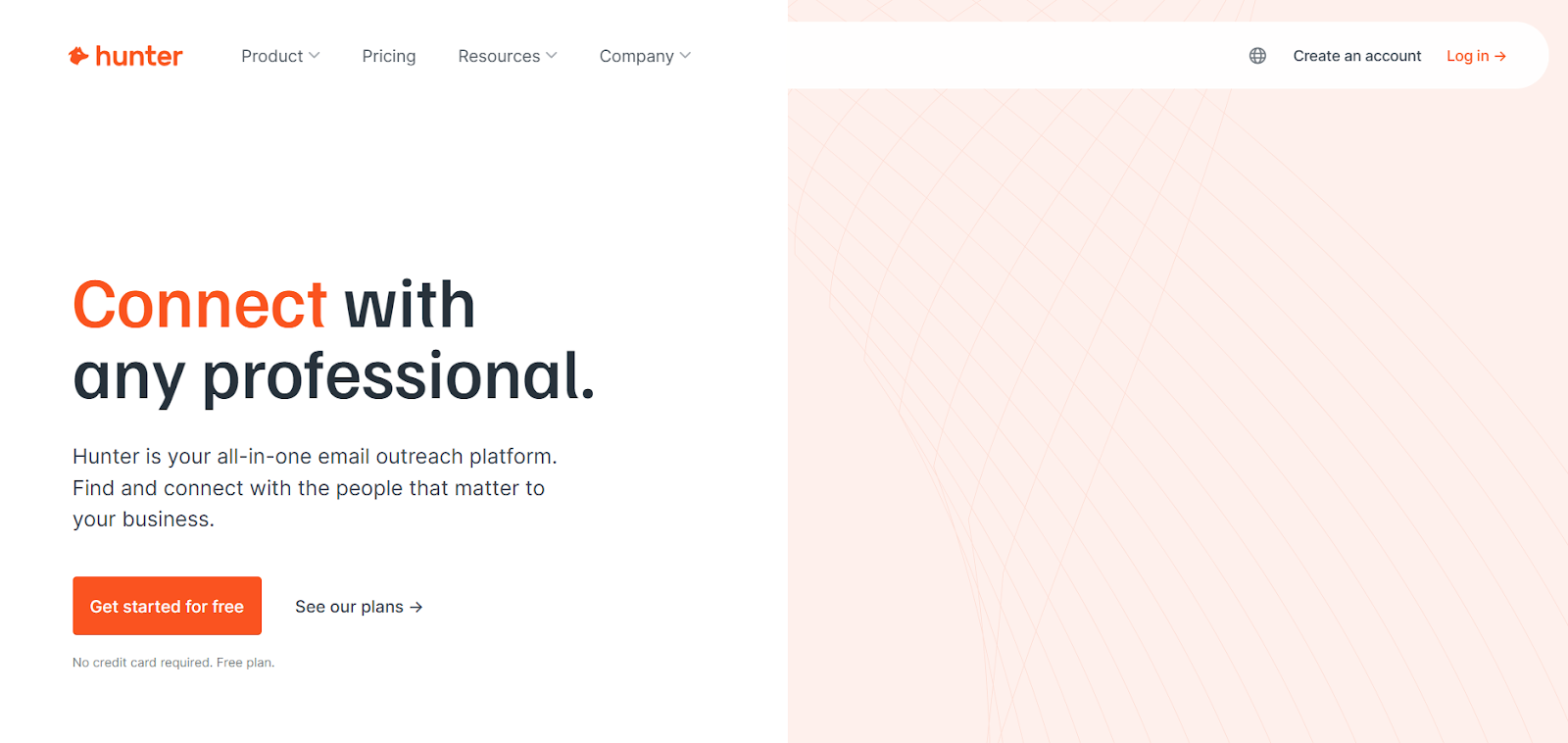
Hunter is an email outreach and lead generation platform best known for finding emails by domain/company, verifying email addresses, and supporting outreach workflows.
Top features
- Email search + verification
- Custom tracking domain
- Cold email scheduling + tracking
- Built-in email campaign features
Pricing
- Free plan available
- Starting price: $38 per user/month
13. Seamless
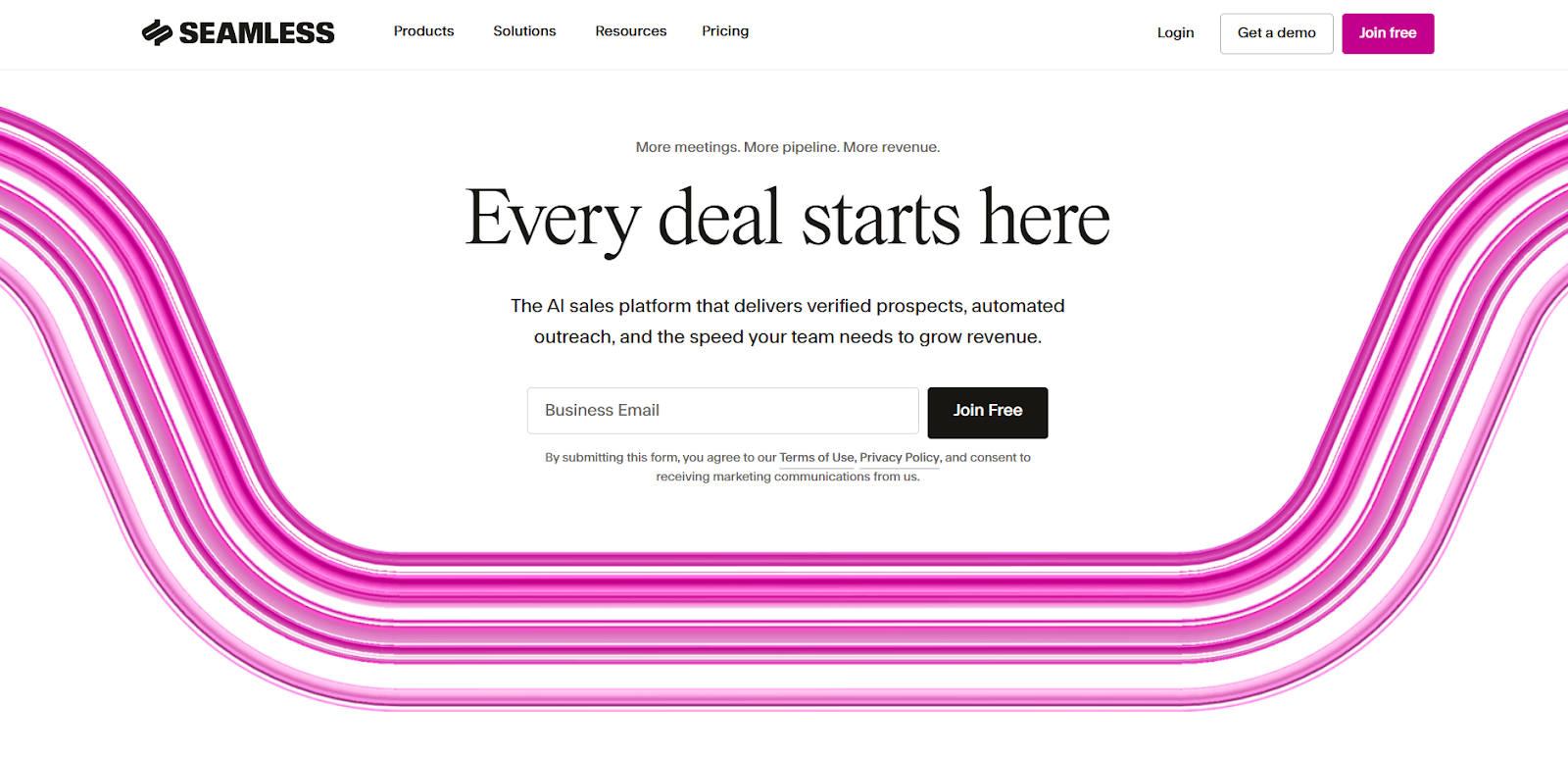
Seamless is marketed as an AI-powered contact discovery engine, with a Chrome extension that works across Sales Navigator, Recruiter, Salesforce, and company websites.
Top features
- Job change alerts
- Data enrichment
- Buyer intent data
- AI-powered writer
Pricing
- Quote-based
- Free plan available
14. Lead411
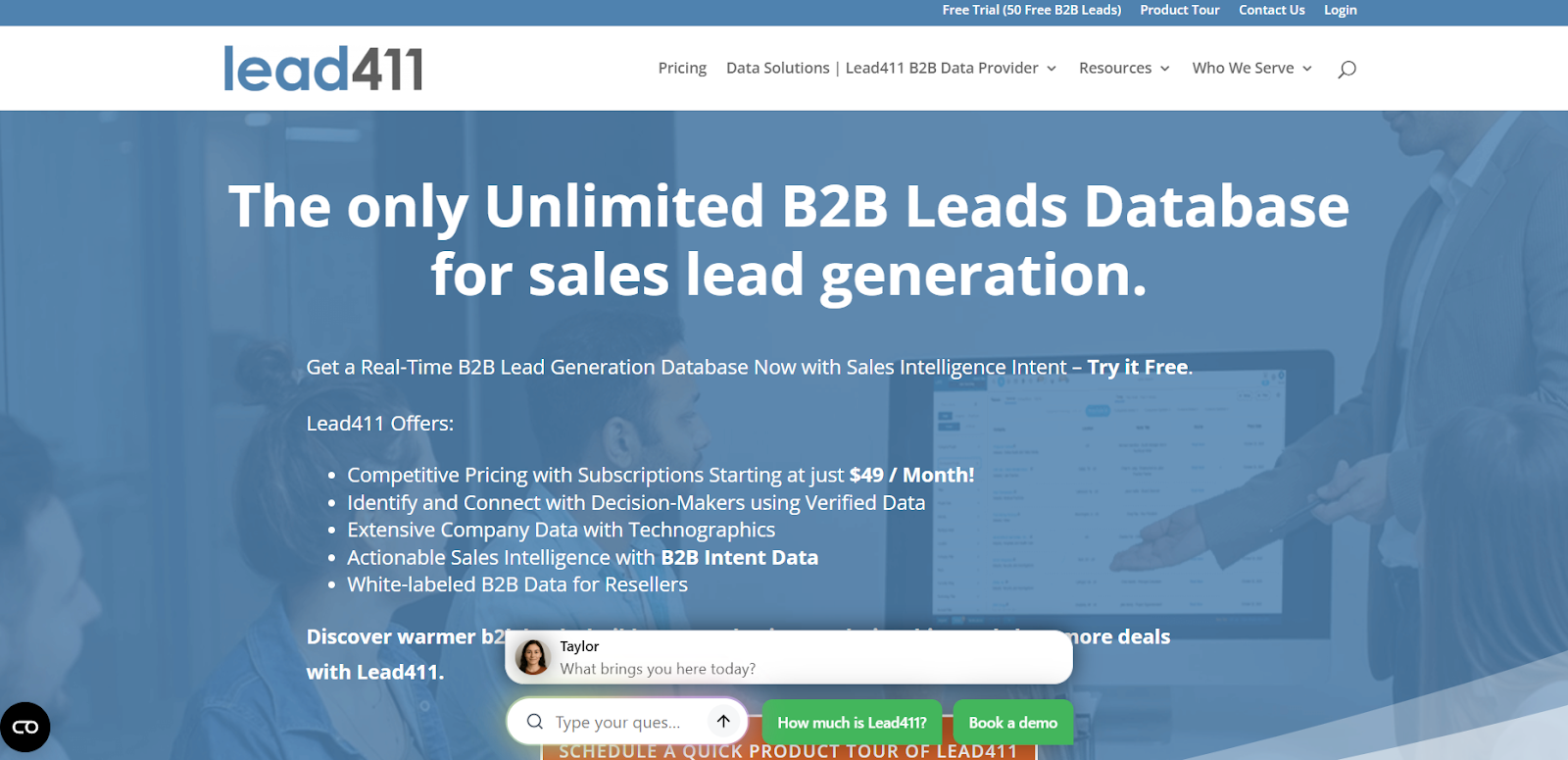
Lead411 is a B2B database and business intelligence platform with a Chrome extension and, in some plans, intent data powered by Bombora.
Top features
- Real-time company updates + news alerts
- Advanced filters
- Contact enrichment
- Automated email engagement
- CRM integrations
Pricing
- Starts at $99 per user/month
- Free trial available
15. 6sense
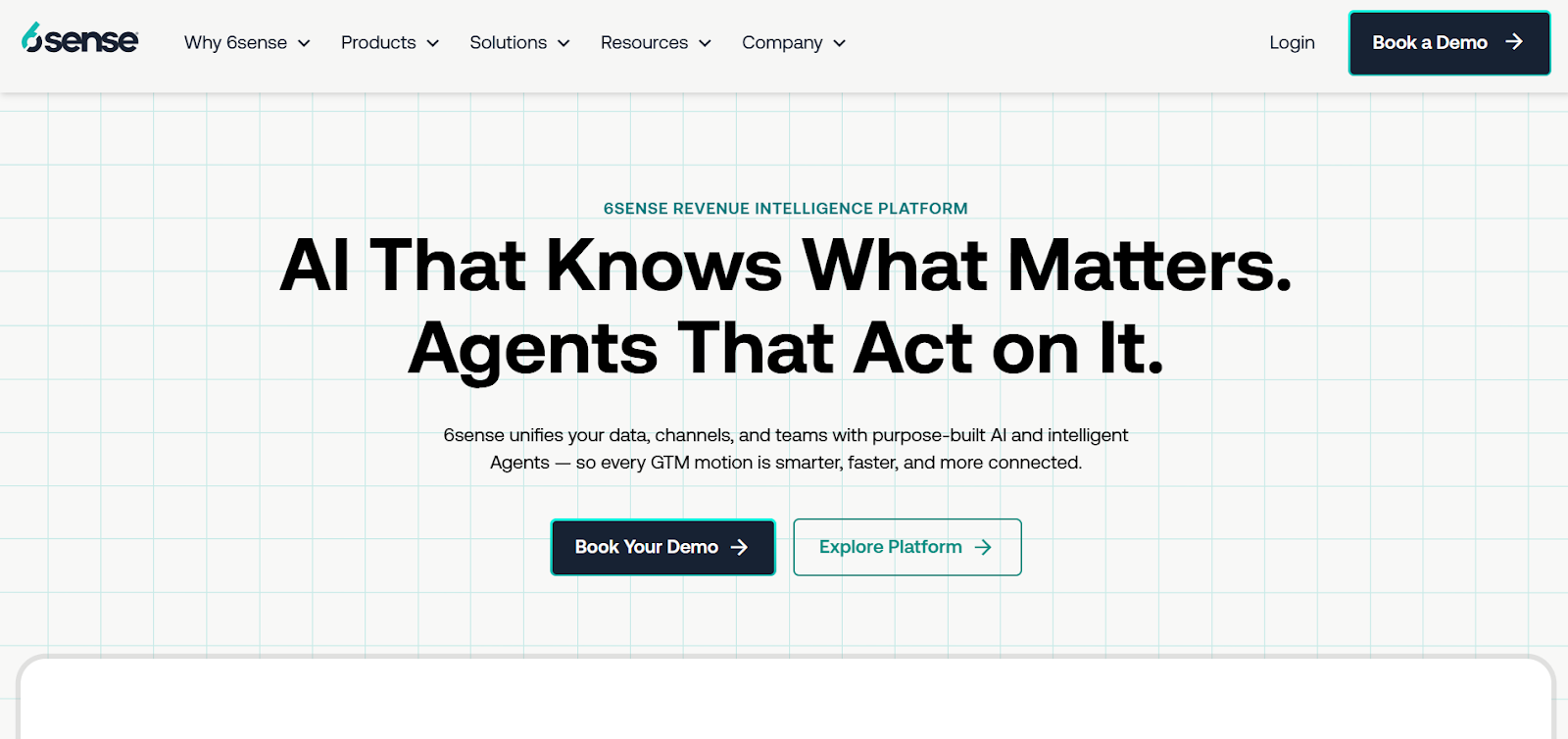
6sense is an AI-driven platform centered on intent and account insights, including website visitor intelligence and prioritization dashboards for prospecting and ABM.
Top features
- AI-driven sales intelligence
- Intent data
- Prioritization dashboards
- Prospecting workflows
- Insight into site visitors
- Firmographic + technographic data
Pricing
- Customizable plans
- Free plan available
16. LeadIQ
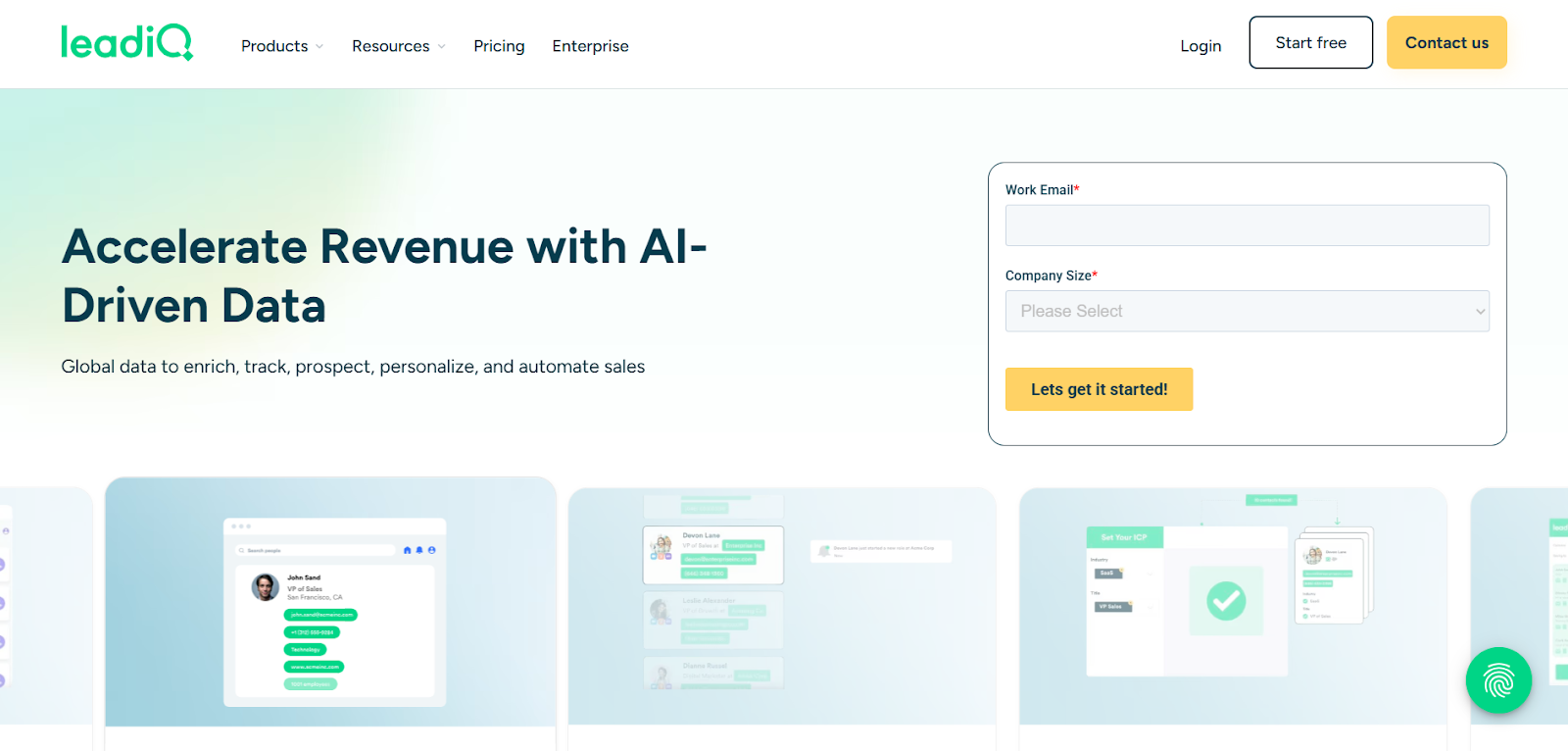
LeadIQ supports prospect capture, enrichment, and outreach assistance (including message composition), with a Chrome extension that works on Sales Navigator.
Top features
- Chrome extension for Sales Nav
- Real-time enrichment to keep accounts current
- Sales trigger tracking
- Help drafting personalized cold outreach
Pricing
- $39 per user/month
- Freemium version available
17. SalesIntel
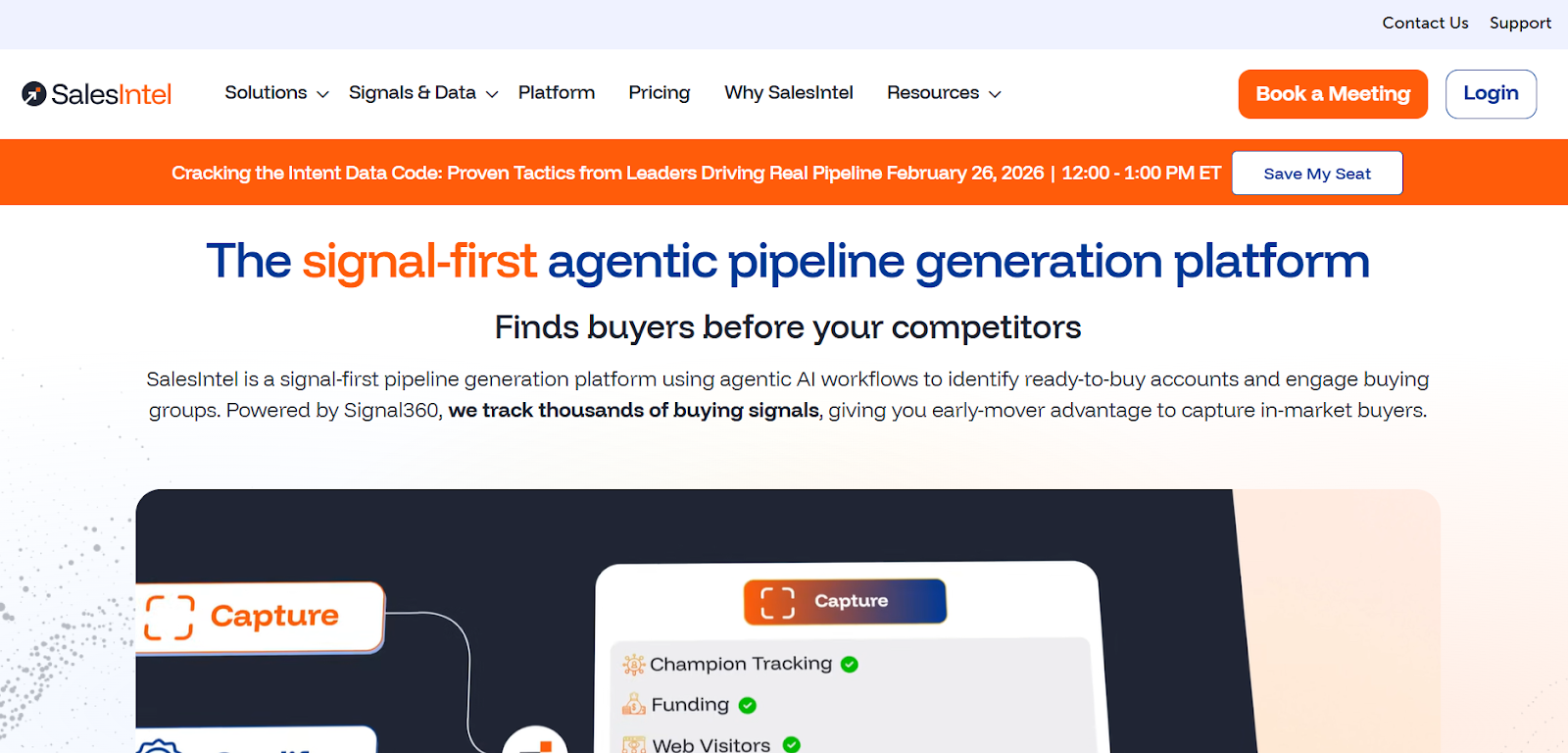
SalesIntel emphasizes high-quality B2B data with a combination of human verification and machine-learning, plus enrichment and technographics.
Top features
- Human-verified data
- Direct dials + emails
- Advanced search filters
- Data enrichment
- Real-time updates
- RevDriver Chrome extension (LinkedIn lead gen)
- Technographics
Pricing
- Individual: $69/month
- Team: $199/month
- Custom pricing for larger teams
18. Snov.io
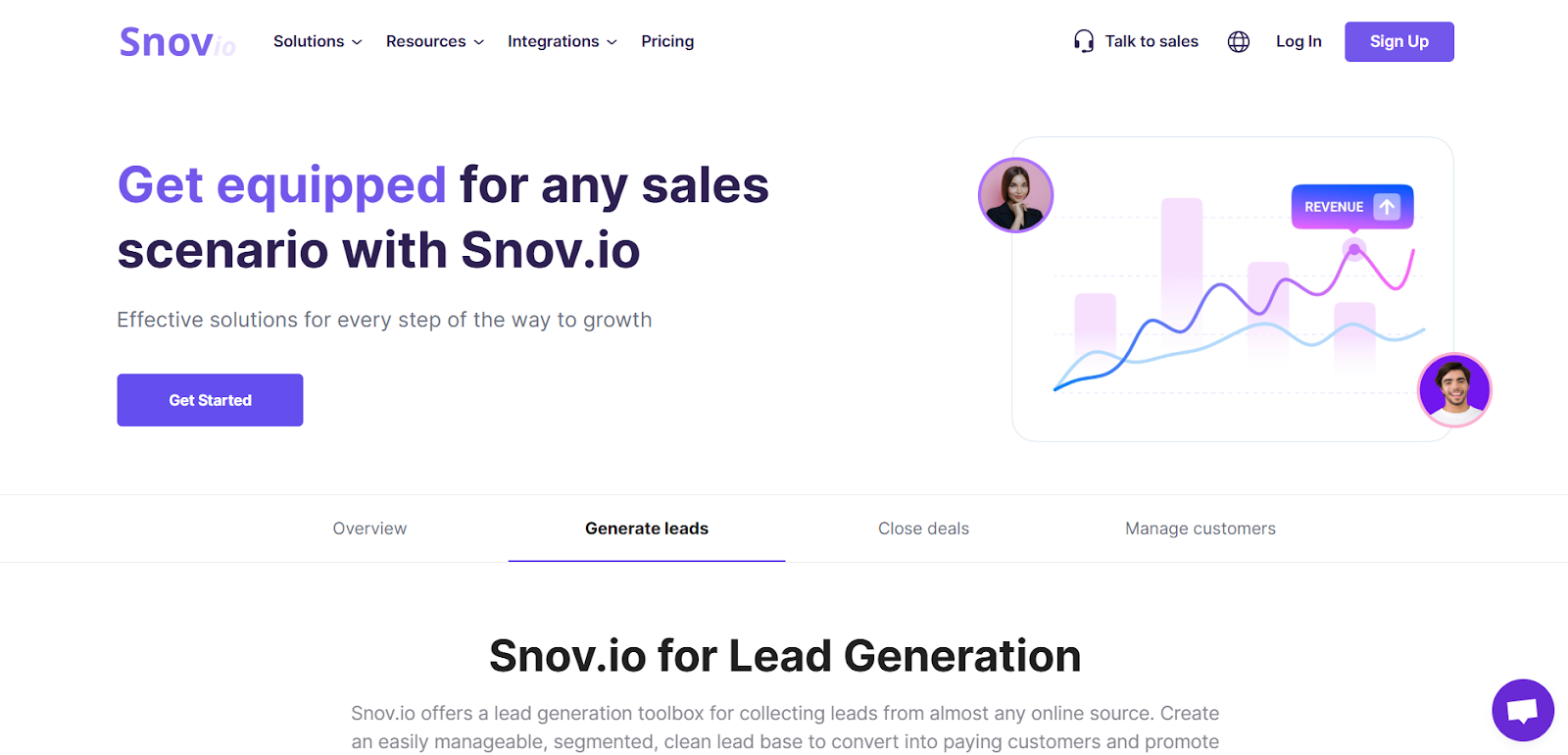
Snov.io is a sales platform with an email finder and Chrome extension (LinkedIn/Sales Navigator/company websites). It’s positioned for teams primarily focused on email discovery and verification.
Top features
- Email finder with a large database
- Bulk search for email discovery
- Email verifier
- Chrome extension
Pricing
- Multiple options: annual, monthly, and managed service
- Free option with 50 credits
Why B2B database providers matter for growth
Dun & Bradstreet frames reliable data providers as a foundation for:
- Strategic insights
- Better lead discovery and conversion
- Risk mitigation + compliance alignment
- More personalized marketing and segmentation
In practical terms: good data reduces wasted outreach, improves routing, and helps teams prioritize accounts that are actually worth pursuing.
Types of B2B databases
A useful way to think about “B2B database providers” is by the shape of the data and how it’s collected/maintained.
1) Paid B2B databases
These are subscription-style platforms where you can search, filter, export, and enrich records. They can be great for speed-if they match your market and your compliance needs.
2) Consent/opt-in driven databases
Some providers emphasize consent-based collection paths (signups, inquiries, partnerships) and position themselves around privacy-first practices.
3) Enrichment-first systems
Instead of “search then export,” enrichment tools focus on improving your existing CRM/list data (fill gaps, verify, refresh).
4) Intent and ABM data platforms
These help you prioritize accounts using behavioral signals and fit scoring (useful for TOFU-to-MOFU targeting).
What to look for in B2B contact database software
Use these criteria to compare providers quickly:
Compliance and data governance
If you operate across regions (EU/UK/US/India), you’ll want a provider that can clearly explain how data is sourced, updated, and used-and how they align with major privacy expectations.
Accuracy and refresh rate
Bad data doesn’t just waste time-it hurts deliverability and can create compliance risk.
Coverage (region + vertical)
Some tools are strong in the US; others are better for EU compliance-first workflows; others have niche coverage.
Workflow fit (integrations + exports)
Check for CRM sync, enrichment APIs, and the ability to push data where your team actually works.
How to shortlist the right provider
Shortlisting the right B2B database provider starts with clarity, not feature comparison. Define your ICP, identify the minimum data points you need (email, phone, firmographics, intent, etc.), and shortlist 3-5 tools that match your region and workflow. Then run a small pilot using real accounts from your TAM (Total Addressable Market) to compare data accuracy, enrichment depth, ease of use, and overall cost before making a long-term commitment.
Step 1: Define your TAM and your “minimum viable record”
Decide what a usable record needs:
- Company: industry, employee count, HQ, tech stack (optional)
- Contact: role, seniority, email, phone (optional), LinkedIn URL
- Signals: hiring/job change/news/intent (optional)
Step 2: Pick 2-3 categories (don’t force one tool to do everything)
A common TOFU stack is:
- 1 core database
- 1 enrichment/verification layer
- (optional) 1 intent/ABM tool for prioritization
Step 3: Run a pilot with real accounts (not random exports)
Test with a few hundred accounts from your real ICP and compare:
- Match rate (how many records found)
- Bounce rate / validity (for emails)
- Time-to-list (how long reps take)
- CRM sync friction
Step 4: Decide based on repeatability, not “most features”
The best provider is the one your team will actually use weekly.
Common mistakes (including “leads for sale” traps)
Mistake 1: Buying a B2B email database and calling it “pipeline”
If your plan is “buy b2b email database” → blast sequences, you’ll usually end up with poor deliverability and noisy results.
Mistake 2: Optimizing for volume over fit
A smaller, cleaner database aligned to your ICP often beats a huge database you can’t segment well.
Future trends in B2B databases
A few trends that keep showing up:
- More AI-assisted collection, validation, and scoring
- More cloud-based collaboration and integration
- Stronger focus on privacy and compliance standards
FAQs
1) What is a B2B database?
A B2B database is a structured set of company + contact records used to find and engage potential buyers (often including firmographic and sometimes intent signals).
2) Are “leads for sale” the same as a B2B contact database?
Not really. “Leads for sale” usually implies a one-time list purchase, while B2B databases are typically searchable, updatable systems designed to stay current.
3) Is it safe to buy a B2B email database?
It depends on sourcing, consent expectations, and jurisdiction. Treat this as a compliance and deliverability risk area and prefer providers that can explain sourcing and refresh practices.
4) What should I look for in B2B database providers?
Prioritize: compliance clarity, refresh rate, coverage, integrations, and workflow fit-then validate with a pilot.
5) What is the best free lead finder software?
For TOFU testing, choose tools that offer a free tier or trial and let you validate match rate on your ICP sample. (Many providers position free access as a way to trial workflows before upgrading.)
6) How do I compare B2B contact database software without wasting time?
Use a 2-week pilot and score providers on: match rate, bounce rate, time-to-build lists, and CRM sync friction.
7) Which B2B database is best for intent-based prospecting?
Intent-based prospecting usually needs a tool that supports behavioral/intent signals plus a workflow to activate those accounts (lists, routing, outreach).
8) How to build a comprehensive b2b tam database?
Start with a clean ICP definition, compile an account list from 2-3 sources, standardize identifiers (domain, LinkedIn URL), enrich firmographics/technographics, deduplicate, then set a refresh cadence (monthly/quarterly) with validation checks before activation.
9) How often should I refresh my B2B database?
If you do outbound regularly, plan on refreshing key fields (role, email validity, company changes) at least monthly for active segments; quarterly for the wider TAM.
10) What’s the best way to avoid stale contacts?
Use a combination of (1) verification/enrichment, (2) job-change monitoring, and (3) a CRM sync process that prevents duplicates and overwrites.